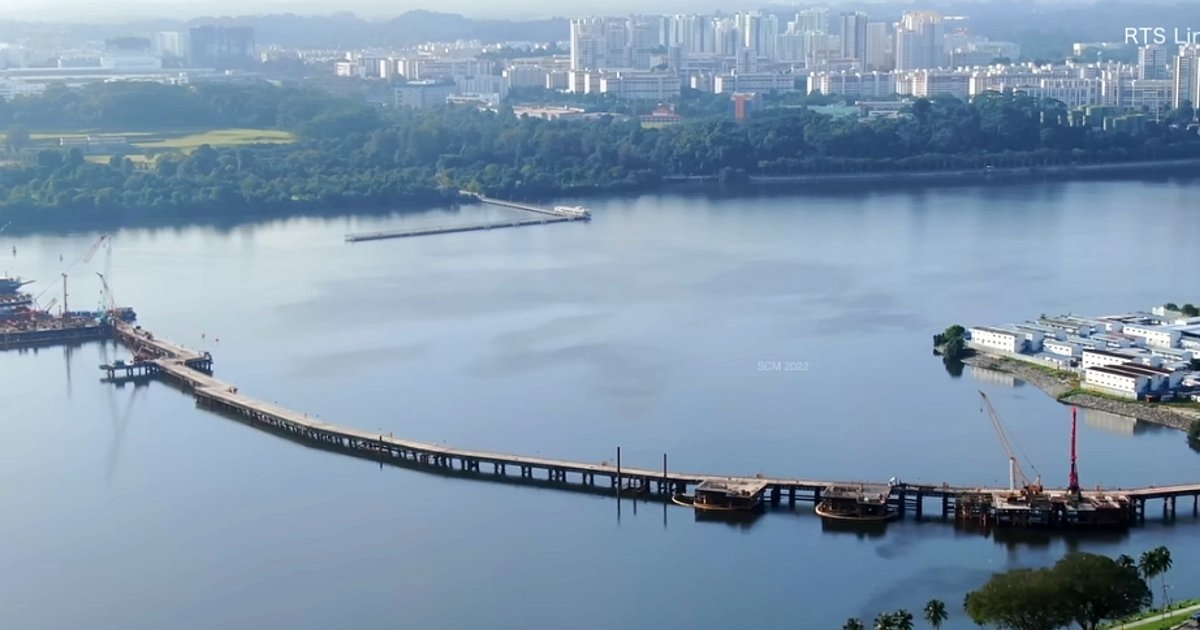
Malaysian Transport Minister Anthony Loke confirmed that the Rapid Transit System (RTS Link) between Singapore and Johor Bahru is progressing according to the established timeline for its launch in January 2027, despite global energy pressures. This announcement was made during a site visit to the project, where Loke explained that the project has entered the system installation phase, which means that fuel costs will be limited and not affected by global conditions.
Loke noted that RTS Operations Pte Ltd, the operator of the railway, will present its ticket pricing proposal in the third quarter of this year. Both the Malaysian government and the Land Transport Authority of Singapore will review the prices before announcing them to the public by the end of the year.
Project Details and Collaboration
The RTS Link project is a joint venture between the Malaysian government-owned company Prasarana Malaysia and the Singaporean company SMRT. Loke emphasized that the proposal aims to gain approval from both governments, indicating the possibility of introducing a subscription card for frequent cross-border travelers, provided that this plan is commercially viable and may require government support.
He also mentioned that any proposal for a subscription card must be discussed with RTSO, as the service is a cross-border railway operation involving both Malaysia and Singapore. The main issue lies in whether the recurring revenues from these cards can cover operational costs, even if there is political interest in assisting Malaysian travelers.
Background & Context
Loke's statements come at a time when Malaysia is facing negative impacts from fluctuations in the global energy market, linked to political conflicts in the Middle East, leading to rising energy costs and increased pressure on the country's fuel subsidy bill. However, Loke assured that the rapid transit system project will not be affected, as it has moved into the system installation phase, with the completion of major construction works approaching.
During his site visit, Loke pointed out that work on the Bukit Chagar station and the Immigration, Customs, and Quarantine (ICQ) complex is in the final stages, with the installation of electronic gates completed, while the installation of baggage and passenger screening devices is still ongoing.
Impact & Consequences
The rapid transit system is expected to reduce traffic congestion at checkpoints by up to 25%, reflecting the project's importance in enhancing mobility between Malaysia and Singapore. Additionally, the project will bolster economic integration between the two countries, enabling the transport of approximately 10,000 passengers per hour in each direction, with daily passenger numbers expected to reach around 40,000 when operations commence.
This initiative is part of Malaysia and Singapore's efforts to enhance cooperation in public transport, contributing to improved quality of life for citizens and residents in both countries.
Regional Significance
Rapid transit projects like the RTS Link serve as a model for Arab countries seeking to improve their transportation infrastructure and enhance regional cooperation. Arab nations can benefit from successful experiences in this field, especially amidst the economic and political challenges they face.
In conclusion, the RTS Link project represents a significant step towards strengthening ties between Malaysia and Singapore, reflecting both governments' commitment to developing transportation infrastructure, which contributes to improved mobility and increased economic efficiency.