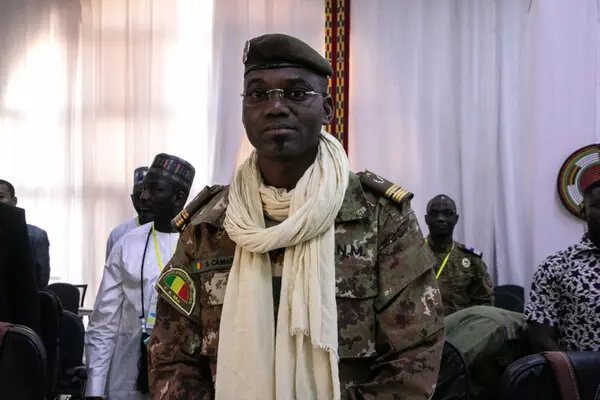
The Malian government reported the death of Defense Minister General Sadio Kamara during coordinated attacks executed by militants affiliated with Al-Qaeda. The assaults occurred in various regions of the country, including the capital Bamako, where a suicide bomber driving an explosive-laden vehicle targeted General Kamara's residence.
General Kamara, a pivotal figure in the military government, was killed after engaging with the attackers at the site of the assault. In his honor, the Malian government has declared a two-day national mourning period.
Details of the Attacks
The attacks targeting General Kamara come at a time when Mali is witnessing a rise in violence, with increasing assaults from jihadist groups in the country. Government spokesperson Issa Osman Koulibaly indicated that the attack was carried out using a car bomb driven by a suicide bomber.
General Kamara played a significant role in the military coup that occurred in 2020, which led to the ousting of the previous government led by Ibrahim Boubacar Keïta. He was regarded as a key link between the Malian government and Russia, which has provided security support to the military government.
Background & Context
Historically, Mali has experienced an escalation of violence since 2012, when militants linked to Al-Qaeda seized control of the northern part of the country. In recent years, the group known as the Group for the Support of Islam and Muslims (JNIM) has gained strength, seeking to expand its influence in the West African region.
Founded in 2017, JNIM has ties to Al-Qaeda and has begun executing coordinated attacks against military and civilian targets. As its influence grows, the group has started targeting major cities, reflecting its increasing political ambitions.
Impact & Consequences
The killing of General Kamara may exacerbate the security situation in Mali, with expectations that the government will respond forcefully to these attacks. General Oumar Diarra, the Chief of Staff of the Malian Army, stated that over 200 militants have been eliminated during military operations against them.
The military response may involve increased cooperation with Russia, which has become a strategic partner for the Malian government, potentially escalating tensions in the region. Furthermore, the rise in violence could impact stability in neighboring countries such as Burkina Faso and Niger.
Regional Significance
The events surrounding General Kamara's death serve as a serious indicator of the escalating violence in Mali and its implications for regional security. The situation remains fluid, and the government's next steps will be crucial in determining the future of stability in the region.
As Mali grapples with these challenges, the international community will be closely monitoring the developments, particularly in relation to the influence of jihadist groups in West Africa.