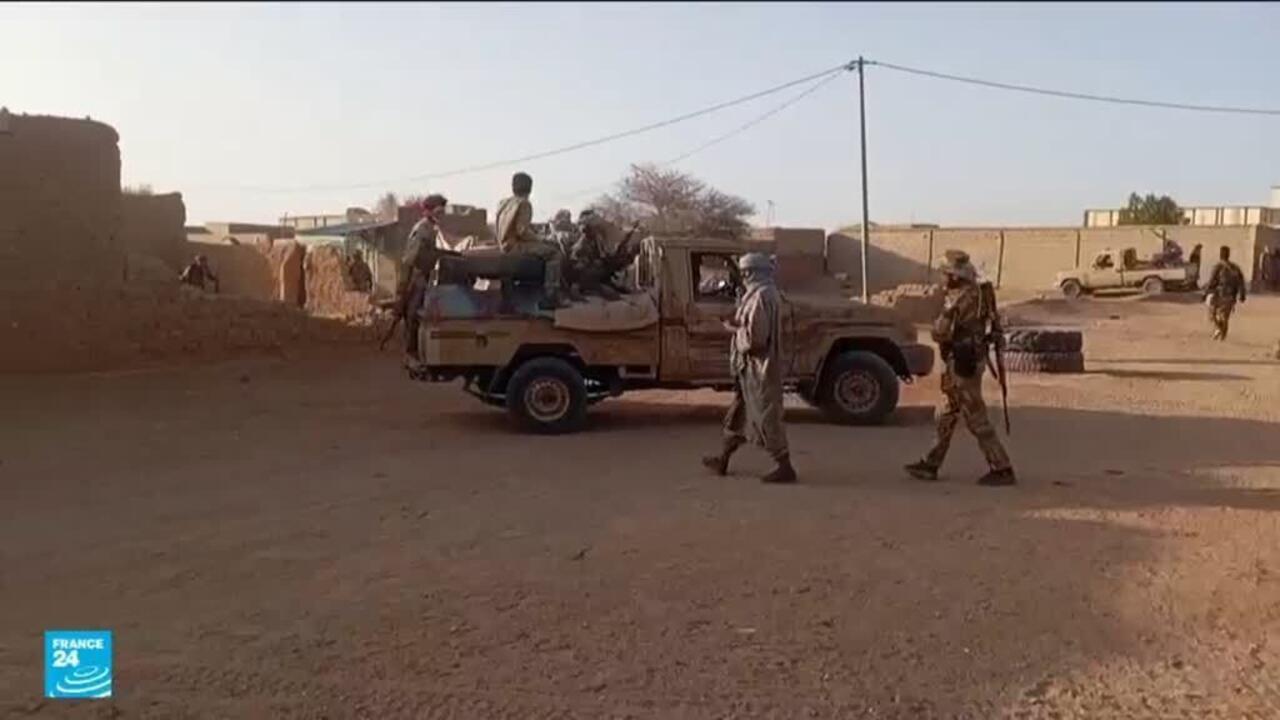
In a serious development, Malian Defense Minister General Sadio Kamara, aged 47, was killed in an attack carried out by the Group for the Support of Islam and Muslims at his home. This attack, which took place in the Kati area, also resulted in the death of his second wife, highlighting the escalating violence in the country.
The attack occurs at a time when the Malian army is facing fierce confrontations with jihadists, as rebels have announced that they reached an agreement with Russian soldiers from Wagner Group for their withdrawal from the strategic city of Kidal. This city, which was under the control of government forces, is now fully controlled by the rebels, reflecting the deteriorating security situation in the country.
Details of the Attack
The attacks carried out by the Group for the Support of Islam and Muslims are part of a continuing escalation of violence in Mali, as the group seeks to expand its influence in the region. The attack targeting the defense minister is considered one of the boldest attacks, reflecting the weakness of government forces in the face of increasing jihadist threats.
Kidal is a strategic point in northern Mali and has witnessed multiple conflicts between government forces and rebels in recent years. The alleged agreement with Russian forces could change the balance of power in the region and complicate the security situation further.
Background & Context
Mali has been suffering from a worsening security crisis since 2012, when Tuareg rebels seized control of the northern part of the country. Since then, jihadist groups have spread throughout the region, leading to an international military intervention led by France. However, these interventions have not succeeded in achieving full stability and have instead complicated the situation.
General Sadio Kamara was one of the prominent military leaders in Mali, having assumed the position of defense minister at a critical time. His assassination reflects the significant challenges facing the transitional government in the country and increases the pressure on it to address security and political crises.
Impact & Consequences
The killing of the defense minister could undermine confidence in military leadership and exacerbate chaos in the country. This incident may also provoke strong reactions from government forces, potentially leading to an escalation of violence in the region.
These events are likely to affect regional stability, as Mali is considered a launchpad for many jihadist groups in the Sahel region. The rise in violence could lead to an influx of more refugees into neighboring countries, increasing pressure on regional governments.
Regional Significance
The situation in Mali has direct implications for security in the Sahel and Sahara region, which is already suffering from insecurity. The escalation of violence in Mali may encourage jihadist groups in other countries like Niger and Burkina Faso, increasing the risk of terrorism spreading in the region.
Furthermore, events in Mali raise concerns among Arab countries, as stability in the Sahel affects regional security. Cooperation between Arab and African countries in combating terrorism has become an urgent necessity to address shared challenges.