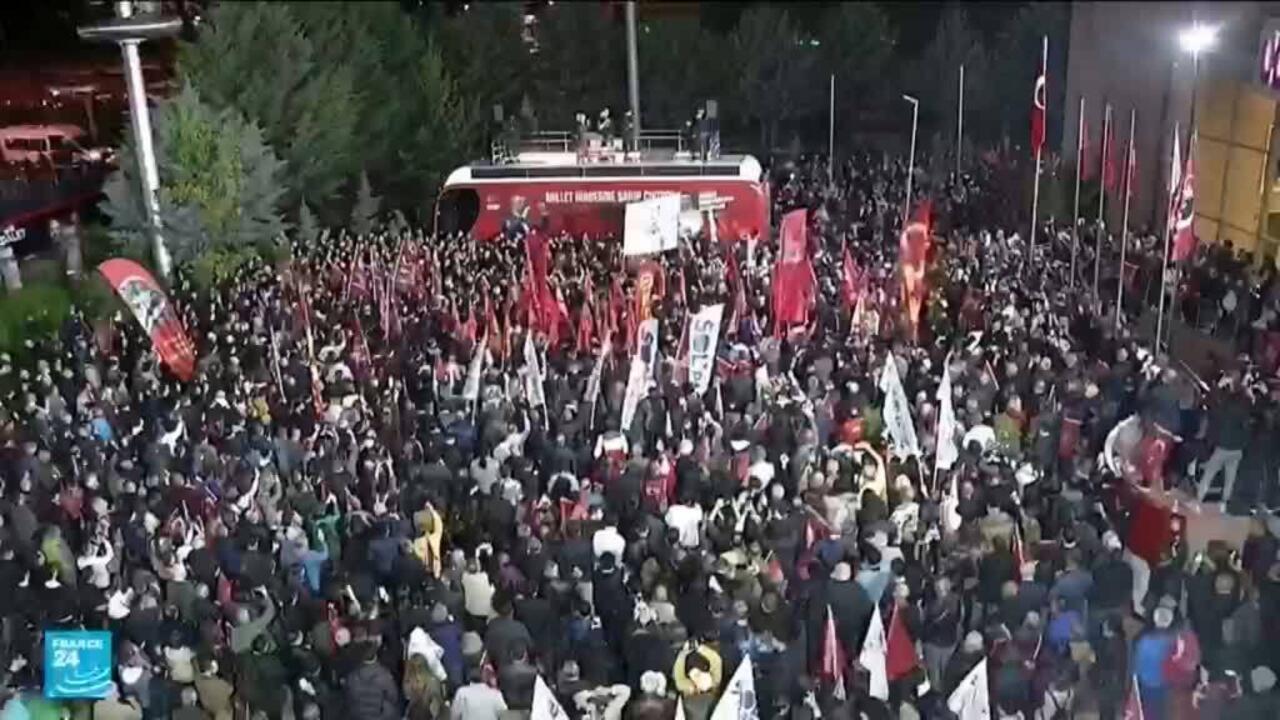
Thousands of demonstrators gathered in front of the Republican People's Party headquarters in Ankara, affirming their support for party leader Ozgur Ozel, after a Turkish court ruled on Thursday to suspend the activities of the party's elected leadership and reinstate Kemal Kilicdaroglu as its president. This decision sparked angry reactions among the party's supporters, who viewed this move as an assault on democracy.
For the past two years, the Republican People's Party (CHP) has faced increasing judicial pressures, with several of its leaders imprisoned amid a broad campaign against the opposition. This ruling comes as the party prepares to compete against the ruling Justice and Development Party led by President Recep Tayyip Erdogan in the upcoming elections, heightening political tensions in the country.
Details of the Event
Reports indicate that the court decided to annul the results of the party's internal elections, which many perceive as an attempt by the government to control the opposition. Demonstrators gathered in Ankara's square, holding banners calling for democracy and freedom of expression. The protests saw significant participation from youth and women, reflecting the diverse support base of the party.
Protesters also pointed out that this step is part of a repressive campaign against dissenting voices in Turkey, where many politicians and activists face increasing legal pressures. The demonstrators expressed their determination to continue protests until the elected leadership of the party is restored.
Background & Context
The Republican People's Party is one of the oldest political parties in Turkey and has played a significant role in the political life since the establishment of the republic. However, the party has faced substantial challenges in recent years, especially following the electoral victories of the Justice and Development Party. The party has experienced internal divisions and leadership struggles, affecting its competitiveness.
Historically, there have been numerous attempts by the Turkish government to limit the influence of opposition parties, using the judiciary as a tool to pressure political opponents. These dynamics reflect a state of sharp political polarization in the country, complicating the political landscape.
Impact & Consequences
This decision could have far-reaching effects on the future of the Republican People's Party, potentially leading to the erosion of its popular support base. Continued judicial pressures may contribute to a growing sense of injustice among voters, possibly driving them to support the party more strongly in the upcoming elections.
Furthermore, these events may escalate tensions between the government and the opposition, increasing the likelihood of larger protests in the future. Additionally, these developments could impact Turkey's international relations, as many countries monitor the democratic situation in the country.
Regional Significance
The events in Turkey hold particular importance for the Arab region, as many Arab countries closely follow the political situation in Turkey. Turkey is seen as a model of democracy in the region, and any regression in this model could affect political movements in Arab countries.
Moreover, the success or failure of the Republican People's Party in facing government pressures may have implications for opposition parties in Arab nations facing similar challenges. The events in Turkey highlight the importance of supporting democracy and human rights in the region.
The protests witnessed in Ankara reflect a state of anger and dissatisfaction among supporters of the Republican People's Party, shedding light on the challenges facing the opposition in Turkey. Under these circumstances, the future of the party and the democratic process in the country remains in question.