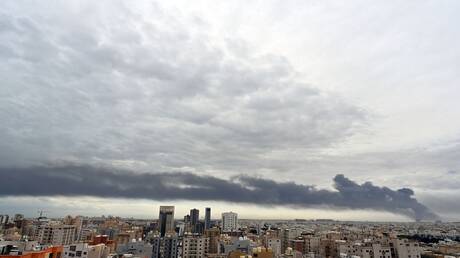
A fire broke out in a fuel tank at Kuwait International Airport after being targeted by drones, causing material damage but no reported injuries. The incident occurred late last night, prompting a swift response from firefighting teams that managed to control the blaze quickly, preventing further escalation.
This incident is part of a series of attacks that have occurred in the region recently, raising concerns about the security of vital facilities in Arab countries. An investigation has been launched to determine the circumstances of the attack and identify those responsible.
Details of the Incident
According to security sources, the fire ignited in a large fuel tank, resulting in columns of smoke rising over the airport. Some air corridors were closed as a precautionary measure, although air traffic at Kuwait International Airport continued generally. Images circulated on social media depicted the scale of the fire and its impact on the airport.
Reports indicated that the drones used in the attack were equipped with advanced technologies, reflecting the evolving methods of attacks in the region. Security measures at the airport have been reinforced following the incident, with additional security forces deployed to monitor the situation.
Background & Context
This incident comes at a sensitive time for the region, as tensions between several countries in the Middle East are on the rise. Kuwait has experienced relative stability in recent years, but drone attacks have become an increasing phenomenon, raising fears of escalating violence.
Historically, Kuwait has been a target of previous attacks, but the recent incident reflects a shift in strategies employed by armed groups. Recent events in the region have shown that drone attacks have become a preferred method for many conflicting parties.
Impact & Consequences
This incident raises questions about Kuwait's ability to protect its vital facilities, especially with the increasing security threats. Additionally, the incident may affect air traffic and tourism in the country, potentially leading to negative economic repercussions.
These events may lead to increased security cooperation among Arab countries to address common threats. Governments may also be prompted to enhance their investments in security technology to tackle these challenges.
Regional Significance
This incident serves as a wake-up call for other Arab countries that may face similar threats. With the increasing use of drones in conflicts, it becomes essential to enhance defensive capabilities and regional cooperation to address these challenges.
In conclusion, this incident highlights the urgent need for comprehensive security strategies to protect vital facilities in the region, as national security increasingly depends on the ability to confront modern threats.