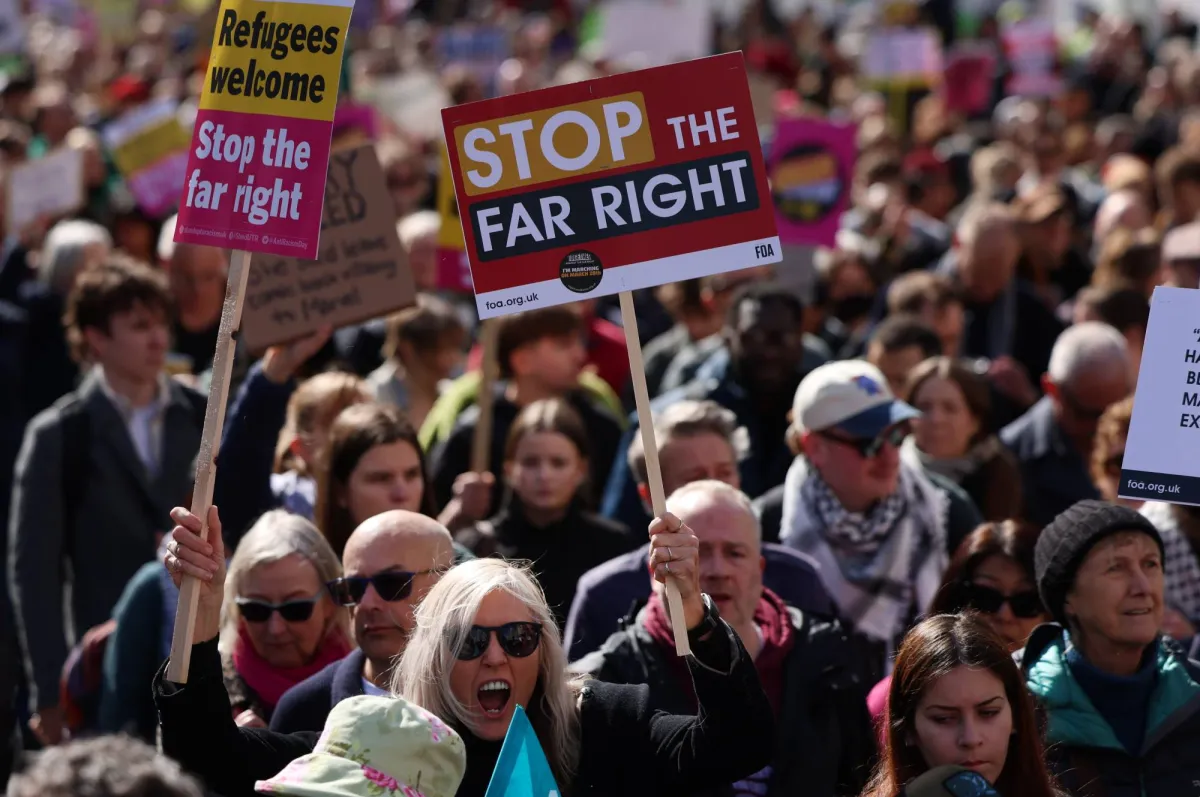
Today (Saturday), tens of thousands of protesters took to the streets of London in a march titled 'Together Against the Far Right,' expressing their condemnation of the right-wing Reform Party led by Nigel Farage, known for his anti-immigration stance and advocacy for Brexit.
British police estimates indicate that around 50,000 demonstrators participated in this protest, organized by the 'Together Alliance' with support from trade unions and civil society organizations. The protesters carried banners expressing their rejection of the Reform Party's positions, alongside Iranian flags and flags supporting the Palestinian cause.
Event Details
This demonstration comes at a time when the Reform Party is experiencing a surge in popularity, with opinion polls showing it surpassing the Labour Party, led by Keir Starmer. Joining the march was Zak Polanski, leader of the Green Party, which also competes with Labour. This increase in support for the Reform Party raises concerns among political and social circles in Britain, as some view it as a threat to democratic values and cultural diversity.
On another note, police reported that they arrested 25 individuals during the demonstration, in addition to another pro-Palestinian protest that took place on the same day. These arrests reflect the rising tensions within British society, where protests against far-right policies are increasing.
Background & Context
Historically, Britain has witnessed a rise in far-right movements in recent years, particularly following the Brexit referendum in 2016. These events have contributed to the strengthening of nationalist rhetoric, leading to increased social division. The Reform Party, which promotes anti-immigration policies, benefits from this atmosphere, gaining growing support from certain segments of society.
These protests coincide with increasing concerns about the impacts of far-right movements across Europe, where other countries like France and Germany have also seen similar trends. This phenomenon is not limited to Britain alone but reflects a broader trend across the European continent.
Impact & Consequences
These demonstrations raise questions about the future of democracy in Britain, as there is growing concern over the increasing influence of far-right ideologies on public policy. Additionally, these protests reflect the community's desire to confront these phenomena, which could lead to new political movements in the future.
It is expected that these events will impact upcoming elections, as the Labour Party seeks to regain voter confidence by presenting clear alternatives to right-wing policies. Furthermore, these protests may prompt other political parties to reassess their positions on immigration and diversity issues.
Regional Significance
These events hold particular significance for the Arab region, as they reflect the political and social conflicts faced by many countries. The rise of the far right in Europe may also affect immigration and asylum policies, impacting the situation of Arab refugees in European countries.
In conclusion, these protests remain a sign of the increasing awareness within British society regarding the challenges it faces, emphasizing the importance of solidarity in confronting extremist policies.