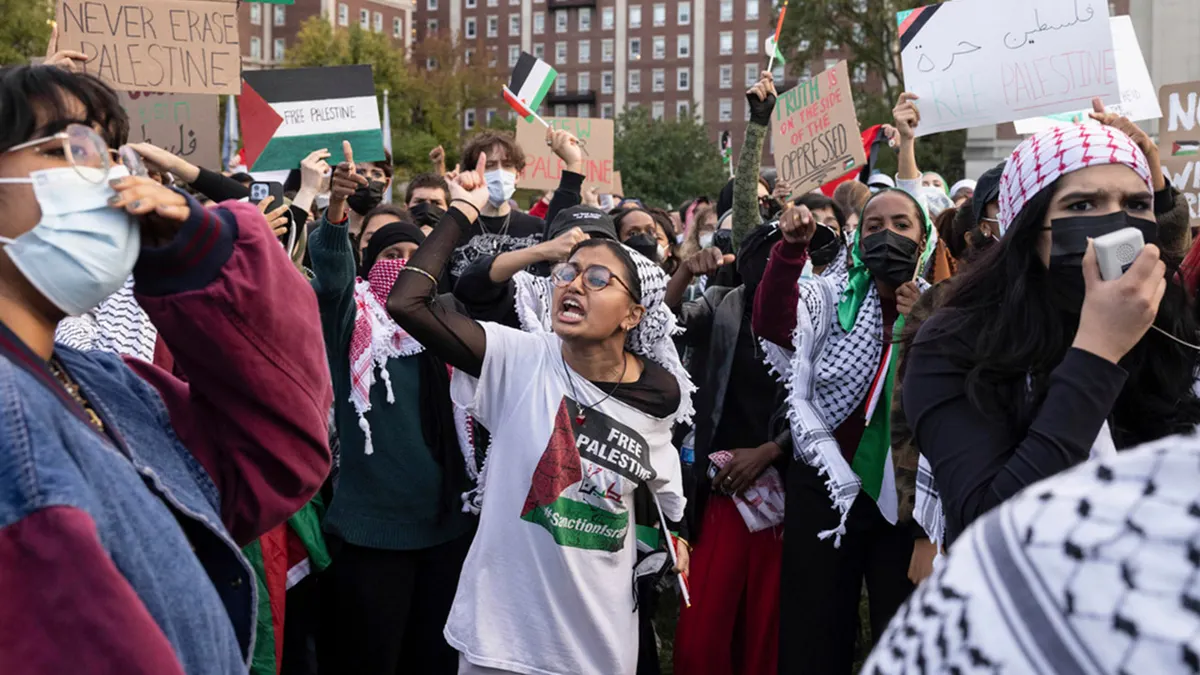
Today, Friday, numerous capitals and cities around the world witnessed a wave of massive protests against the "Execution of Palestinian Prisoners" law approved by the Israeli Knesset on March 30. These demonstrations come at a time of increasing international discontent with Israeli policies towards Palestinians, especially with the ongoing closure of Al-Aqsa Mosque since February 28.
In the Syrian capital, Damascus, hundreds of citizens gathered in an angry demonstration denouncing the new law, expressing their solidarity with Gaza in the face of ongoing Israeli attacks. The protest began after Friday prayers from the courtyard of the Umayyad Mosque, where participants raised Palestinian flags and chanted slogans against the Israeli occupation and Prime Minister Benjamin Netanyahu.
Details of the Protests
The protests were not limited to Damascus; other Syrian cities such as Jisr al-Shughur in Idlib province also witnessed demonstrations in support of Palestine and in rejection of the execution law. In Morocco, hundreds of citizens took to the streets in multiple cities such as Tangier, Tetouan, and Nador, holding protests denouncing the unjust law and demanding the reopening of Al-Aqsa Mosque to worshippers. These demonstrations were in response to calls from NGOs like the "Moroccan Authority for Supporting the Nation's Issues" and the "Moroccan Front for Supporting Palestine."
In the Mauritanian capital, Nouakchott, dozens of students organized a march opposing the law, raising Palestinian flags and banners condemning Israeli violations. Meanwhile, in Mogadishu, hundreds of citizens gathered in the Hodan neighborhood, calling for the reopening of Al-Aqsa Mosque and urging the international community to intervene to protect sacred sites.
In Istanbul, Taksim Square witnessed a protest organized by Turkish organizations, where participants raised slogans calling for an end to the occupation. In Oslo, activists held a silent vigil outside the opera house, hanging "gallows ropes" to express their rejection of the law and calling for international sanctions against Israel.
Background & Context
The law permitting the execution of Palestinian prisoners comes amid escalating tensions between the Israeli occupation and Palestinians, with recent Israeli violations on the rise. This law has sparked outrage from various sectors, as many view it as an escalatory step that threatens the lives of Palestinian prisoners and exacerbates their suffering.
The closure of Al-Aqsa Mosque since February has heightened tensions, as the mosque is considered a significant symbol for Muslims worldwide. Many scholars and preachers have condemned these violations, warning of their repercussions on security and stability in the region.
Impact & Consequences
The protests witnessed in several countries reflect a growing international awareness of the Palestinian issue and underscore the importance of solidarity with the Palestinian people in their struggle against occupation. Additionally, international reactions may influence Israeli policies, especially with increasing pressure from human rights organizations.
The escalation of Israeli actions could lead to greater unrest in the region, threatening regional security and increasing instability. Many analysts have warned that the continuation of these policies could lead to an explosion of tensions in the occupied territories.
Regional Significance
These protests represent a manifestation of unity among Arab and Islamic peoples in support of the Palestinian cause, reflecting the issue's importance in the Arab consciousness. Furthermore, these events may lead to enhanced political and diplomatic movements at both regional and international levels to support Palestinian rights.
In conclusion, the Palestinian issue remains a focal point of global concern, as people continue to express their rejection of the occupation and Israeli practices, highlighting the significance of Arab and Islamic solidarity in facing challenges.