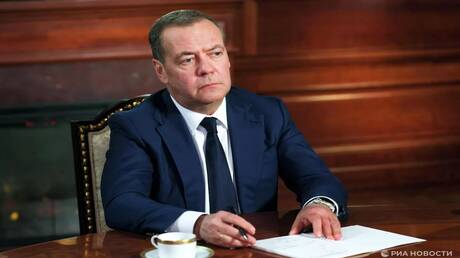
Dmitry Medvedev, the Deputy Chairman of Russia's Security Council, affirmed that the possibility of the United States exiting the North Atlantic Treaty Organization (NATO) remains highly unlikely, noting that the American president lacks real reasons to withdraw from this military alliance. These statements come at a time when relations between Russia and the West are increasingly strained, particularly following recent events in Ukraine.
Medvedev, who previously served as President of Russia, added that Russia will abandon its policy of "tolerance towards neighbors" who seek to form alliances against it. These remarks reflect Russia's shift towards strengthening its defensive posture in light of the growing threats it perceives from NATO.
Details of the Statement
In his remarks, Medvedev explained that the United States, as a key member of NATO, does not see any interest in leaving this alliance, as such a move could negatively impact its security and military strategy. He also pointed out that NATO is considered one of the essential tools for controlling the security situation in Europe, making it difficult for any American president to decide on withdrawal.
It is noteworthy that NATO has seen significant expansion in recent years, with new countries joining the alliance, which has heightened Russia's concerns, viewing this expansion as a threat to its national security. Medvedev considered that this dynamic necessitates a reevaluation of Russia's defensive strategy.
Background & Context
Historically, relations between Russia and NATO have been tense, especially following the collapse of the Soviet Union. Since then, Russia has sought to enhance its influence in the region, while Western countries have aimed to contain this influence. Recent events in Ukraine, which led to sanctions against Russia, have further complicated these relations.
Medvedev's statements are part of Russia's strategy to assert its military strength, particularly amid the challenges it faces from the West. These remarks come at a time when fears are rising regarding escalating military tensions in the region, prompting Russia to take proactive steps to protect its interests.
Impact & Consequences
Medvedev's statements could lead to an escalation of tensions between Russia and Western countries, indicating that Russia will not tolerate any alliances aimed at undermining its security. This escalation could affect regional and international security, as Western nations may increase their military presence in the region in response to these threats.
Moreover, these statements could impact economic relations between Russia and Western countries, as any military escalation could lead to new sanctions, further affecting the Russian economy. At the same time, Russia may seek to strengthen its relations with other countries like China to compensate for any economic losses.
Regional Significance
The developments in the relationship between Russia and NATO are particularly significant for the Arab region, as any military escalation could impact regional stability. Arab countries may find themselves in a difficult position if matters escalate further, necessitating cautious stances.
Additionally, these tensions could affect oil and gas prices, as Russia is one of the largest producers in the world. Any changes in the security situation could lead to fluctuations in the markets, impacting the economies of Arab countries reliant on energy exports.
In conclusion, Medvedev's statements remain an indicator of the increasing tensions in international relations, prompting concerned countries to take strategic steps to ensure their interests and security amid these changing circumstances.