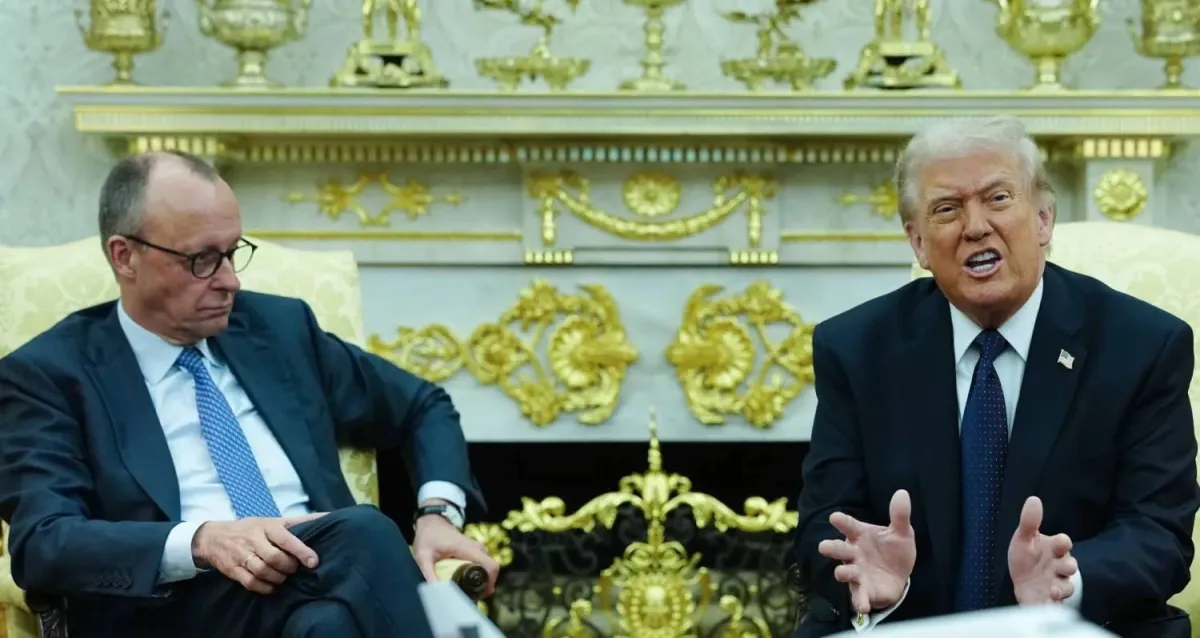
German advisor Friedrich Merz stated on Wednesday that he believes his relationship with U.S. President Donald Trump is still good, following Trump's response to his criticisms regarding the Iran War.
In remarks made by Merz, he said, "From my perspective, my personal relationship with the U.S. president is good, but I have doubted the reasons for the Iran War from the beginning, which is why I clarified the matter."
Details of the Event
Trump criticized Merz in a social media post regarding the war, stating that he does not understand what he is talking about. This came after Merz expressed his views on the Middle East conflict during a visit to a school in Marsberg, western Germany, where he pointed out the lack of a clear strategy from the Americans.
Merz added, "The problem with wars like this is that you not only need to go in, but you also have to come out again," referring to the painful experiences the United States faced in Afghanistan and Iraq.
Background & Context
These statements come at a time when U.S.-Iranian relations are experiencing increasing tension, as the United States led a coalition of regional countries to issue a joint call to support Panama in its dispute with China over its canal, describing Beijing's actions as a threat to all these countries.
In this context, President Trump confirmed during a dinner at the White House that he has "defeated Iran militarily," indicating that the United States is making efforts to achieve good outcomes in the Middle East.
Impact & Consequences
The statements from Merz and Trump highlight the ongoing tensions in international relations, as Merz's stance reflects concerns about the U.S. strategy in the region. The mutual criticisms indicate deep divisions among traditional allies.
On the other hand, Iran continues to assert its right to develop nuclear technology for peaceful purposes, complicating the situation in the region further. The continuation of these tensions could escalate military conflicts, negatively impacting regional security.
Regional Significance
Arab countries are directly affected by these developments, as the region remains on alert for the outcomes of these events. The ongoing conflict in the Middle East could impact the stability of neighboring countries and heighten sectarian and political tensions.
In conclusion, the question remains about how these strained relations will affect security and stability in the region, and whether they will lead to radical changes in regional policies.