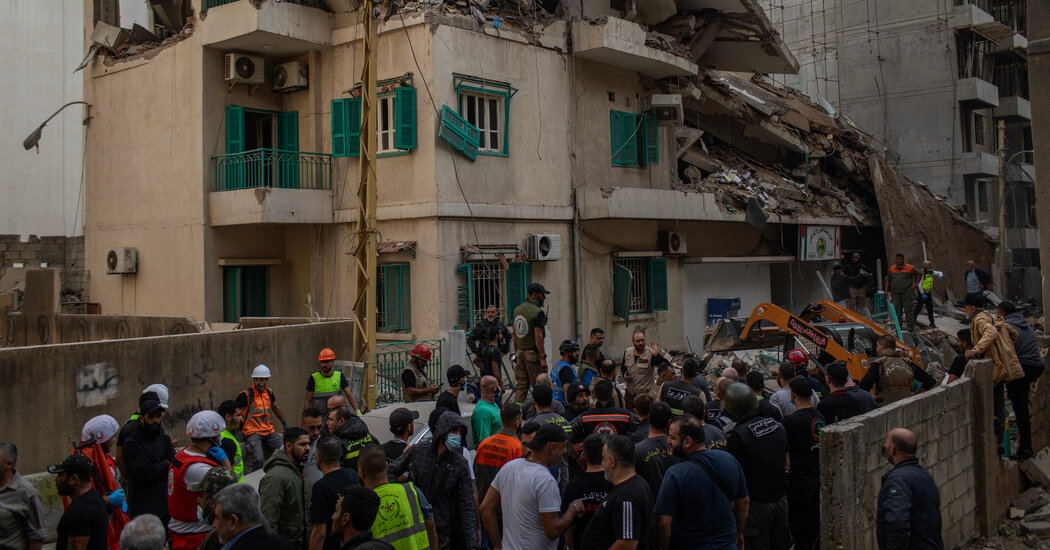
Lebanon has witnessed a significant military escalation following Israeli airstrikes near Beirut Airport, with threats to occupy southern regions. This escalation comes at a sensitive time marked by increasing regional tensions, raising concerns among Lebanese citizens and international observers alike.
Reports indicate that the Israeli strikes targeted sites near Beirut Airport, marking an unprecedented escalation in Israeli military operations within Lebanese territory. This attack is part of the ongoing tensions between Israel and Hezbollah, with clashes intensifying in recent times.
Details of the Incident
Israel has announced that it may take occupying steps in southern Lebanon, raising fears of a larger escalation in the ongoing conflict. Israeli military sources confirmed that these operations are part of its strategy to mitigate threats from Hezbollah, which the Israeli occupation considers one of the greatest security threats in the region.
At the same time, the Lebanese government expressed its concern over these developments, emphasizing the need to maintain national sovereignty and rejecting any violations of Lebanese borders. Lebanese officials have called on the international community to intervene and halt the military escalation.
Background & Context
Historically, Lebanese-Israeli relations have been marked by ongoing tensions, especially since the Lebanese Civil War in the 1970s and 1980s, which led to repeated Israeli military interventions. These conflicts have had devastating effects on the Lebanese people, with many still suffering from the repercussions of those wars.
The southern region of Lebanon is considered a hotspot for conflict, with Hezbollah's strong presence complicating the security situation. The Lebanese government has attempted in recent years to strengthen its control over this area, yet tensions with Israel remain persistent.
Impact & Consequences
These developments could lead to a larger military escalation, threatening the stability of Lebanon and the entire region. Should military operations continue, it may open the door to a comprehensive armed conflict, which would have negative impacts on the already struggling Lebanese economy.
Furthermore, Lebanon's relations with other Arab countries may be affected, as some nations are expected to take supportive stances towards Lebanon in the face of Israeli aggressions, while others may remain silent or adopt neutral positions.
Regional Significance
These events are part of the larger picture of the Arab-Israeli conflict, with growing concerns about their impact on stability in neighboring countries such as Syria and Palestine. Any military escalation could lead to an influx of refugees into neighboring countries, increasing the economic and social burdens on those nations.
In conclusion, the current situation in Lebanon and the broader Arab region requires urgent international attention, as any military escalation could lead to dire consequences for regional security and stability.