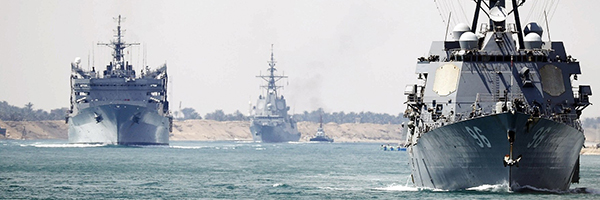
The commander of the French Navy, Admiral Pierre Villieu, emphasized the urgent need for military intervention to monitor the reopening of the Strait of Hormuz. These remarks come at a sensitive time, as the strait is a critical point for transporting oil and natural gas, and is experiencing increasing tensions due to regional conflicts.
During a press conference, Admiral Villieu pointed out that the security situation in the region requires a response from the international community to ensure maritime safety. He stressed that any threat to navigation in the strait could significantly impact the global economy, especially given the heavy reliance on energy supplies from this area.
Details of the Situation
The Strait of Hormuz, which connects the Arabian Gulf to the Gulf of Oman, is one of the busiest maritime passages in the world, with approximately 20% of the world's total oil supplies passing through it. In recent years, the strait has witnessed numerous incidents, including attacks on oil tankers, raising concerns about navigation security in the region.
The statements from the French Navy commander come at a time of escalating tensions between Iran and the United States, with both countries exchanging accusations regarding threats to navigation. In this context, Admiral Villieu called for enhanced cooperation between European nations and the United States to ensure security in the region.
Background & Context
Historically, the Strait of Hormuz has been the scene of numerous political and military crises. In the 1980s, the strait witnessed a naval war between Iraq and Iran, where both countries targeted commercial vessels. Since then, the strait has become a focal point for security policies in the region, with naval forces from various countries present to ensure safe navigation.
In recent years, military activities in the area have increased, with the United States sending military reinforcements to the Arabian Gulf in an attempt to deter potential threats. European countries have also bolstered their naval presence in the region, reflecting growing concerns about global energy security.
Impact & Consequences
If military intervention is carried out to monitor the Strait of Hormuz, it could have significant implications for international relations, especially between Western nations and Iran. This could lead to heightened tensions, threatening regional stability and impacting global oil prices.
Furthermore, any military escalation could affect global trade flows, as any closure of the strait would lead to increased transportation costs and delays in shipments. Thus, security in the Strait of Hormuz is a matter of utmost importance for global economies.
Regional Significance
The Arab countries neighboring the Strait of Hormuz, such as the United Arab Emirates and Oman, are among the most affected by any military escalation in the region. These countries heavily rely on maritime trade, and any threat to navigation could negatively impact their economies.
Additionally, any military intervention could exacerbate sectarian tensions in the region, as the conflict between Sunnis and Shiites may escalate if external powers intervene. Therefore, the situation in the Strait of Hormuz requires significant caution from all parties involved.
In conclusion, the issue of security in the Strait of Hormuz remains a vital topic that requires ongoing international attention, as any escalation could affect both regional and global stability.