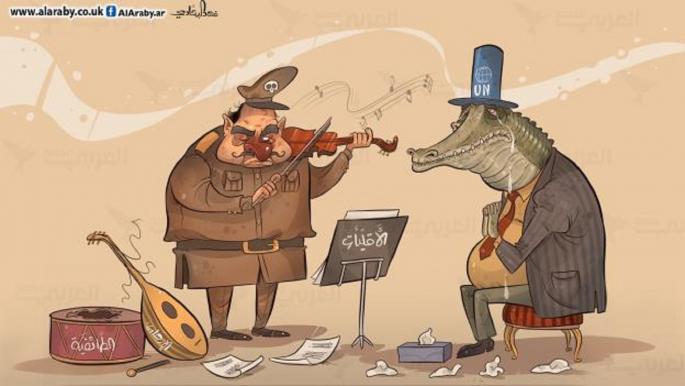
Minorities are increasingly entangled in a web of regional and international relations, making them part of geopolitical conflicts rather than merely internal demand movements. This dynamic reflects a profound shift in the nature of conflicts witnessed in many countries, where the internal demands of minorities are no longer limited to cultural or political rights but are closely linked to the strategic interests of major powers.
In recent years, we have seen how minorities in various regions of the world, such as the Middle East, Africa, and Eastern Europe, have become tools in geopolitical conflicts. External interventions, whether military or economic, often exploit these minorities to enhance their influence in the region. This complicates the ability of states to maintain internal stability under such complex circumstances.
Details of the Events
This phenomenon is clearly manifested in the conflicts occurring in countries like Syria and Iraq, where many regional and international actors have exploited sectarian and ethnic divisions to achieve their goals. For instance, in Syria, minorities have played a pivotal role in the conflict, being used by the Syrian regime as a tool to bolster its power, while other forces have sought to support specific minority groups to achieve their own interests.
This trend is not limited to the Middle East; it extends to other regions such as the Balkans, where tensions between minorities led to bloody conflicts in the 1990s. In this case, minorities were used as a means to dismantle states, resulting in civil wars and humanitarian crises.
Background & Context
Historically, minorities were considered part of the social fabric of states, but with the rise of geopolitical conflicts, these minorities began to be used as tools to achieve political objectives. In many cases, major powers have supported minorities in their struggles against central governments, leading to state disintegration and the emergence of new conflicts.
For example, in Libya, minorities have contributed to the ongoing conflict since 2011, being exploited by various factions to achieve political gains. This reflects how minorities are no longer just victims of conflicts; they have become key actors in shaping the political landscape.
Impact & Consequences
The consequences of this trend are manifold, as it can lead to the disintegration of states and an increase in the intensity of conflicts. Minorities that are used as tools in geopolitical conflicts may find themselves in confrontation with central governments, increasing the likelihood of armed conflicts.
Moreover, these dynamics can exacerbate humanitarian crises, as minorities face displacement and persecution. This underscores the necessity for the international community to intervene to protect the rights of these minorities and ensure they are not exploited in conflicts.
Regional Significance
In the Arab region, minorities are an essential part of the social fabric, but they face significant challenges amid ongoing conflicts. The exploitation of minorities in geopolitical conflicts could lead to the disintegration of Arab states and an increase in tensions between them.
Therefore, it is crucial for Arab states to promote dialogue and understanding among various social components to ensure internal stability and protect themselves from external interventions. Building bridges of trust between minorities and the state can contribute to achieving peace and stability in the region.
In conclusion, we must recognize that minorities are not merely marginalized groups; they are key actors in geopolitical conflicts. It is essential to address this phenomenon seriously to ensure the integrity of states and the stability of the region.