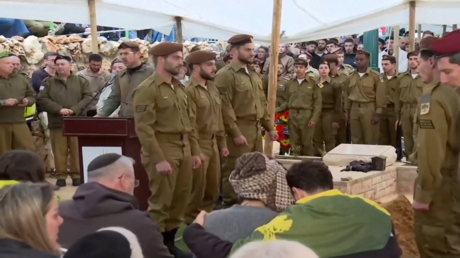
Large crowds gathered in Jerusalem on Thursday to pay their respects to Israeli soldier Oz Greenberg, who was killed in clashes in southern Lebanon. The 21-year-old soldier's death represents a painful loss for his family and the Israeli army, amidst escalating violence between Israeli forces and Hezbollah in recent weeks.
The funeral was held at Mount Herzl Cemetery, attended by family members, friends, and several military officials. A state of mourning has been declared in Israeli society, as Greenberg's death signifies a significant loss for both his family and the Israeli Defense Forces.
Details of the Incident
Oz Greenberg, who served in an elite unit of the Israeli army, was killed during a military operation in southern Lebanon, where tensions between Israel and Hezbollah have intensified. The Israeli army confirmed his death, expressing deep sorrow over the loss of one of its soldiers. This incident occurs at a sensitive time, with growing fears of a broader escalation in the region.
This incident is part of a series of clashes that have occurred along the Israeli-Lebanese border, which has seen a notable escalation in recent years. Rockets have been launched from Lebanon into Israeli territory, prompting military responses from the Israeli army, further complicating the security situation in the area.
Background & Context
Historically, the Israeli-Lebanese border has experienced ongoing tensions for decades, marked by several wars and conflicts between the two sides. Hezbollah, which is a major force in Lebanon, rejects the existence of Israel and considers it an enemy. This conflict has resulted in significant human losses on both sides, making it difficult to achieve lasting peace in the region.
In recent years, military activities along the border have increased, as both sides seek to enhance their military capabilities. This has led to heightened tensions, making it challenging to reach peaceful solutions. Soldier Greenberg is one of many soldiers who have lost their lives in this ongoing conflict.
Impact & Consequences
The death of Greenberg serves as a stark reminder of the security challenges facing Israel in the region. This incident is likely to increase pressure on the Israeli government to take more decisive military action against Hezbollah. It may also influence public opinion in Israel, with some calling for an escalation of military operations in Lebanon.
On the other hand, this incident could heighten tensions in Lebanon, as Hezbollah may exploit this event to strengthen its position among the Lebanese public. This could lead to an escalation of military confrontations, increasing the risk of a larger conflict in the region.
Regional Significance
Events in Lebanon directly impact the situation in the Arab region as a whole. The tensions between Israel and Hezbollah could have repercussions for neighboring countries, including Syria and Palestine. Any escalation in the conflict could lead to a flow of refugees and exacerbate humanitarian crises in the region.
These events also reflect the ongoing challenges faced by Arab countries in achieving stability and security. The persistent conflicts in the region affect economic and social development, making it difficult for Arab nations to achieve their developmental goals.
In conclusion, the death of soldier Oz Greenberg remains a painful event that highlights the ongoing tensions in the region. As fears of a greater escalation increase, the hope for achieving peace remains elusive.