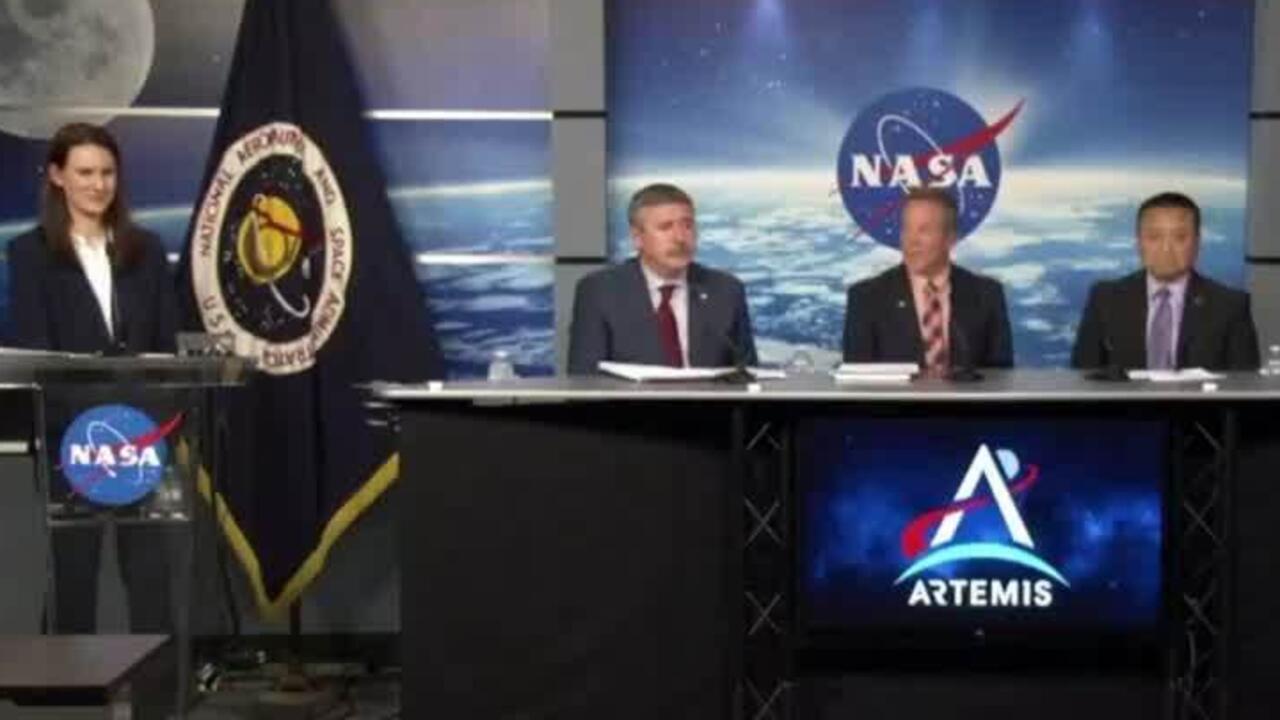
In an unprecedented achievement, NASA astronauts accomplished a historic feat during their Artemis-2 mission, becoming the first humans to venture away from Earth at an unprecedented distance. The four astronauts, Reid Wiseman, Victor Glover, Christina Koch, and Jeremy Hansen, spent approximately seven hours flying around the moon, reaching a distance of about 6,500 kilometers from the Earth's surface.
This mission is part of the Artemis program, which aims to return humans to the moon and develop new technologies for deep space exploration. During this journey, numerous systems and technologies used in the Orion spacecraft were tested, representing the next generation of space vehicles.
Event Details
The Orion spacecraft launched on its historic journey from the Kennedy Space Center in Florida, taking off early Monday morning. After several hours of ascent, the spacecraft entered orbit around the moon, allowing the astronauts to witness breathtaking views of the lunar surface.
Throughout the flight, various scientific experiments were conducted, including studying the effects of long-duration space travel on the human body, which is crucial for future missions to Mars.
Background & Context
Historically, space missions to the moon have been regarded as one of the most significant scientific achievements of the 20th century. Following the landing of Apollo 11 on the lunar surface in 1969, moon missions ceased for an extended period. However, the Artemis program represents a strong return for NASA to the moon, aiming to establish a permanent base on the lunar surface by 2028.
Through this program, NASA seeks to enhance international cooperation in space exploration, with many countries participating in these efforts, reflecting the importance of space as a realm for scientific collaboration.
Impact & Consequences
This mission is a crucial step towards achieving larger goals in space exploration, opening doors for more research and experiments that could lead to new discoveries. Additionally, the success of this mission strengthens the United States' position as a leading power in space.
Moreover, this journey may inspire future generations of scientists and engineers, emphasizing the importance of education in the fields of science, technology, engineering, and mathematics.
Regional Significance
As Arab nations strive to enhance their capabilities in space, NASA's success in this mission could serve as a catalyst for the development of Arab space programs. Many Arab countries, such as the United Arab Emirates, have shown significant interest in space exploration, reflecting the importance of this field in achieving sustainable development.
Furthermore, international cooperation in space could open new horizons for Arab countries, enhancing opportunities for investment in technology and innovation.