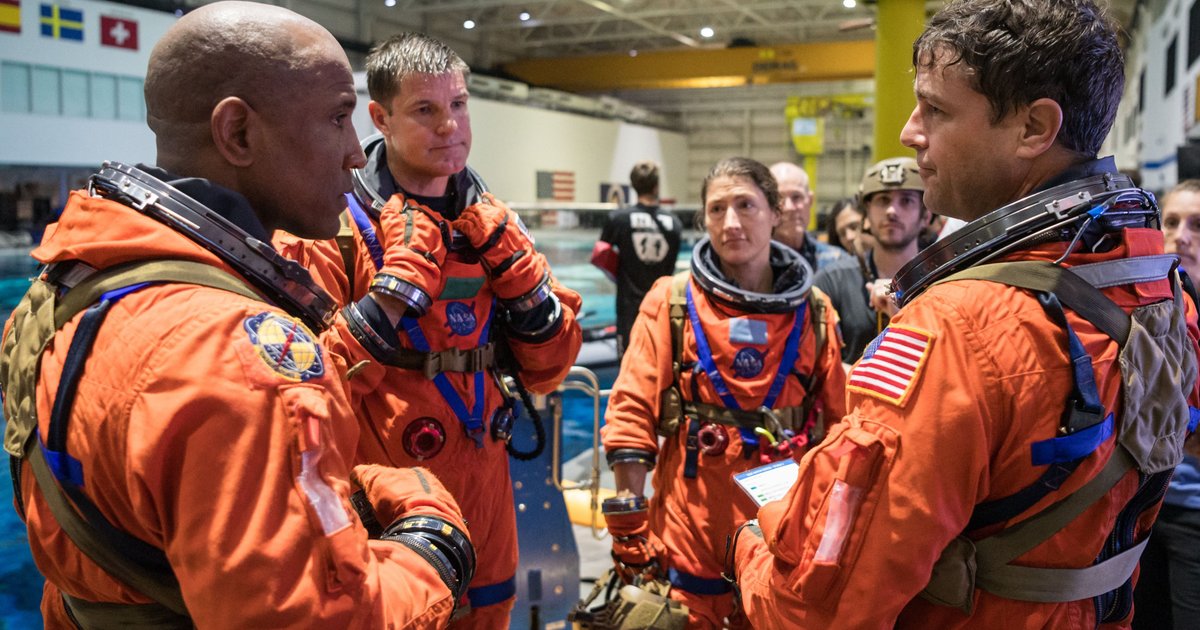
NASA is preparing to launch the Artemis-2 mission, which will send four astronauts on a journey around the Moon on the evening of April 1 from Cape Canaveral, Florida. This mission marks the first crewed flight around the Moon in over half a century, with the last crewed mission to the Moon occurring in 1972.
The mission will last nine days, during which the astronauts will fly around the Moon, providing them with the opportunity to explore the outer space environment up close. This event is considered a significant step in the Artemis program, which aims to return humans to the Moon and expand the scope of space exploration.
Details of the Mission
The Artemis-2 mission includes four astronauts: Jessica Watkins, John Shoffner, Christina Koch, and David Saint-Jacques. The Orion spacecraft will transport the astronauts on this journey, which will involve flying around the Moon before returning to Earth. This mission is expected to provide valuable data on how to live and work in space for extended periods, which is essential for future missions to Mars.
This mission is part of NASA's vision for space exploration, as the agency seeks to enhance its capabilities in outer space travel and develop new technologies that support future explorations.
Background & Context
NASA was established in 1958, and since then, it has conducted several historic missions, including the Apollo program that sent humans to the Moon. After the Apollo program ended, crewed activities around the Moon decreased, but with advancements in technology and increased interest in space, NASA relaunched the Artemis program in 2017. This program aims to return to the Moon and establish a permanent base, paving the way for Mars exploration.
Artemis-2 is part of a series of missions that will include Artemis-3, which aims to land humans on the Moon's surface again, marking a historic achievement in space exploration.
Impact & Consequences
The Artemis-2 mission represents a significant step in enhancing international cooperation in space, as NASA seeks to collaborate with international partners in space exploration. This mission is expected to foster innovation in technology and science, contributing to the development of new technologies that can be utilized in various fields on Earth.
Moreover, the success of this mission could stimulate further investments in the space sector and increase youth interest in science and technology, potentially leading to the development of new skills in this vital area.
Regional Significance
As Arab countries continue to develop their space programs, the success of the Artemis-2 mission could positively impact these efforts. Many Arab nations, such as the United Arab Emirates, have launched their own space programs, and this mission serves as a model for space exploration.
This mission could inspire new generations in the Arab world to engage in science and technology fields, enhancing the region's ability to compete in this vital sector.
The Artemis-2 mission represents a new beginning in space exploration, opening new horizons for scientific research and international cooperation. As the launch date approaches, the world looks forward to the outcomes of this historic mission.