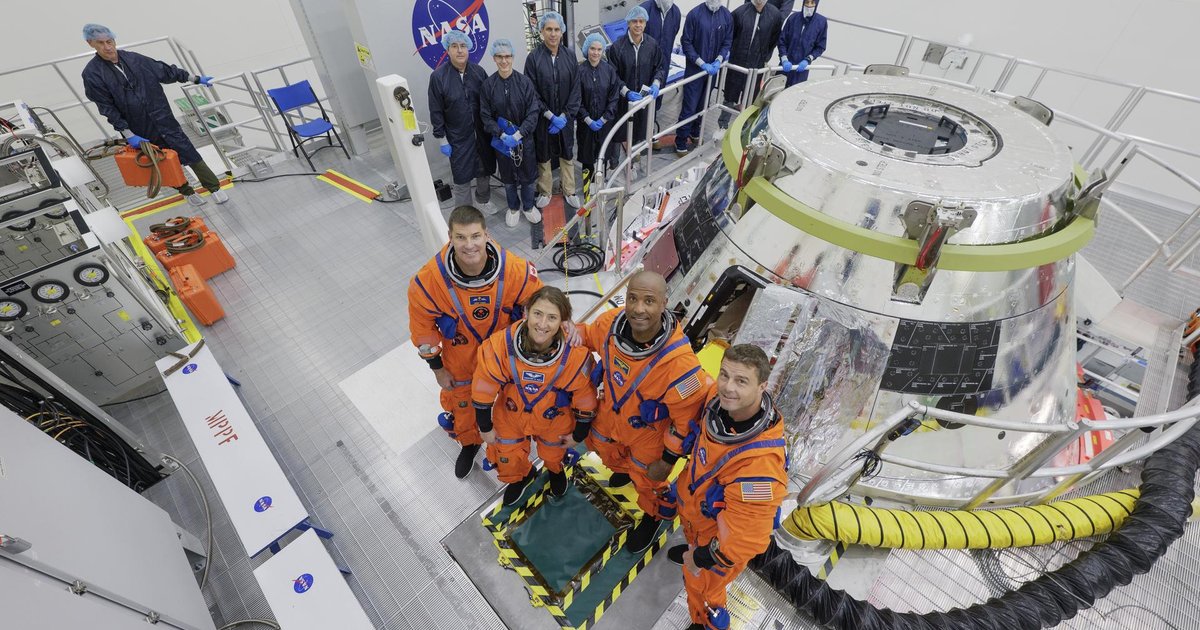
NASA has revealed the crew for the Artemis mission, marking the first crewed journey to the moon in more than half a century. The mission includes four astronauts who will explore the lunar surface as part of efforts to return to deep space. The mission is scheduled to launch later this year, representing a significant step in the history of space exploration.
The crew consists of astronauts with diverse backgrounds, including Christina Koch, Jason Robinson, Stephen Bossard, and Alexander Gerst. These astronauts represent a range of countries and experiences, reflecting diversity and innovation in the field of space exploration.
Event Details
The Artemis mission is part of a larger program aimed at returning humans to the moon by 2024. The mission will utilize new and advanced technologies, including a spacecraft known as Orion, which will transport the astronauts to lunar orbit. The spacecraft will conduct scientific experiments and explorations aimed at gaining a better understanding of the lunar environment.
Through this mission, NASA aims to achieve multiple objectives, including testing new technologies and gathering critical data to support future exploration plans, including crewed missions to Mars.
Background & Context
The history of lunar exploration dates back to 1969 when the first crewed spacecraft, Apollo 11, landed on the moon's surface. Since then, crewed missions to the moon have ceased, making the Artemis mission a milestone in space history. After more than 50 years of hiatus, humanity is returning to the moon, reflecting technological advancements and a growing interest in space.
This mission comes at a time when there is increasing global interest in space exploration, with many countries seeking to develop their own space programs. There is also a growing interest from the private sector in space, opening new avenues for collaboration and exploration.
Impact & Consequences
The Artemis mission is a strategic step for NASA, aiming to enhance its position in the field of space. This mission could also lead to increased international cooperation in space, with other countries potentially participating in future programs.
Economically, this mission could contribute to the growth of industries related to technology and space, creating new job opportunities and fostering innovation. Furthermore, space exploration could lead to new discoveries in various fields, such as science and technology.
Regional Significance
For the Arab region, the Artemis mission represents an opportunity to enhance cooperation in the field of space. Many Arab countries have begun developing their own space programs, such as the United Arab Emirates, which launched the Hope Probe to Mars. This mission could encourage Arab nations to invest in research and development in the field of space.
There is also potential for strengthening collaboration between Arab countries and global space agencies, which could lead to knowledge and experience sharing in this advanced field.
The Artemis mission represents a new beginning for space exploration, as humanity returns to the moon after more than 50 years. This mission is not just a journey to the moon; it is a step towards the future, opening new horizons for exploration and international cooperation.