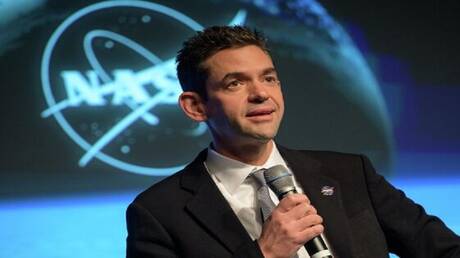
NASA Administrator Jared Isaacman has confirmed that the possibility of extraterrestrial beings remains, emphasizing that the search for life beyond Earth is one of the agency's fundamental missions. This commitment reflects NASA's ongoing efforts to explore the universe for signs of life.
Isaacman's remarks come at a time when research and studies regarding the existence of life in other parts of the universe are on the rise. NASA aims to explore planets and moons that may harbor conditions suitable for life, such as Mars and the moons of Jupiter and Saturn.
Details of the Event
In his speech, Isaacman explained that the agency employs advanced technologies to monitor distant planets and analyze data that may indicate the presence of life. He noted that these efforts include sending spacecraft to nearby planets, as well as utilizing sophisticated telescopes to observe astronomical phenomena.
He also stressed that the search for life beyond Earth is not merely a hypothesis; it is a scientific project supported by increasing evidence suggesting that life may exist in unexpected places. Isaacman pointed out that the agency is developing new tools to analyze the atmospheres of distant planets, which could help reveal signs of life.
Background & Context
Historically, the idea of extraterrestrial beings has been a controversial topic, with opinions varying between supporters and skeptics. As science and technology advance, new evidence has emerged to support the notion of life beyond Earth. Recent years have seen an increase in astronomical discoveries indicating the presence of Earth-like planets in distant regions.
NASA is considered a pioneer in this field, having launched numerous exploratory missions aimed at gaining a better understanding of the universe. Among these missions is the Kepler mission, which has discovered thousands of planets outside our solar system, thereby increasing the likelihood of life existing elsewhere.
Impact & Consequences
If the existence of life beyond Earth is proven, it could fundamentally change our understanding of the universe and our place within it. This discovery would open new horizons in the fields of science, philosophy, and religion, potentially leading to a reevaluation of many concepts we hold about life and existence.
Furthermore, this discovery could impact international relations, as major countries would seek to collaborate in the field of space research. Investments in this sector may also increase, fostering innovation and technological advancement.
Regional Significance
For Arab countries, interest in space sciences could open new avenues for scientific and technological collaboration. Such research may enhance education and scientific inquiry in the region, helping to build local capacities in space and technology fields.
This interest could also motivate Arab youth to engage in science and engineering fields, contributing to the development of the knowledge economy in Arab nations.
In conclusion, the search for life beyond Earth is not just a dream; it is a reality that scientists are striving to achieve. As NASA and other agencies continue their efforts, hope remains alive for discovering what lies beyond our planet.