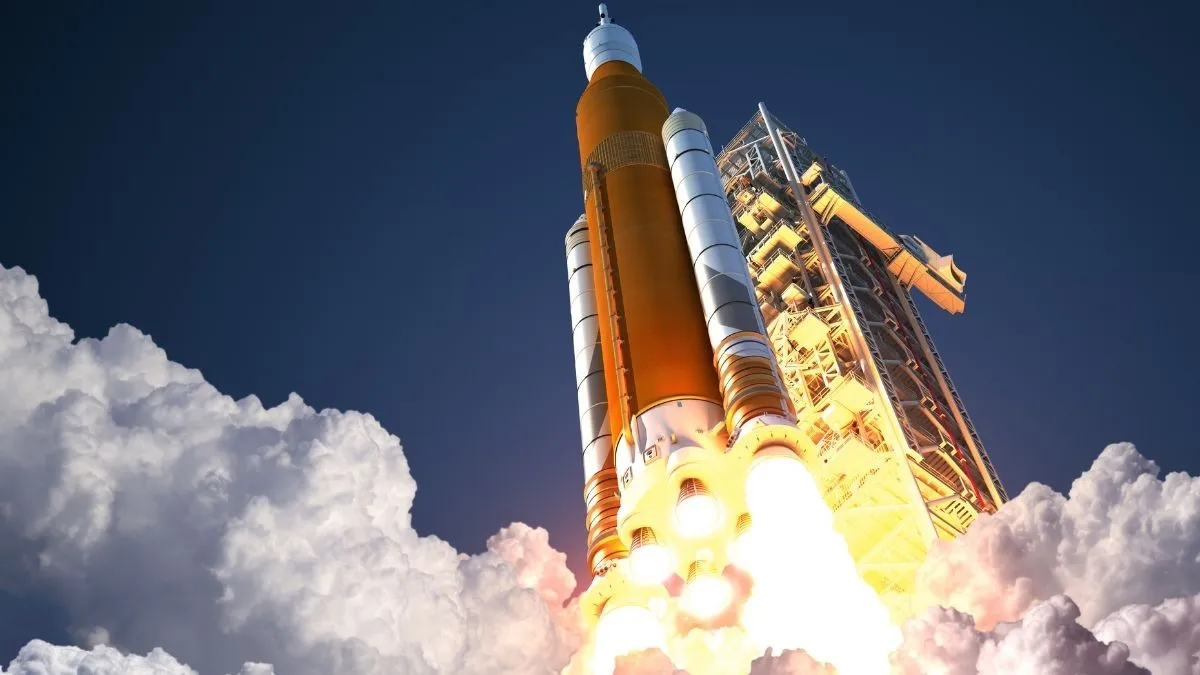
NASA successfully launched the Artemis II mission on Wednesday evening, carrying four astronauts on a journey to the moon. This marks the first time astronauts have been sent to the moon in over 50 years. The mission is part of the Artemis program, which aims to return humans to the moon by 2028, with the spacecraft set to orbit the moon for a duration of 10 days.
The four astronauts participating in this mission are Reid Wiseman, Victor Glover, Christina Koch, and Canadian Jeremy Hansen. They will embark on their journey aboard the Orion capsule, representing the first crewed flight of the Space Launch System (SLS) rocket. This mission was postponed last February due to a helium supply issue.
Details of the Event
The Artemis II mission is a crucial step in the Artemis program, which aims to explore the moon and return humans to its surface. After multiple delays, NASA has finally managed to launch this mission, marking a new beginning for space exploration. The flight will allow the astronauts to test new systems and technologies that will be used in future missions.
The next mission, Artemis III, is planned to be the one aimed at landing on the moon's surface, but it has been postponed from 2027 to 2028, as it has been converted into a test flight. The last human landing on the moon occurred during the Apollo 17 mission in 1972.
Background & Context
The history of lunar exploration dates back to the 1960s when NASA launched the Apollo program, which saw humans land on the moon for the first time. After the Apollo program ended, human activities on the moon declined, but interest in space has surged in recent years, with new programs like Artemis emerging.
The Artemis program is part of NASA's broader vision for space exploration, aiming to enhance international cooperation in space and develop new technologies. The program also seeks to achieve scientific and commercial goals, opening new horizons for space exploration.
Impact & Consequences
The Artemis II mission is a milestone in the history of space exploration, as it brings humanity back to the moon after decades of absence. This mission will aid in the development of new technologies that may be essential for future missions to Mars and other planets.
Furthermore, the success of this mission may encourage more countries to invest their resources in space exploration, enhancing international collaboration in this field. Additionally, this mission will pave the way for further innovations in technology and science.
Regional Significance
Although the Arab world does not have a direct role in the Artemis program, the success of this mission may inspire Arab countries to invest in their own space programs. Many Arab nations have already begun developing their own space initiatives, such as the United Arab Emirates, which launched the Hope Probe to Mars.
Enhancing cooperation in space could contribute to sustainable development in the region, as space technology can be utilized in various fields such as agriculture, environment, and communications.