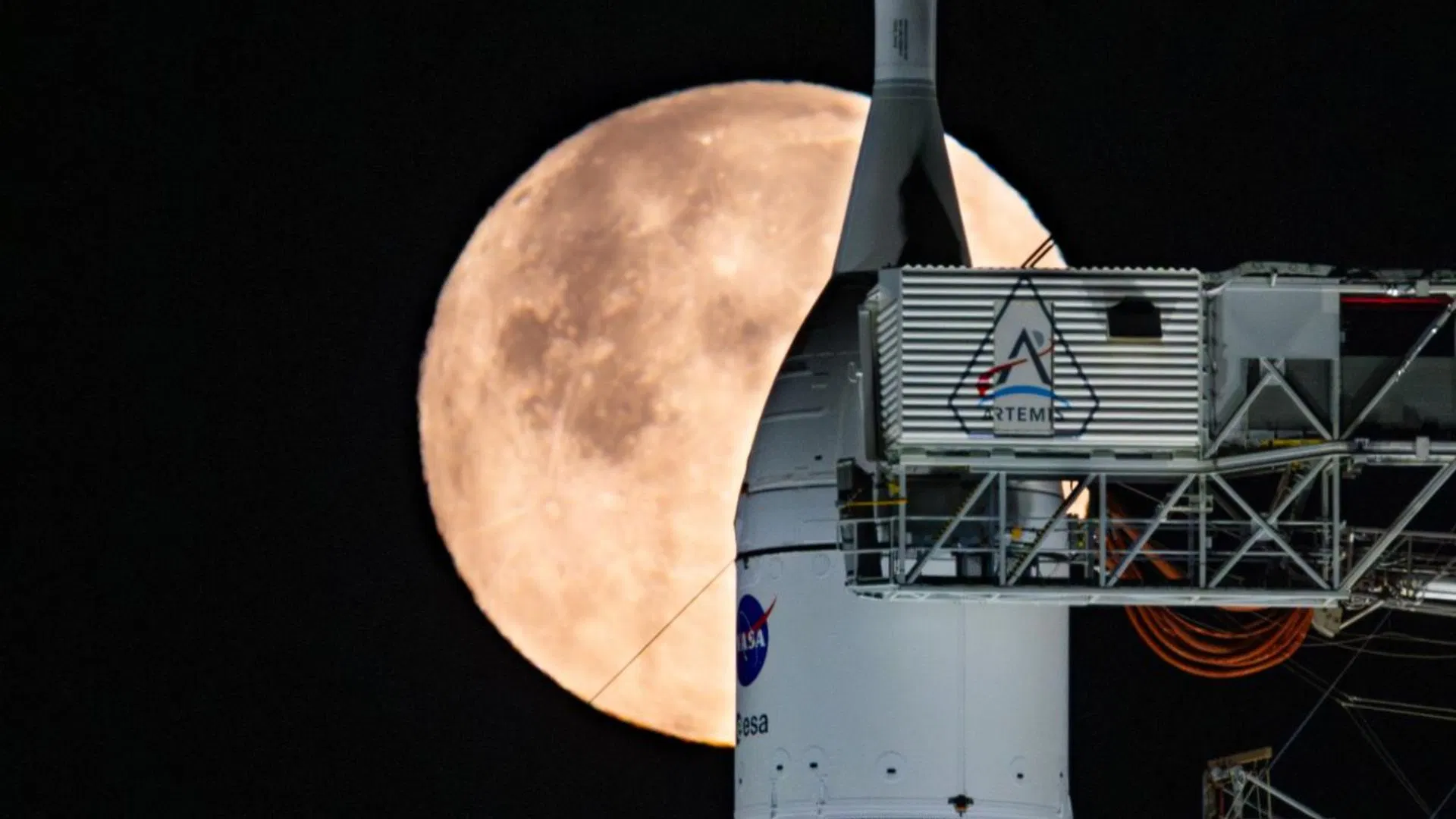
NASA has launched its crew of astronauts on a historic journey to the moon, achieving a stable orbit that paves the way for humanity's return to the lunar surface after more than 50 years. This mission, known as Artemis II, represents an important step in the agency's future plans as it seeks to explore deep space and develop new technologies.
The mission launched from the Kennedy Space Center in Florida, where the Space Launch System rocket, considered the most powerful in human history, was prepared to send the spacecraft toward the moon. The journey aims to test the systems and technologies necessary for returning to the moon, in addition to preparing for future missions that may include trips to Mars.
Event Details
The Artemis II mission consists of four astronauts who will spend about ten days in space, conducting scientific experiments and tests on various systems. This mission is part of the broader Artemis program, which aims to return humans to the moon by 2025, focusing on establishing a permanent base on the lunar surface.
This mission is a critical step in achieving NASA's goals, demonstrating the agency's commitment to sustainable space exploration. It also marks a return for humanity to the moon after more than half a century, as the last crewed mission to the moon was Apollo 17 in 1972.
Background & Context
NASA was established in 1958, and since then, it has achieved numerous milestones in space exploration. The Apollo program launched by the agency in the 1960s and 1970s played a significant role in achieving the first human landing on the moon. However, after the conclusion of the Apollo program, crewed lunar activities declined, making this new mission a historic return.
In recent years, competition in space exploration has increased, with private companies such as SpaceX and Blue Origin emerging, prompting government agencies to bolster their programs. The Artemis program is a response to these challenges, aiming to enhance international cooperation in space exploration.
Impact & Consequences
The Artemis II mission is a strategic step for NASA, as it will help develop new technologies that can be used in future missions. It also enhances the United States' position as a leading power in space, which may lead to increased investments in this sector.
Moreover, the success of this mission could encourage other countries to engage in space exploration programs, fostering international collaboration in this field. This mission may also open new avenues for scientific research, contributing to a better understanding of the universe.
Regional Significance
Although the mission focuses on the moon, its impact may extend to the Arab region. Developments in space could encourage Arab countries to enhance their investments in this sector, potentially leading to the development of their own space programs. Additionally, international cooperation in space could open new doors for collaboration between Arab countries and others.
In conclusion, the Artemis II mission represents an important step toward a bright future in space exploration, rekindling hope for a return to the moon and opening new horizons for scientific research and international cooperation.