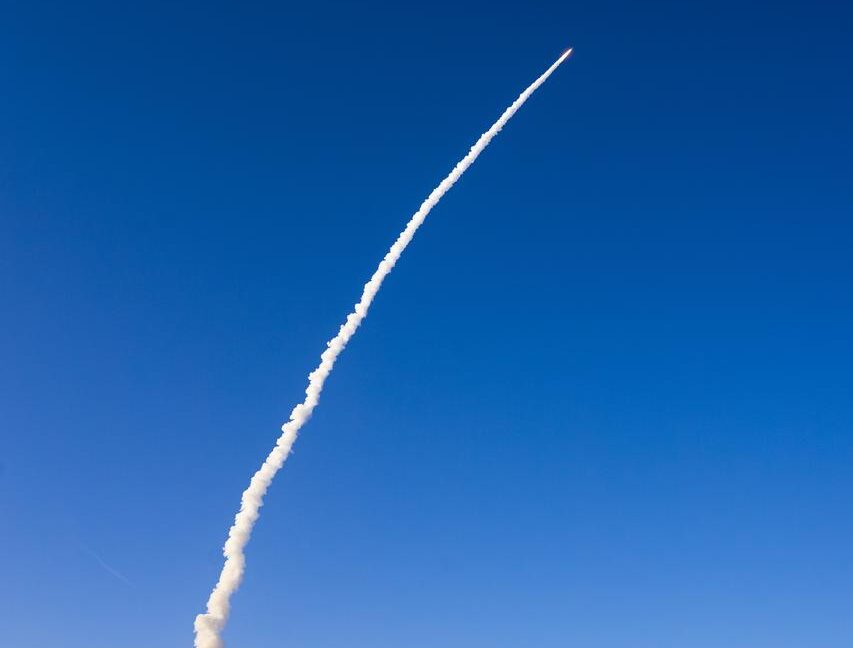
NASA has announced the launch of four astronauts on a historic journey to the moon, where officials expressed their great excitement about this mission. This flight is part of the Artemis program, which aims to return humans to the moon after more than fifty years since the last human landing on its surface.
The four astronauts, carefully selected, represent a diverse range of experiences and specialties, reflecting NASA's new direction towards diversifying its teams. The mission is set to launch later this year and will serve as an important step towards achieving larger goals in space exploration.
Mission Details
The upcoming mission involves several stages, where the astronauts will fly around the moon before landing on its surface. This mission is not just an exploratory journey; it also aims to test new technologies that could be used in the future for exploring Mars.
The mission is expected to last several weeks, during which the astronauts will collect data and conduct scientific experiments while in space. NASA has expressed hope that this mission will contribute to enhancing human understanding of space and developing new technologies.
Background & Context
The history of lunar exploration dates back to 1969 when the first human mission, Apollo 11, landed on its surface. Since then, there have been many missions that contributed to gathering valuable data about the moon. However, the Artemis program represents a strong return to lunar exploration after decades of hiatus.
Through the Artemis program, NASA aims to establish a permanent base on the moon, enabling scientists to conduct long-term research. This step is considered essential for developing new technologies that can be used in missions to Mars and other distant destinations.
Impact & Consequences
This mission is a significant step not only for NASA but also for science and technology worldwide. The success of this mission could encourage more countries to invest their resources in space exploration, potentially leading to greater international collaboration in this field.
Moreover, this mission may open new avenues for innovation in areas such as engineering and medicine, where technologies developed in space could be used to improve life on Earth. Additionally, lunar exploration could provide new resources such as hydrogen and helium-3, which could have a significant impact on future energy solutions.
Regional Significance
Although Arab countries were not among the main participants in this mission, there is a growing interest in space in the region. Many Arab nations, such as the United Arab Emirates, have launched their own space programs, reflecting an increasing interest in scientific exploration.
This mission could inspire new generations of scientists and engineers in the Arab world and emphasize the importance of education in science and technology fields. It may also open doors for collaboration between Arab countries and global space agencies.
In conclusion, the launch of this mission to the moon represents an important step in the history of space exploration, reflecting the significant progress humanity has made in this field. As technological developments continue, the future looks promising for exploring more of the universe's mysteries.