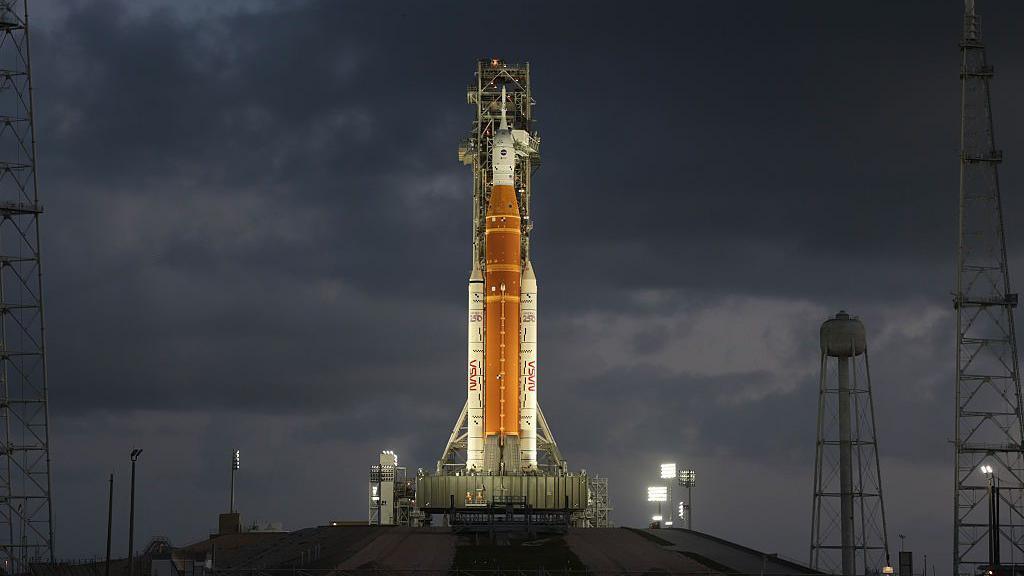
NASA is gearing up for the launch of the Artemis II mission, with weather forecasts indicating favorable conditions despite some clouds. This launch is part of the Artemis program, which aims to return humans to the Moon by 2024 and reflects significant advancements in space exploration.
All eyes are on the Kennedy Space Center in Florida, where the giant rocket carrying the Artemis II spacecraft will be launched. Weather conditions are expected to be suitable, increasing the chances of a successful launch. Meteorological experts have confirmed that the clouds will not hinder the launch process, instilling optimism among the scientists and engineers involved in this monumental project.
Event Details
The Artemis II mission will see astronauts sent into lunar orbit, where they will conduct scientific and exploratory experiments. This launch is a crucial step towards achieving NASA's ambitious goals, which include establishing a permanent base on the lunar surface and exploring Mars in the future.
It is noteworthy that Artemis II is the second mission in a series aimed at returning to the Moon. The first mission, Artemis I, was an uncrewed test of the rocket and spacecraft, achieving significant success in November 2021.
Background & Context
The history of space exploration dates back decades, with the United States sending the first human to the Moon in 1969 during the Apollo 11 mission. Since then, space technologies have evolved significantly, allowing space agencies to design more complex and ambitious missions.
The Artemis program represents a strong return for the United States to the Moon and reflects the increasing competition in the space sector among major nations. It also opens new avenues for international cooperation in space exploration, as many countries seek to participate in these efforts.
Impact & Consequences
The success of the Artemis II mission could have significant implications for the future of space exploration. In addition to enhancing the United States' status as a leading power in this field, success in this mission may encourage other countries to invest in their space programs.
Furthermore, the scientific results achieved through this mission could contribute to our understanding of Earth, the Moon, and the universe in general. This mission is expected to enhance innovation in technology and engineering, benefiting many industries.
Regional Significance
Although the Artemis II mission focuses on the Moon, it may have potential impacts on the Arab region. With increasing interest in space in Arab countries, this mission may inspire new generations of scientists and engineers in the region.
Many Arab nations, such as the United Arab Emirates and Saudi Arabia, are striving to develop their own space programs, and American successes in this field may encourage cooperation among Arab countries in space exploration.
In conclusion, the launch of Artemis II represents an important step towards a bright future for space exploration, reflecting the significant progress humanity has made in this field. The success of this mission could open new avenues for international cooperation and enhance scientific and technological innovation.