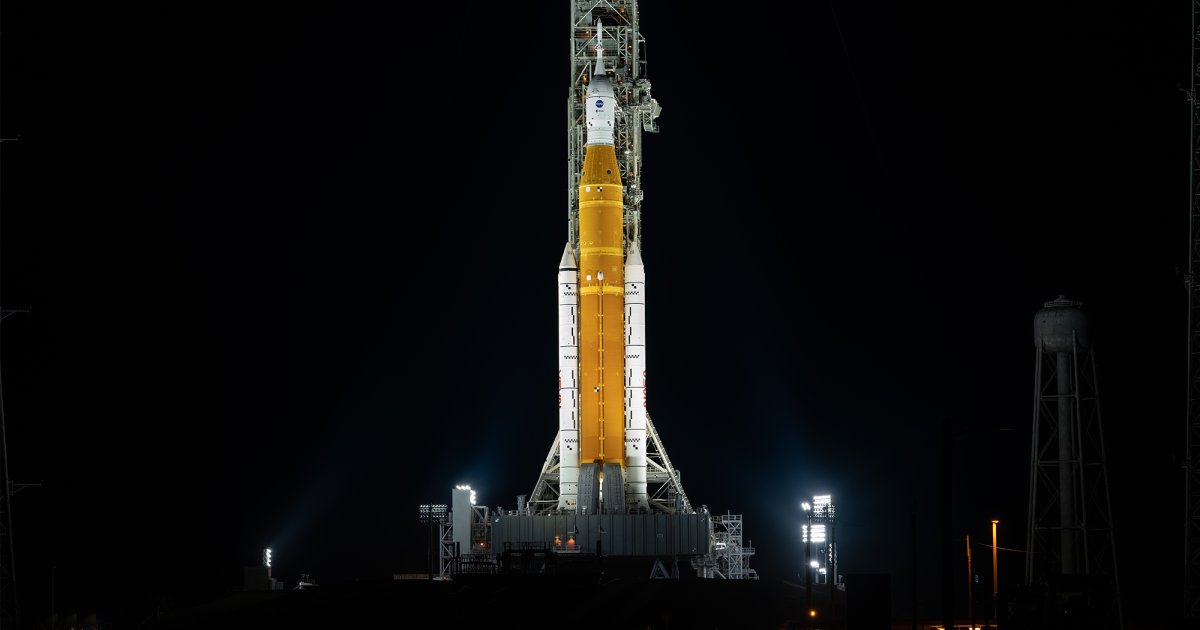
NASA is preparing to return to the Moon through the Artemis program, which aims to explore the lunar secrets that have remained elusive for decades. These new missions are set to begin in the coming years, with expectations to contribute to a deeper understanding of the Moon's history and its natural resources.
The Moon is considered one of the most studied celestial bodies in our solar system; however, many questions about it remain unanswered. The Artemis missions, which include sending astronauts to the lunar surface, will allow scientists to collect and analyze new samples, potentially helping to solve some longstanding mysteries.
Details of the Artemis Missions
The Artemis missions are expected to launch in the coming years, with Artemis II and III sending astronauts into lunar orbit, while Artemis IV will land them on the surface for the first time since the Apollo era. This step represents a new beginning for lunar exploration, as NASA aims to establish a permanent presence on the Moon.
Among the mysteries that may be solved is the theory of the Moon's origin, which suggests it formed after a Mars-sized planet collided with Earth around 4.5 billion years ago. However, this theory relies on complex models and limited samples collected during the Apollo missions. Access to new, unaltered rocks will enable scientists to obtain stronger evidence.
Background & Context
For decades, the Moon was believed to be completely dry, but recent research has shown the presence of ice in the dark craters at the south pole. The question now is: how much of this ice exists, and can it be utilized in the future? The Artemis missions will examine these craters to determine the quantity of ice and whether it can be extracted.
Additionally, the Moon's internal structure remains one of the major mysteries. Although seismometers sent during the Apollo missions detected lunar quakes, the available data is limited. Having humans on the Moon will allow for the installation of new seismometers in previously unstudied areas.
Impact & Consequences
The return to the Moon opens new horizons for understanding planetary history and formation. The mysteries surrounding the far side of the Moon, characterized by rugged terrain, may be unraveled through the Artemis missions. If samples are collected from this side, scientists will be able to determine its age, composition, and thermal evolution.
Moreover, the new missions may shed light on an unexpected magnetic phenomenon on the Moon, as Apollo samples showed evidence of magnetism, indicating that the Moon may have experienced a strong internal dynamo. New samples will help determine when this dynamo existed and its strength.
Regional Significance
The Artemis missions not only aim to explore the Moon but also have implications for future space exploration efforts. Understanding the Moon's resources could pave the way for sustainable human presence beyond Earth, which is crucial for long-term space missions.
In conclusion, the Artemis program represents a significant step toward space exploration and understanding our planet's history, potentially opening new avenues for scientific research.