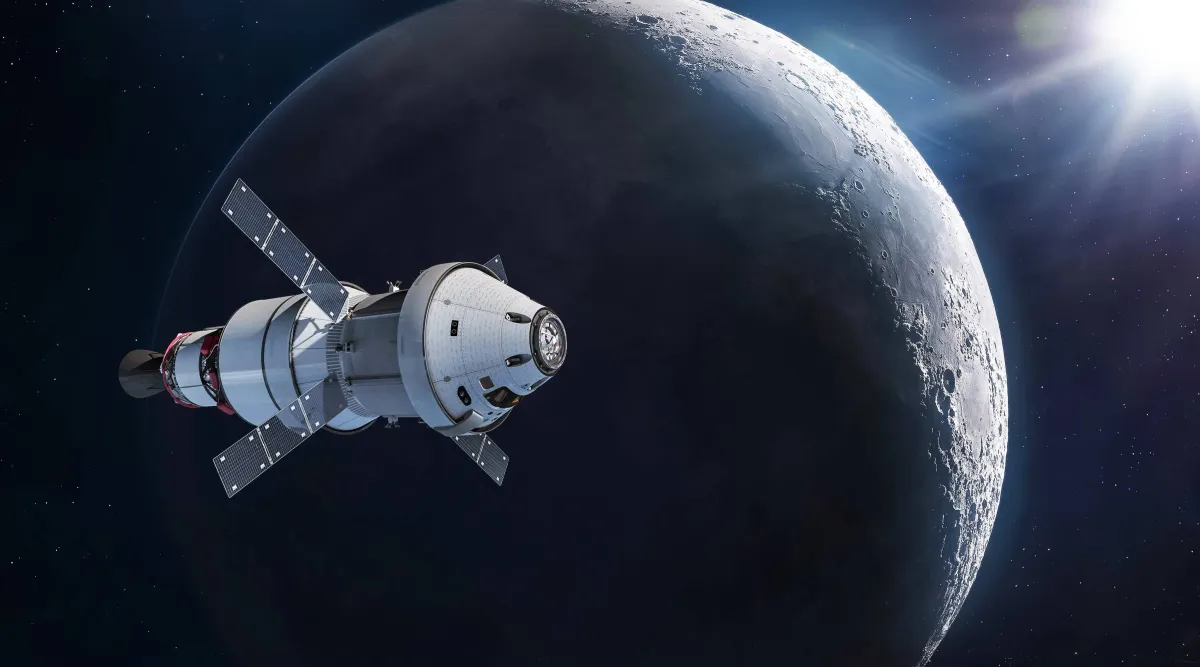
NASA is gearing up to launch a historic new mission, sending four astronauts—three from the United States and one from Canada—on a ten-day journey around the Moon. This mission, known as Artemis 2, is the first of its kind since the Apollo 17 mission in 1972, opening new horizons for lunar exploration.
If successful, this mission is expected to be followed by others aimed at returning astronauts to the lunar surface in the coming years. The Artemis program includes ambitious plans for lunar exploration for both scientific and commercial purposes, including the extraction of resources such as frozen water.
Event Details
NASA will utilize the Space Launch System (SLS), one of the largest rockets ever developed, standing at 322 feet tall and weighing 5.75 million pounds when fully fueled. It will be launched from the Kennedy Space Center in Florida and is capable of sending a payload of up to 60,000 pounds to the Moon. This rocket represents a significant technological advancement, combining both old and new technologies.
The Orion spacecraft, which will carry the astronauts, is designed to support crewed missions lasting up to 21 days. The spacecraft consists of two main sections: the crew module that will return to Earth and the service module that provides essential support systems.
Background & Context
After the United States achieved a historic milestone with Neil Armstrong's landing on the Moon in 1969, interest in lunar exploration waned for a long period. However, with a renewed interest in space, NASA has once again prioritized the Moon, especially during the administration of former President Donald Trump, and these priorities have continued under the current administration of President Joe Biden.
Through the Artemis program, NASA aims to explore the Moon for scientific and commercial purposes, focusing on resource extraction such as frozen water and helium-3, which could have applications in future energy production.
Impact & Consequences
If the Artemis 2 mission is successful, it will enhance the United States' position in the space race and provide a significant boost to scientific and technological research. Success in lunar exploration could also open new avenues for future missions to Mars and other planets.
Moreover, this mission represents an opportunity to strengthen international cooperation in space, as a Canadian astronaut is participating in this mission, reflecting the importance of global partnerships in space exploration.
Regional Significance
This mission presents an opportunity for Arab countries to enhance their interest in space and modern technology. With increasing investments in space programs in countries like the United Arab Emirates, this mission could inspire Arab astronauts and open new avenues for collaboration in the field of space.
In conclusion, the Artemis 2 mission represents a significant step toward space exploration and reflects NASA's ambitious goals to return to the Moon, potentially leading to new scientific discoveries and future commercial applications.