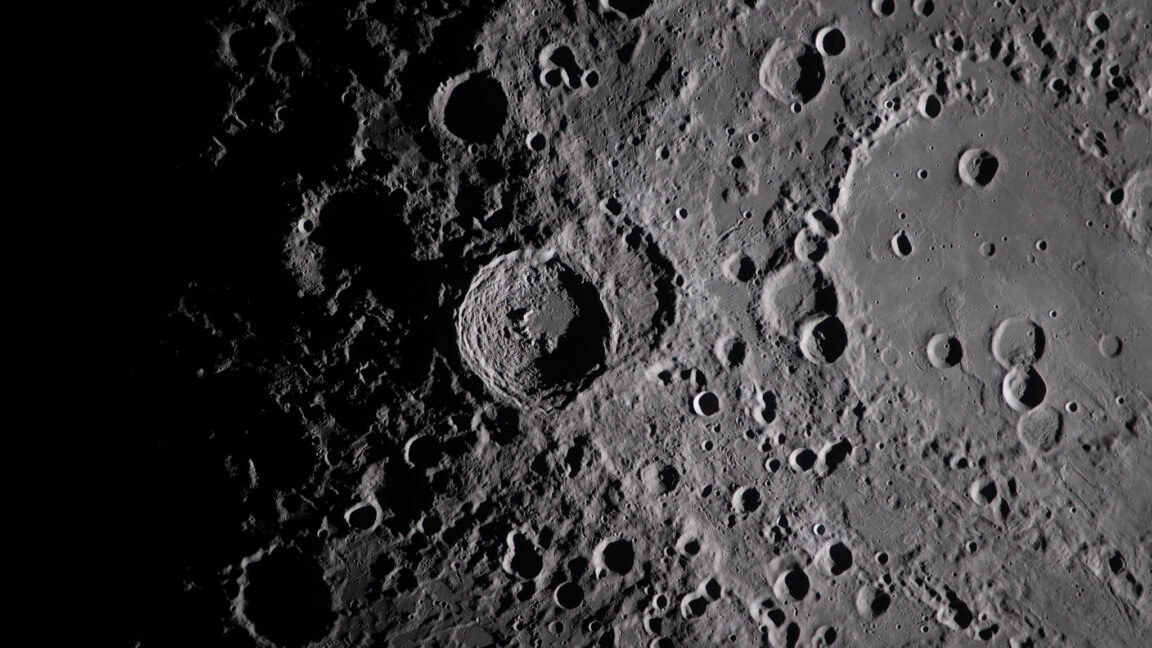
NASA has announced the release of a remarkable set of images of the Moon, taken by the Artemis spacecraft. These images, representing a significant achievement in space exploration, offer detailed insights into the lunar surface, enhancing our understanding of its characteristics and history.
The release of these images is part of NASA's ongoing efforts to explore the Moon, with the mission aiming to return humans to the lunar surface by 2024. The new images reflect the precision of the technology used in the spacecraft, showcasing details never seen before, thereby opening new avenues for scientific research.
Event Details
The images released by NASA depict stunning views of the Moon's surface, including craters and diverse terrain. Captured using advanced cameras, these images allow scientists and researchers to study the Moon's features with greater accuracy. They also form part of a larger dataset aimed at supporting future research on the Moon.
Through the Artemis mission, NASA seeks to enhance international collaboration in space exploration, involving partnerships with other space agencies, which underscores the importance of cooperation in exploring outer space. The new images will assist in identifying suitable landing sites and exploring potential resources on the lunar surface.
Background & Context
The history of lunar exploration dates back to the 1960s when the Apollo 11 mission achieved the first human landing on the Moon in 1969. Since then, numerous missions have targeted the Moon, but the Artemis mission represents a new step towards deeper lunar exploration. This mission aims to establish a permanent base on the Moon, enabling humans to live and work there for extended periods.
The new images are part of broader efforts to explore outer space, as NASA aims to understand more about other planets and moons. This mission comes at a time of increasing global interest in space exploration, reflecting the significance of scientific research in this field.
Impact & Consequences
The newly released images contribute to enhancing scientific knowledge about the Moon, which may lead to new discoveries in various fields such as geology and physics. Furthermore, these images bolster opportunities for international collaboration in space, potentially leading to new partnerships among countries in space exploration.
These discoveries are expected to influence future research, as they may help identify new landing sites and explore potential resources. Additionally, these images could inspire a new generation of scientists and engineers to work in the field of space exploration.
Regional Significance
The Artemis mission presents an opportunity for Arab countries to enhance their participation in space exploration. With growing interest in space within the region, this mission could inspire Arab nations to develop their own space programs. Moreover, collaboration in space could open new avenues for scientific and technological cooperation between Arab countries and others.
In conclusion, the new images of the Moon from the Artemis mission represent an important step towards a deeper understanding of space. These discoveries not only enhance scientific knowledge but also open new horizons for international cooperation in the field of space.