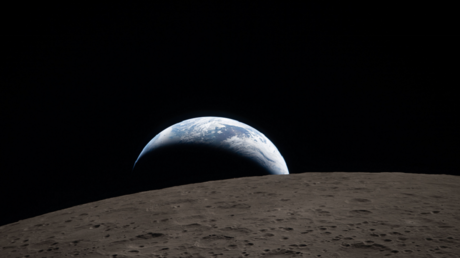
NASA, the American space agency, has announced the release of a remarkable set of images taken by the Artemis 2 mission, which reveal unprecedented scenes of the Moon's far side. These images mark a significant step in space exploration, recalling historic moments from the space exploration era and opening new horizons for understanding the Moon and its history.
The Artemis 2 mission is part of the Artemis program, which aims to return humans to the Moon by 2024. This mission will be the first to send astronauts to the Moon since Apollo 17 in 1972. The captured images reflect the significant technological advancements achieved by NASA in the field of space exploration, highlighting the beauty of the Moon from previously unseen angles.
Event Details
The images released by NASA showcase breathtaking views of the Moon's far side, including its unique terrain and geographical features that were not fully known before. These images were captured during the spacecraft's journey around the Moon, utilizing advanced imaging techniques to provide precise details about the lunar surface.
These images are part of a larger dataset that will be analyzed by scientists to gain a better understanding of the Moon's history and evolution. This mission also contributes to enhancing knowledge about the potential for future space exploration, including the possibility of establishing bases on the Moon.
Background & Context
The history of lunar exploration dates back to the 1960s when the United States sent the first human to the Moon through the Apollo program. Since then, numerous studies and missions have been conducted to explore the Moon, but the Artemis 2 mission represents a new step towards returning humans to the Moon and exploring it more deeply.
Through the Artemis program, NASA aims to achieve multiple objectives, including enhancing international cooperation in space exploration and developing new technologies that can benefit humanity. This mission also comes amid global competition in space exploration, as other countries like China and Russia seek to strengthen their presence in space.
Impact & Consequences
The images captured by Artemis 2 represent a turning point in our understanding of the Moon, opening new avenues for scientific and technological research. These images could lead to new discoveries about potential resources on the Moon, such as water and minerals, which may contribute to the development of new technologies for space exploration.
Furthermore, the success of this mission could encourage more investments in the space sector and enhance international cooperation in this field. Additionally, this mission may inspire new generations of scientists and engineers to explore space and realize their dreams of traveling to other planets.
Regional Significance
Space exploration represents a significant opportunity for Arab countries to enhance their role in this field. Arab nations can benefit from collaboration with global space agencies like NASA, contributing to the development of their technological and scientific capabilities.
Moreover, the growing interest in space may encourage Arab countries to invest in their own space programs, potentially leading to advancements in science and technology. These steps could be crucial for achieving sustainable development and fostering innovation in the region.
The images released by NASA from the Artemis 2 mission represent a new beginning in lunar exploration, opening new horizons for scientific research and international cooperation. This mission remains a symbol of hope and human ambition in exploring space.