NASA has unveiled three breathtaking images of Earth captured by astronauts during the Artemis II mission using an iPhone 17 Pro Max camera. The images show Commander Reid Wiseman and astronaut Christina Koch gazing at Earth through the Orion spacecraft window.
The photos were taken on April 2, the second day of the mission, where all four astronauts were equipped with iPhone 17 Pro Max devices for personal documentation, including photos and videos. This technological use is part of NASA's efforts to streamline documentation processes in space.
Details of the Event
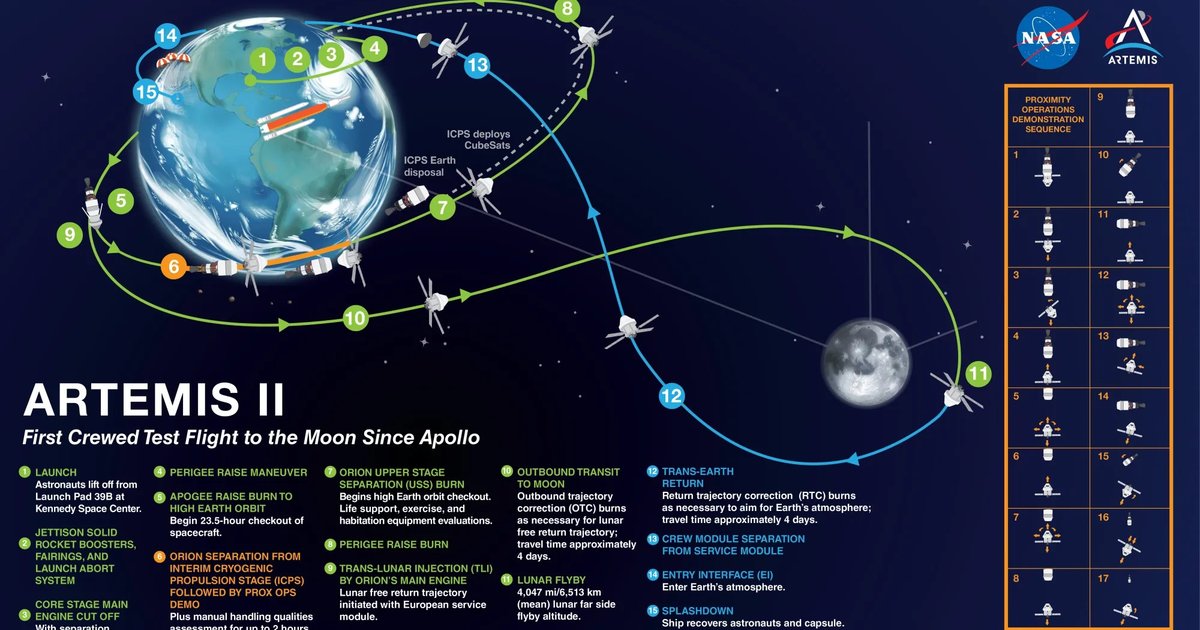
The Artemis II mission is considered NASA's first crewed mission to the Moon since the Apollo 17 mission in 1972. During this mission, astronauts are set to reach the far side of the Moon, achieving a new record for the distance humans have traveled from Earth. However, the Orion spacecraft will not land on the Moon's surface but will return to Earth on April 10.
It is noteworthy that other documentation related to the mission was captured using professional cameras such as the Nikon D5 and Nikon Z 9, in addition to GoPro HERO4 Black cameras, highlighting the variety of technologies employed in documenting this historic mission.
Background & Context
The Artemis II mission is part of the broader Artemis program, which aims to return humans to the Moon and explore it more deeply. This program represents a significant step towards achieving goals for deep space exploration, including Mars. Since the end of the Apollo program, space exploration has undergone significant changes in technology and techniques used, making it possible to utilize devices such as smartphones in space environments.
In recent years, NASA has made remarkable progress in leveraging modern technology, as smartphones have been adopted as effective documentation tools in space. This shift reflects how everyday technology can play a role in major scientific missions.
Impact & Consequences
The use of the iPhone 17 Pro Max in space opens new horizons for documenting space experiences. This innovation may encourage the use of more modern technologies in the future, allowing astronauts to document their experiences more quickly and efficiently. Additionally, the captured images may contribute to raising public awareness about space exploration.
Moreover, these images could inspire a new generation of scientists and engineers, enhancing interest in the fields of science, technology, engineering, and mathematics (STEM). Seeing Earth from space through the lens of a smartphone may bring space closer to the public.
Regional Significance
In the Arab region, such innovations can have a significant impact on education and scientific research. With increasing interest in space in Arab countries, these achievements could inspire Arab youth to explore fields in science and technology. Furthermore, collaboration among Arab nations in the field of space could open new avenues for scientific and technological cooperation.
In conclusion, the Artemis II mission represents an important step in the history of space exploration, combining technological innovation and effective documentation, reflecting humanity's ability to explore the unknown.