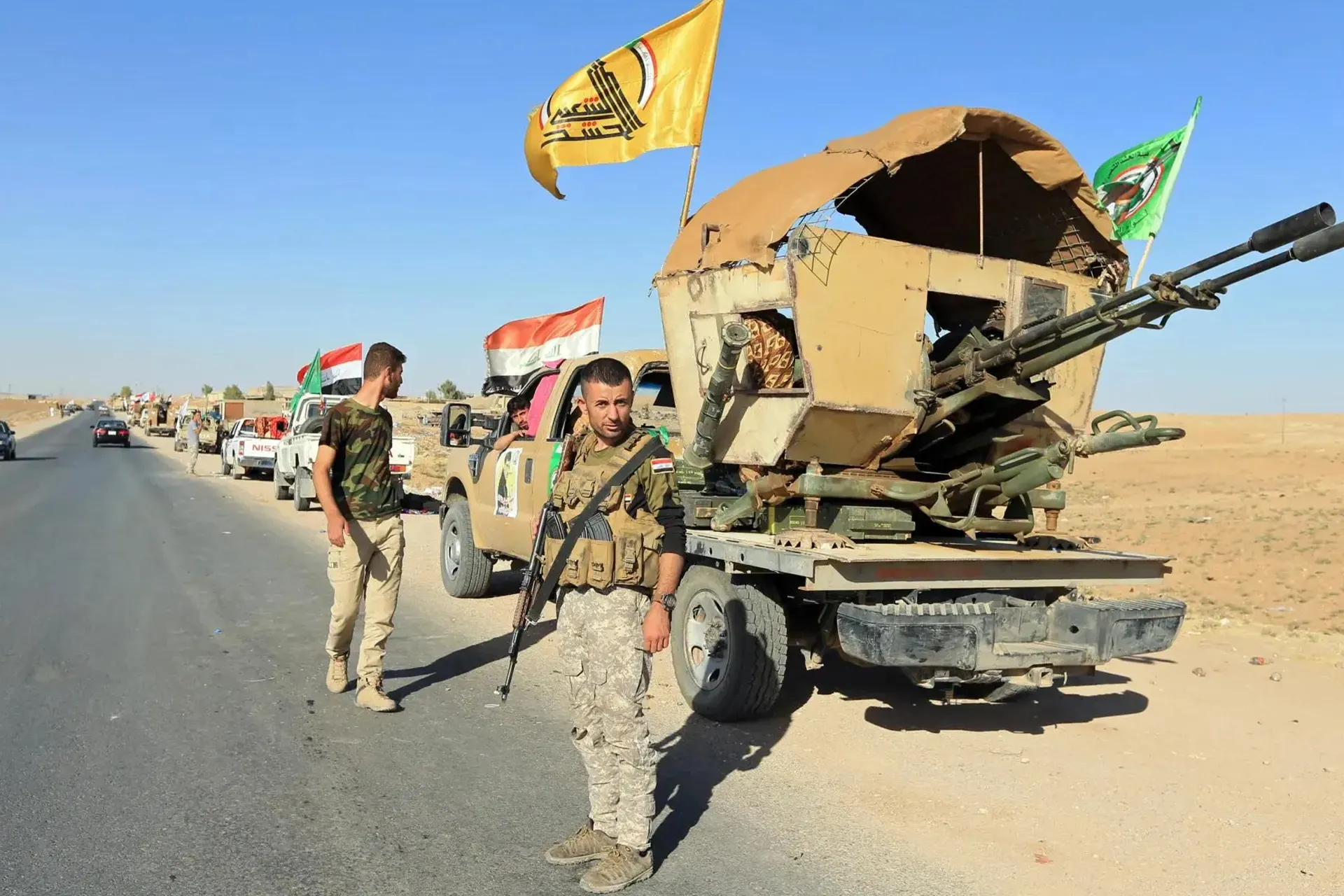
The new government of Ali Al-Zaydi in Iraq begins its term amid complex geopolitical pressures, finding itself caught between the demands of the United States to dismantle Shiite factions and Iran's outright refusal to allow any interference. This challenging equation presents the government with a real test of power balance in the country.
The situation is further complicated by the substantial political power held by these factions, whose supporters account for approximately 80 seats in the Iraqi parliament. They also have deep social and tribal roots, along with a wide network of economic interests, making any attempt to dismantle them fraught with risks.
Details of the Situation
During the first meeting of the National Security Council chaired by Al-Zaydi, Gulf accusations were raised against armed Iraqi factions for carrying out drone attacks on their territories, putting the government in a diplomatically awkward position from the outset of its tenure. Washington has expressed conditional support for Al-Zaydi, emphasizing that it will not back any government that grants a ministerial portfolio to any of the six Iran-aligned factions, demanding their dismantlement and disarmament.
Osama Al-Saidi, a political science professor at Al-Nahrain University, clarified that these factions emerged in a historical context following 2003, when Iraqi state institutions were incomplete, but they have now become a national asset that cannot be ignored. He stressed the importance of integrating them within a formal legal framework according to UN disarmament programs.
Background & Context
Reports indicate that former U.S. President Donald Trump imposed strict conditions on the new Iraqi government, complicating the situation further. Previous attempts at dialogue with the factions during the tenure of former Prime Minister Mohammed Shia' Al-Sudani have failed, reflecting the difficulty of reaching effective solutions.
In this context, some analysts have suggested that Al-Zaydi should directly approach Tehran, which is considered key to any potential resolution. Mustafa Al-Sarai, the research director at Al-Bayan Center for Studies and Planning, pointed out the need to consider who would take possession of the weapons if any faction decides to surrender its arms.
Impact & Consequences
American pressures coincide with internal movements, where analysts expect that the scenario will lead to an escalation of tensions. The political landscape is fraught with uncertainty, as the government navigates these pressures while trying to maintain stability.
The implications of these dynamics extend beyond Iraq, potentially affecting regional security and the balance of power in the Middle East. The government's ability to address these challenges will be crucial in determining its legitimacy and effectiveness.
Regional Significance
The situation is not only critical for Iraq but also has broader implications for the Arab region. The interplay between U.S. interests and Iranian influence in Iraq could set precedents for other countries facing similar dilemmas.
In conclusion, the new government of Ali Al-Zaydi is at a crossroads, tasked with navigating the intricate web of external pressures and internal dynamics. Its success or failure could reshape the political landscape of Iraq and influence the region's stability.