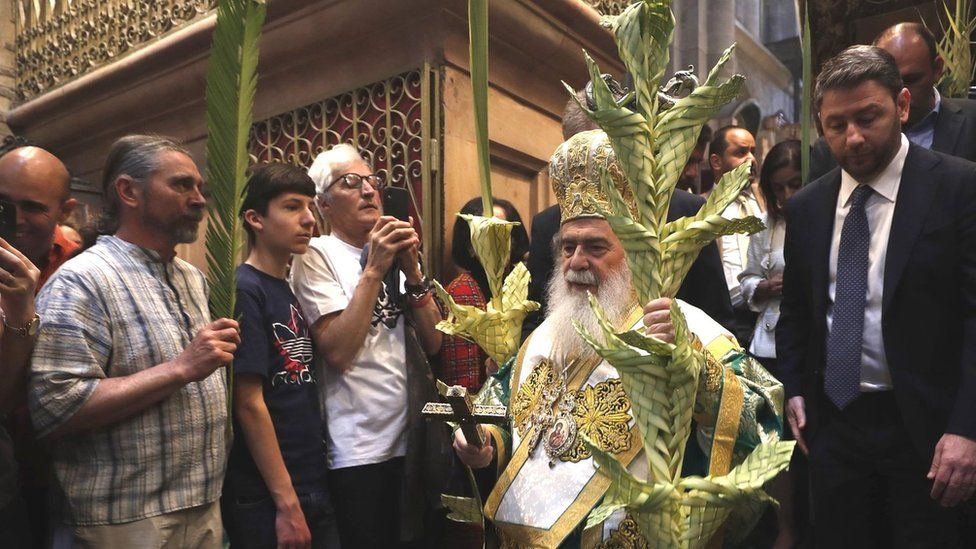
In a surprising turn, Israeli Prime Minister Benjamin Netanyahu announced that the Latin Patriarch can hold Easter Mass as desired, after a previous ban was imposed. This decision follows international and local pressures, as the ban was expected to provoke strong reactions from the Christian community.
This announcement came days after controversy surrounding the Israeli government's decision that prohibited the mass at the Church of the Holy Sepulchre in Jerusalem, which sparked widespread discontent among Christians worldwide. Many considered this decision a violation of their religious rights.
Details of the Event
Earlier, the Israeli government had issued a decision prohibiting the Easter Mass at the Church of the Holy Sepulchre, which provoked angry reactions from Latin Patriarch Pierre Batista Pizzaballa, who deemed this decision a threat to freedom of worship. However, Netanyahu's announcement reflects a shift in stance, confirming that the Patriarch can hold the mass without any restrictions.
This change in position reflects the increasing pressures faced by the Israeli government amid rising tensions between Palestinians and Israelis, as well as international pressures demanding respect for the rights of religious minorities. Netanyahu emphasized the importance of maintaining freedom of worship for all religions in Israel.
Background & Context
Historically, Jerusalem has been a center for the three major religions: Judaism, Christianity, and Islam. However, the tense political situation in the city has impacted freedom of worship, especially for Christians. In recent years, Christian churches in Jerusalem have faced increasing pressures, leading to concerns over the erosion of their rights.
Easter is one of the most significant religious occasions for Christians, celebrating the resurrection of Christ. This event attracts many visitors from around the world, contributing to the enhancement of religious tourism in the city. However, any restrictions on celebrations could lead to negative repercussions on Jerusalem's reputation as a religious center.
Impact & Consequences
Netanyahu's decision to lift the ban on the Easter Mass may help ease tensions between the Israeli government and the Christian community. However, this decision may not be sufficient to address broader concerns regarding the rights of minorities in Israel. There remains concern that the government may take further actions that could negatively impact freedom of worship.
Furthermore, this decision may open the door for more dialogues between the government and the Christian community, potentially contributing to improved relations between the two sides. However, it remains to be seen whether this step will lead to lasting changes in Israeli policies towards religious minorities.
Regional Significance
Freedom of worship is a sensitive issue in the Arab region, where many religious minorities suffer from discrimination and persecution. Netanyahu's decision may have broader implications for Arab countries, as it could be seen as a model for promoting minority rights. Additionally, this decision may bolster the position of Arab nations advocating for respect for human rights and religious freedoms.
In conclusion, it remains to be seen how matters will evolve in Jerusalem, and whether the Israeli government will continue to take positive steps towards enhancing the rights of religious minorities. Freedom of worship is a fundamental right that must be respected and promoted, not only in Israel but around the world.