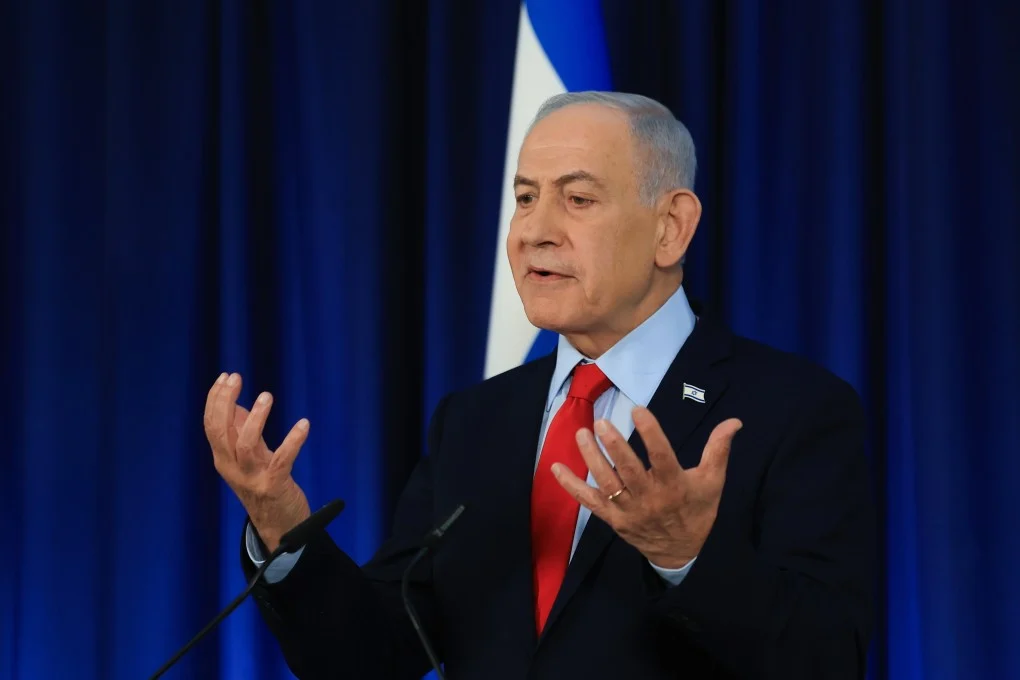
Israeli Prime Minister Benjamin Netanyahu expressed confidence on Monday that the Iranian regime will ultimately face an internal collapse. This statement was made during an interview with an American news channel, where he confirmed that military operations conducted by Israel and the United States aim to weaken Iranian military capabilities, not to overthrow the regime.
Netanyahu stated, "I believe this regime will collapse from within. But for now, what we are doing is reducing their military capabilities, diminishing their missile capabilities, and weakening them from within." These remarks come at a time when tensions between Iran and Israel are escalating, particularly amid the ongoing conflict in the region.
Details of the Situation
Netanyahu's statements coincide with an increase in Israeli military operations against Iranian targets in Syria and Iraq, as Israel seeks to prevent Iran from bolstering its military presence near its borders. Israel considers Iran's presence in these areas a threat to its national security, prompting a series of airstrikes.
At the same time, Iran continues to develop its nuclear program, raising concerns within the international community. Netanyahu indicated that the goal of military operations is to reduce Iran's ability to develop nuclear weapons, which he views as a direct threat to Israel and neighboring countries.
Background & Context
The current Iranian regime was established after the Islamic Revolution in 1979, which led to the overthrow of the Shah. Since then, the regime has faced numerous internal and external challenges, including economic sanctions and popular protests. Recent years have seen a rise in public protests against the regime, reflecting dissatisfaction with economic and political conditions.
Historically, relations between Iran and Israel have been tense, with Israel viewing Iran as one of its greatest enemies in the region. These tensions significantly escalated after the Iranian nuclear agreement in 2015, which Israel deemed insufficient to deter Iran from developing nuclear weapons.
Impact & Consequences
Netanyahu's statements indicate a long-term Israeli strategy aimed at weakening the Iranian regime from within. If this internal collapse occurs, it could lead to radical changes in regional politics and open the door to new alliances in the area.
However, the question remains about Iran's ability to withstand these pressures. The Iranian regime has a long history of surviving challenges and may exploit these pressures to bolster its domestic popularity by portraying itself as a victim of external aggression.
Regional Significance
Tensions between Iran and Israel directly impact Arab countries, as many Arab nations view Iran as a threat to their security and stability. This has led to enhanced security cooperation between some Arab states and Israel, particularly in the face of Iranian threats.
Ultimately, the situation in the region remains complex, with political and security interests overlapping. Arab countries must closely monitor developments, as any changes in the Iranian regime could significantly affect the regional balance.