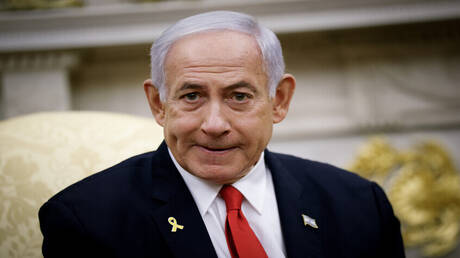
Israeli Prime Minister Benjamin Netanyahu has urged U.S. President Donald Trump not to cease fire with Iran at this time, indicating growing concerns over the risks that such a step could entail. These statements come amid rising tensions between Iran and the United States, reflecting the security challenges faced by Israel in the region.
The relationship between the United States and Iran is one of the most complex issues in international politics, with regional and international interests heavily intertwined. Netanyahu expressed his fears that any decision to halt hostilities could provide Iran with an opportunity to enhance its military capabilities, posing a direct threat to Israel's security.
Details of the Event
In his conversation with Trump, Netanyahu conveyed his concerns that a ceasefire might lead to increased Iranian influence in the region, particularly given the presence of armed groups supported by Tehran in Iraq, Syria, and Lebanon. He noted that these groups could exploit any period of calm to bolster their military capabilities, thereby escalating tensions in the area.
Netanyahu also emphasized the importance of maintaining pressure on Iran through economic and political sanctions, asserting that this strategy is the only one capable of curbing Iran's destabilizing activities. He argued that any retreat from this approach could lead to dire consequences for regional security.
Background & Context
Historically, relations between Iran and Israel have been marked by increasing tensions, with Israel viewing Iran as an existential threat. These tensions have particularly escalated since the United States withdrew from the Iranian nuclear deal in 2018, leading to the re-imposition of economic sanctions on Tehran.
In recent years, Iran has intensified its military activities in the region, including the development of its nuclear program, raising concerns among both Western and Arab nations. In this context, Israel seeks to strengthen its alliances with Arab countries to counter the Iranian threat, especially given recent developments in relations between Israel and some Arab states.
Impact & Consequences
If tensions between Iran and the United States continue, it could lead to military escalation in the region, affecting regional stability. Oil prices and financial markets could be significantly impacted by any potential escalation, negatively reflecting on the global economy.
Moreover, ongoing tensions could exacerbate divisions among Arab states, as positions may vary between those supporting pressure on Iran and those advocating for dialogue. This could create a complex environment requiring careful diplomacy to achieve stability in the region.
Regional Significance
Arab countries neighboring Iran, such as Iraq, Syria, and Lebanon, are the most affected by the tensions between the United States and Iran. Any military escalation could lead to serious humanitarian and economic repercussions for these nations, increasing the suffering of the populations in those areas.
Furthermore, the continuation of tensions may worsen humanitarian crises in the region, where many countries are grappling with internal conflicts and economic crises. Thus, any escalation in relations between Iran and the United States could have negative implications for overall regional stability.
In conclusion, the situation in the region remains complex, requiring a delicate balance between power and diplomacy. Netanyahu's statements reflect Israeli concerns over any changes in U.S. policy towards Iran, adding a new layer of complexity to the regional landscape.