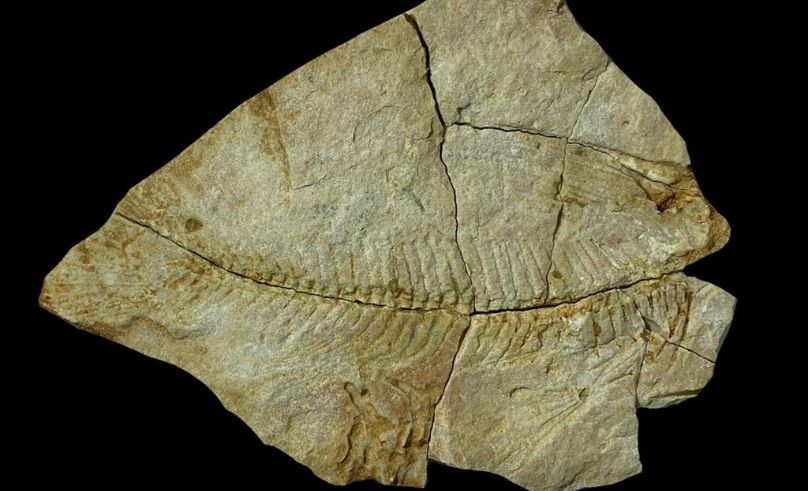
New fossils discovered in China reveal exciting information about marine life diversity, indicating that animal life began to diversify in Earth's primitive seas around 546 million years ago. These discoveries offer new insights into the history of life on our planet and reshape our understanding of ancient geological periods.
These fossils are part of a broader study aimed at understanding how marine life evolved in ancient times. The results show that marine species were more diverse and complex than previously thought, highlighting the significance of this period in the history of life on Earth.
Details of the Discovery
The fossils were found in a mineral-rich region of China, where advanced techniques were used to analyze the genetic and biological composition of the discovered organisms. Studies have shown that these organisms lived in diverse marine environments, suggesting that marine life was evolving more rapidly than previously believed.
Reports indicate that these fossils include new species of marine organisms, adding to the list of known species and enhancing scientific understanding of the history of marine life. The results have been published in a prestigious scientific journal, paving the way for further research and studies in this field.
Background & Context
The history of life on Earth spans millions of years and has seen significant changes in biodiversity across different eras. In the period preceding 546 million years ago, marine life was evolving gradually, but recent discoveries suggest that this process was more complex than previously thought.
These fossils are part of a period known as the Cambrian Explosion, a time characterized by rapid diversification of life forms. This period is crucial for understanding the evolutionary history of marine organisms and their adaptations to changing environments.
Impact & Consequences
The implications of these discoveries extend beyond academic interest; they contribute to a broader understanding of evolutionary biology and the mechanisms driving biodiversity. By revealing the complexity of ancient marine ecosystems, these findings challenge existing theories and encourage a reevaluation of how life on Earth has developed over time.
Furthermore, the research fosters international collaboration in scientific exploration, as researchers from various countries engage in discussions and studies related to these findings. This collaboration can lead to a more comprehensive understanding of marine life evolution and its implications for current biodiversity.
Regional Significance
In addition to its scientific importance, this discovery enhances China's reputation as a center for paleontological research. The findings are expected to boost scientific tourism in the region, attracting researchers and enthusiasts interested in ancient life.
Moreover, these discoveries may inspire a new generation of scientists in the Arab world and beyond, emphasizing the importance of scientific inquiry and exploration in understanding our planet's history.
Overall, these findings not only shed light on the history of marine life and its diversity but also reshape scientific understanding of species evolution. They highlight the importance of scientific research in understanding ancient environments and the ongoing processes that shape life on Earth.