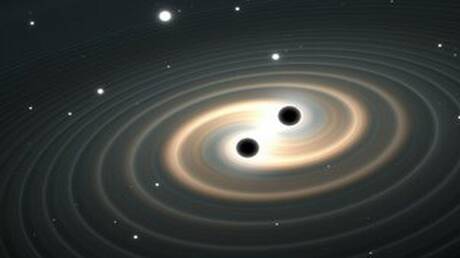
Physicists from the University of Miami, Nico Capeluti and Alberto Magaragi, have revealed significant advancements in confirming the existence of primordial black holes, which are thought to have formed in the initial moments after the universe's inception. These black holes are considered a crucial part of scientific research aimed at understanding the nature of the universe and dark matter, which makes up approximately 27% of the universe's total mass.
Primordial black holes represent a controversial theory in astronomy, as they are believed to have formed in an extremely short time after the Big Bang, specifically during the first fraction of a second. These black holes differ from those formed as a result of stellar collapse, making them a significant subject for scientific inquiry.
Details of the Discovery
In a new study, Capeluti and Magaragi employed advanced mathematical models to simulate the conditions that prevailed in the early universe. The results indicated that primordial black holes may have formed from dense clumps of matter, paving the way for a deeper understanding of how the universe evolved.
These findings represent an important step toward solving the mystery of dark matter, as primordial black holes are believed to be the primary source of this enigmatic substance. By understanding how these black holes formed, scientists can gain new insights into the nature of dark matter and its role in the formation of the universe.
Background & Context
Dark matter is one of the biggest mysteries in astronomy, as it cannot be observed directly, yet its effects are evident through its influence on the motion of stars and galaxies. Although scientists have managed to establish its existence, its nature remains unknown. Primordial black holes could be one of the potential answers to this mystery.
Historically, the concept of primordial black holes was first proposed in the 1970s, but scientists have not been able to provide conclusive evidence for their existence until now. With advancements in technology and research, it has become possible to study these phenomena more deeply.
Impact & Consequences
If the existence of primordial black holes is confirmed, it would revolutionize our understanding of the universe. This discovery would help clarify how galaxies and stars formed, potentially altering our perspective on fundamental physics. It would also open new avenues for research in fields such as cosmology and astronomy.
Moreover, understanding dark matter could have far-reaching implications across various fields, including theoretical physics and the search for alternative energy sources. This discovery may lead to the development of new technologies in energy and communications.
Regional Significance
In the Arab region, research in astronomical sciences and dark matter is a promising field. There is a growing interest in science and technology in Arab countries, which could enhance international collaboration in this area. This discovery could stimulate further investments in scientific research, contributing to the development of research capabilities in the region.
In conclusion, this discovery represents an important step toward a deeper understanding of the universe and may open doors to new research that could change the course of astronomical sciences in the future.