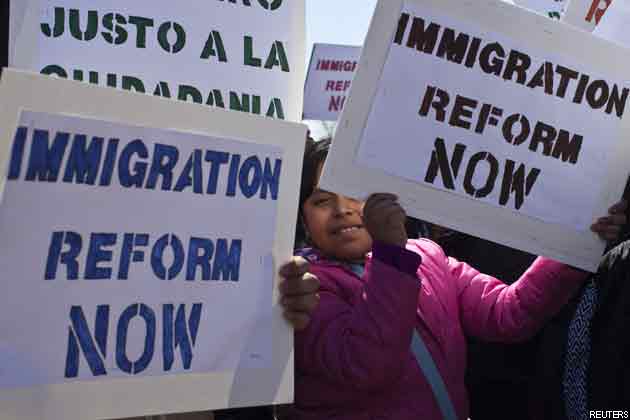
The U.S. Congress has announced new legislation aimed at amending immigration laws, sparking widespread debate among political circles. This legislation comes at a sensitive time coinciding with the upcoming elections, as lawmakers seek to address immigration issues in a manner that aligns with voter aspirations.
The new legislation, introduced by a group of representatives, aims to expedite the process of granting work visas for skilled workers, as well as establish new mechanisms for border monitoring. This proposal has garnered support from some Republican members, while facing strong opposition from Democrats who argue it could exacerbate immigration problems.
Details of the Legislation
The new legislation includes several key provisions, such as increasing the number of visas allocated for skilled workers and facilitating the process for obtaining permanent residency. It also proposes stricter penalties for violations of immigration laws. One of the supporting representatives stated that this law would boost the American economy by attracting talent and expertise.
On the other hand, opponents have criticized the legislation, pointing out that it could lead to the exploitation of cheap labor and increase social tensions. They also argue that focusing on stricter penalties may contribute to the spread of racism and discrimination against immigrants.
Background & Context
Immigration is a contentious issue in the United States, where the country has seen a significant increase in the number of immigrants in recent years, leading to heightened tensions among various groups. In past years, different administrations have attempted to pass immigration-related laws, but many have faced significant political obstacles.
Historically, immigration has always been a controversial topic in the United States, with varying opinions on how to manage borders and determine who is allowed entry. The country has witnessed several changes in immigration policies, affecting the lives of millions of immigrants.
Impact & Consequences
This legislation is expected to have significant effects on American society, potentially leading to an increase in the number of skilled immigrants, which could contribute to economic growth. However, the emphasis on stricter penalties may exacerbate negative sentiments towards immigrants, increasing social division.
Additionally, this legislation could impact U.S. relations with other countries, particularly those considered major sources of immigrants. This may lead to strained diplomatic relations and increase pressure on the U.S. government to address immigration issues more humanely.
Regional Significance
For the Arab region, this legislation may affect many Arab immigrants seeking job opportunities in the United States. Given the difficult economic conditions in some Arab countries, there may be increased interest in immigration to the U.S.
Furthermore, changes in U.S. policies could affect relations between Arab countries and the United States, as some countries may seek to enhance cooperation in the areas of immigration and labor.
In conclusion, this new legislation represents an important step in the trajectory of U.S. immigration policy and reflects the complex challenges the country faces in this area. It is crucial to monitor the developments of this legislation and its impacts on American society and international relations.