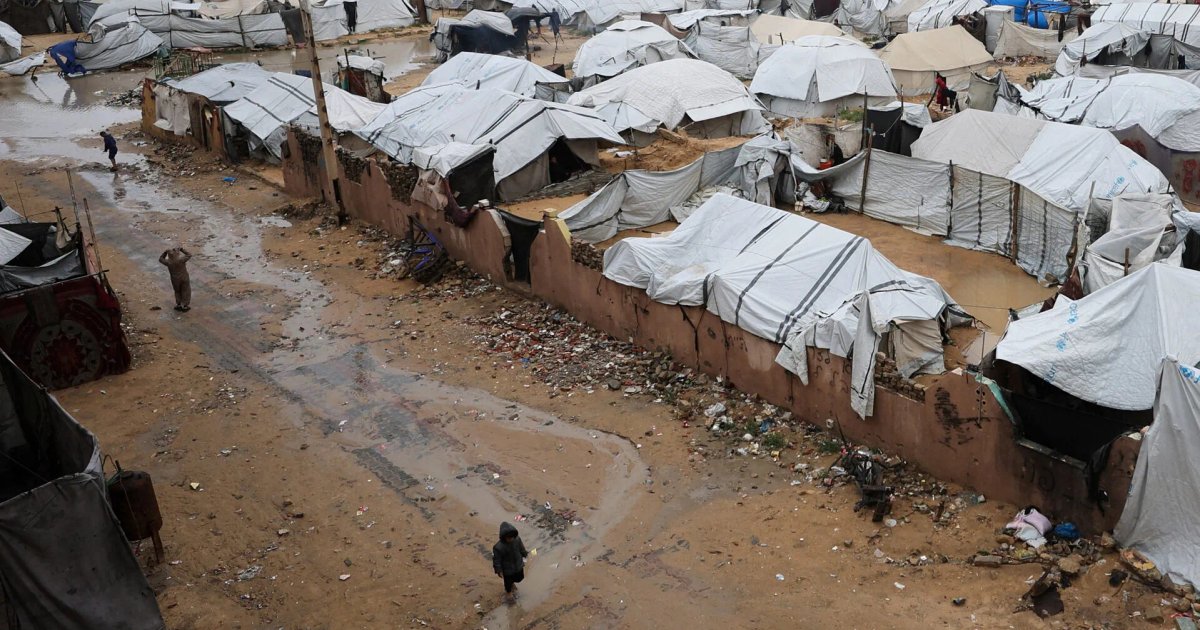
Under the influence of a new weather system, residents of the Gaza Strip are suffering from harsh conditions, as heavy rains continue along with strong winds, further worsening the plight of displaced Palestinians living in tents. These difficult weather conditions come at a time when the region is grappling with multiple crises, undermining the residents' ability to face daily challenges.
Concerns are growing over the worsening humanitarian situation in Gaza, where many displaced individuals reside in inadequate tents, making them vulnerable to the risks posed by severe weather. The heavy rains and strong winds have caused water to seep into the tents, significantly deteriorating living conditions.
Details of the Event
On Tuesday, April 7, the Gaza Strip experienced a new weather system, with rain concentrated in various areas of the region. These harsh weather conditions come at a time when the area is suffering from a severe shortage of essential resources, further increasing the residents' hardships.
The displaced individuals, who have lost their homes due to the ongoing conflict, are facing new challenges as a result of the adverse weather. Many express their concerns about the impact of these conditions on their health and safety, especially with the rise of illnesses associated with cold and damp weather.
Background & Context
The Gaza Strip has been under continuous siege for years, leading to a significant deterioration in humanitarian conditions. The ongoing conflict between Palestinian factions and the Israeli occupation has resulted in the displacement of many families, who find themselves forced to live in tents lacking the most basic necessities of life.
Historically, Gaza has witnessed numerous humanitarian crises, but the current conditions are among the worst, compounded by environmental challenges arising from climate change. These crises require an urgent response from the international community to assist the affected populations.
Impact & Consequences
The impact of adverse weather conditions on the displaced in Gaza extends to multiple areas, including health and education. Children living in tents are particularly vulnerable to diseases, affecting their ability to attend school.
Moreover, the deterioration of living conditions may lead to increased social tensions among the population, potentially exacerbating security situations in the region. It is crucial that humanitarian efforts are intensified to address these growing challenges.
Regional Significance
The situation in Gaza exemplifies the humanitarian crises faced by many Arab countries. Political and economic crises in the region directly affect the ability of nations to provide necessary humanitarian support.
Highlighting the suffering of the displaced in Gaza may help stimulate the international community to take concrete steps to support these populations, reflecting the importance of Arab solidarity in addressing humanitarian crises.
In conclusion, the conditions in Gaza require urgent attention from the international community, as the harsh weather increases the suffering of the displaced and places them in a more vulnerable position. It is essential to provide the necessary support to help them navigate these difficult times.