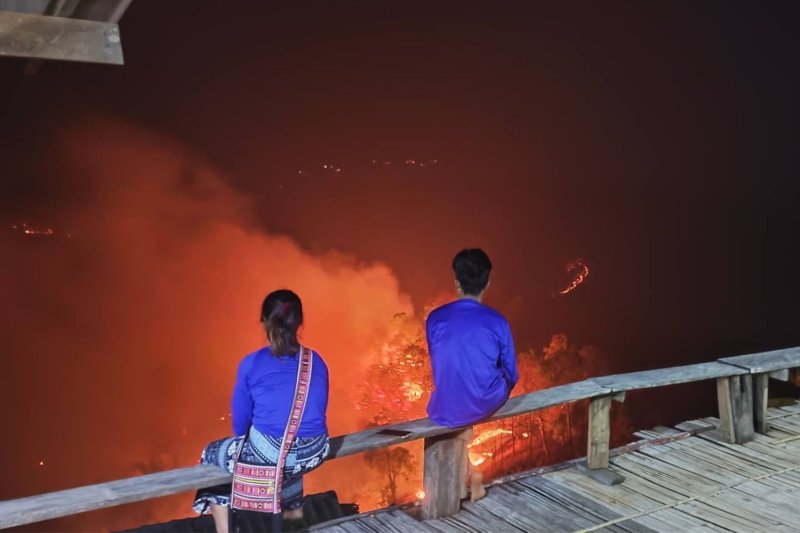
New wildfires erupted on Sunday morning near the Mai Fana reservoir in San Kamphaeng, Thailand, as strong winds reignited flames that communities believed were extinguished. The fire was reported at 1:41 AM on March 29, near the reservoir entrance in area 11, Tambon On Tai.
The head of the San Kamphaeng district, Khant Khamnon, went to oversee the emergency response, coordinating with the Tambon On Tai mayor, Chanan Kantiphong, who deployed two fire trucks. Local leaders and residents joined officials in quickly controlling the fire.
Details of the Incident
In the nearby Mai Ting area, a well-known accommodation called "Manih Garden House" shared a striking before-and-after comparison on social media, showing a view that was once considered a misty sea, now engulfed by smoke clouds from the fires. The post warned that strong winds had stirred and reignited embers that had already been extinguished by midnight.
The situation in Thailand remains critical, with satellite data recording 4,291 hotspots across the country, including 2,192 in protected forest areas, 1,591 in national forest reserves, and 187 in agricultural areas. In Chiang Mai alone, the Geo-Informatics and Space Technology Development Agency (GISTDA) recorded 787 hotspots during a survey on Monday morning.
Background & Context
Wildfires in northern Thailand are a recurring problem, with dry weather conditions and strong winds causing rapid fire outbreaks. Since the beginning of the year, Chiang Mai alone has recorded 3,859 hotspots, highlighting the scale of the wildfire crisis that shows no signs of abating.
Historically, the region has experienced frequent wildfires, but this year the situation appears more severe. These fires cause environmental destruction and negatively impact wildlife, in addition to threatening the health of local populations due to smoke and pollutants generated.
Impact & Consequences
Wildfires pose a significant threat to the environment and the local economy. Alongside environmental damage, these fires affect tourism, as areas once considered prime tourist destinations are now covered in smoke and flames. There are also concerns that these fires could lead to respiratory diseases among the population.
This crisis requires a swift response from the government and relevant authorities, as firefighting efforts must be strengthened and support provided to affected communities. Long-term strategies to reduce wildfires should also be considered, such as improving forest management and raising awareness among residents about fire risks.
Regional Significance
The wildfires in Thailand exemplify the environmental challenges faced by many countries worldwide, including Arab nations. With the increasing impact of climate change, the Arab region also faces similar risks from wildfires and desertification. There should be joint efforts among Arab countries to address these environmental challenges.
In conclusion, the wildfires in Thailand highlight the urgent need for effective actions to protect the environment and ensure the health and safety of local communities. This crisis should serve as a catalyst for enhancing international cooperation in combating wildfires and climate change.