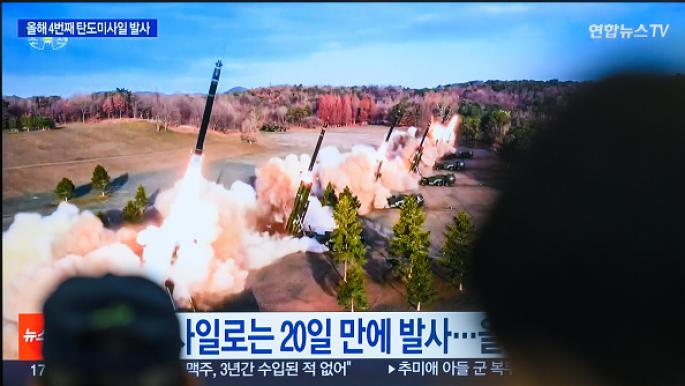
The South Korean military has reported that North Korea launched at least two projectiles into the sea on Wednesday, shortly after a similar launch was reported on Tuesday. These military operations are part of an increasing escalation from Pyongyang, raising concerns in the region.
These launches are considered part of a series of military tests conducted by North Korea, often coinciding with political or diplomatic tensions on the Korean Peninsula. The South Korean military indicated that the projectiles were launched from the Pyongyang area, reflecting North Korea's capability to execute advanced military operations.
Details of the Incident
According to available information, the projectiles launched on Wednesday have been identified as part of North Korea's weapons development program, which includes ballistic missiles. These operations occur at a sensitive time as North Korea seeks to enhance its defensive capabilities amid international pressures.
This escalation follows a series of military exercises conducted by South Korea and the United States, further intensifying tensions among the involved parties. Reports have confirmed that these launches aim to send a strong message to the international community regarding North Korea's determination to bolster its military capabilities.
Background & Context
Historically, the Korean Peninsula has witnessed numerous military tensions, with North Korea being one of the most isolated countries in the world. Since the end of the Korean War in 1953, no formal peace agreement has been reached, leading to a continuous state of tension between the two Koreas.
In recent years, North Korea has increased the frequency of its military tests, including ballistic missile tests, which have raised concerns within the international community. These activities are part of North Korea's efforts to develop its defense capabilities and strengthen its position in negotiations with major powers.
Impact & Consequences
These launches could escalate tensions in the region, as South Korea and the United States may feel threatened, prompting them to enhance their military responses. Additionally, these events could affect North Korea's relations with other countries, especially under the current sanctions imposed on it.
The military escalation may also increase pressures on the North Korean government, which could face further international sanctions. At the same time, the regime may seek to use these launches to bolster domestic support by portraying itself as a defender of the homeland.
Regional Significance
Although events on the Korean Peninsula may seem distant from the Arab region, they have indirect effects. Military tensions in any part of the world can impact regional stability, potentially leading to increased tensions in other areas.
These events highlight the importance of international cooperation in addressing security challenges, as military crises in one location can affect global security overall. Therefore, monitoring these developments is essential for understanding global dynamics.
In conclusion, events in North Korea remain a focal point of global interest, reflecting ongoing military tensions and the need for effective diplomatic solutions. The international community's response to these events will be crucial in determining the future of relations between the two Koreas.