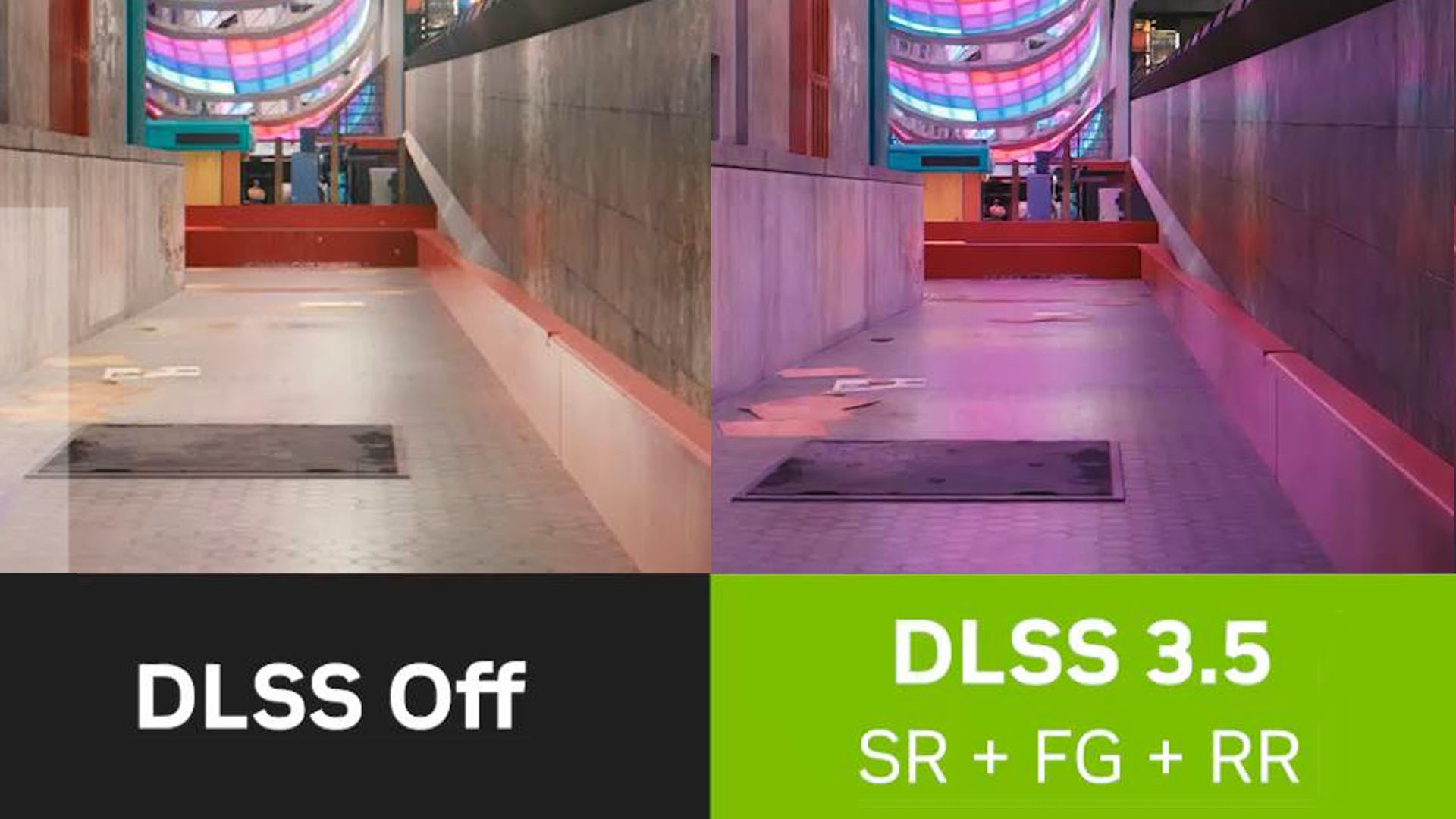
NVIDIA, the American technology company, has unveiled its DLSS 5 (Deep Learning Super Sampling 5) technology, which represents a revolution in the realm of digital graphics. By employing generative artificial intelligence, this technology reconstructs lighting and pixels in video games, allowing for a visual experience that approaches cinematic realism. This technology is not limited to performance enhancement; it fundamentally reimagines reality in a way that changes the game in the video game industry.
There has long been a fierce race between game developers and hardware manufacturers to achieve the highest levels of realism, but computational power has always been a persistent barrier. With the advent of artificial intelligence technologies, this gap has begun to close, as technological solutions become increasingly sophisticated.
Event Details
During the GTC (GPU Technology Conference) held from March 16 to 19, 2023, NVIDIA presented details about DLSS 5, which has evolved from merely enhancing graphics resolution to what CEO Jensen Huang described as "neural rendering." This technology relies on processing images at a lower resolution, maintaining high performance and responsiveness, and then uses deep learning models to reconstruct the image at a much higher fidelity.
According to the official statement, the technology allows the graphics card to produce images that appear to be processed at 4K resolution, while in reality, they are based on a lower resolution, thereby reducing the burden on hardware. This qualitative leap means that graphics cards are no longer limited to rendering what the developer sees; they can imagine and construct reality neurally in fractions of a second.
Background & Context
The DLSS (Deep Learning Super Sampling) technology is part of NVIDIA's ongoing efforts to develop artificial intelligence in the gaming sector. Previous versions of this technology relied on edge enhancement, while DLSS 5 utilizes neural networks to reconstruct materials and lighting from scratch, creating visual details that were not present in the original code.
This development comes at a time when the gaming market is witnessing increasing competition, with major companies like Capcom and Ubisoft striving to improve the quality of their games. Reports suggest that the adoption of DLSS 5 will alter the "economics of development," allowing for reduced game budgets by decreasing reliance on raw power.
Impact & Consequences
Despite the potential benefits, there are concerns that this technology may lead to a "blurring of the artistic identity" of games. In a live demonstration of the game Resident Evil Requiem, critics noted that the artificial intelligence refined the features of characters and environments, impacting the original character of the game. This has prompted some developers to warn that "algorithmic realism" could lead to an aesthetic homogenization of games.
Moreover, reports indicate that the revolutionary features of DLSS 5 require fifth-generation graphics processor cores, meaning that users may need to upgrade their hardware, which some have described as "planned obsolescence." This situation could deepen the class divide among gamers, as "super realism" becomes a luxury confined to a specific class.
Regional Significance
In the Arab region, this technology could impact the emerging gaming industry, as it may enable smaller teams to deliver visual quality that was previously the domain of major companies. This development could foster innovation in the gaming industry and encourage the creation of local content that aligns with global standards.
While Jensen Huang describes this shift as a "historic moment" akin to the steam engine revolution, the fundamental question remains: Will we retain the spirit of art in our games, or are we on the verge of handing over the keys to visual creativity to an algorithm that cannot distinguish between artistic beauty and computational accuracy?