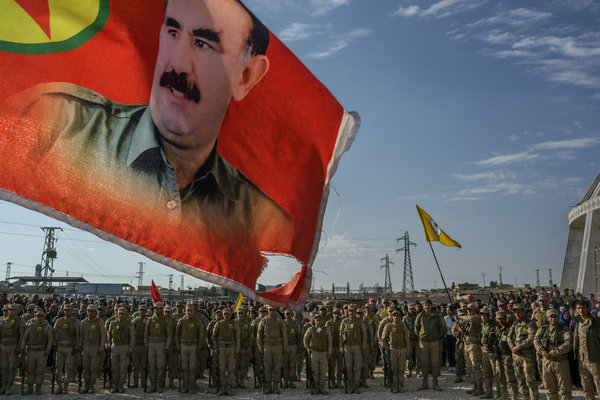
Abdullah Ocalan, the leader of the Kurdistan Workers' Party, has called on Turkey to facilitate an agreement between the Syrian Democratic Forces (SDF) and Damascus. This appeal comes at a sensitive time when the region is witnessing major political shifts, raising questions about Ankara's potential role as a mediator in this understanding.
This call is considered an important step in the context of the complex relationships between the Kurds and the Syrian government, as the SDF seeks to strengthen its position amid ongoing tensions in the country. Ocalan emphasized that dialogue among the concerned parties is essential for achieving stability in the region.
Details of the Event
Ocalan, regarded as one of the most prominent Kurdish leaders in the region, asserted in his message that an understanding between the SDF and Damascus could contribute to achieving peace and security in Syria. These statements come at a time when pressure on the Kurds from the Turkish government is increasing, which considers the SDF a terrorist organization.
Ankara aims to reduce Kurdish influence in northern Syria, viewing them as a threat to national security. However, Ocalan's call for Turkey to facilitate dialogue may open new avenues for understanding among the various parties involved.
Background & Context
Historically, relations between the Kurds and the Syrian government have been tense, especially following the outbreak of the civil war in Syria in 2011. The SDF has managed to assert control over vast areas of northern and eastern Syria, making it a key player in the conflict.
In recent years, the SDF has attempted to establish relations with Damascus, but these efforts have often collided with the Syrian government's refusal to recognize Kurdish rights. Nonetheless, current conditions may provide a new opportunity for dialogue, particularly in light of the geopolitical changes in the region.
Impact & Consequences
If Ankara succeeds in facilitating an agreement between the SDF and Damascus, it could lead to radical changes in the Syrian landscape. Such an understanding could help reduce tensions in the region and enhance prospects for peace.
On the other hand, Ankara may face significant challenges in achieving this goal, as it requires consensus among various stakeholders, including international and regional powers. Additionally, the Syrian government's stance towards the Kurds may remain an obstacle to any progress in this direction.
Regional Significance
These developments are significant not only for Syria but for the entire Arab region. The success of dialogue between the SDF and Damascus could encourage the restoration of stability in Syria, positively impacting neighboring countries.
Moreover, this understanding could foster cooperation between the Kurds and Arab states, contributing to shared interests in addressing regional challenges.
In conclusion, Ocalan's call for Ankara to facilitate dialogue between the SDF and Damascus represents an important step towards achieving stability in the region. However, the question remains as to how capable Ankara is of playing this active role amid existing political complexities.