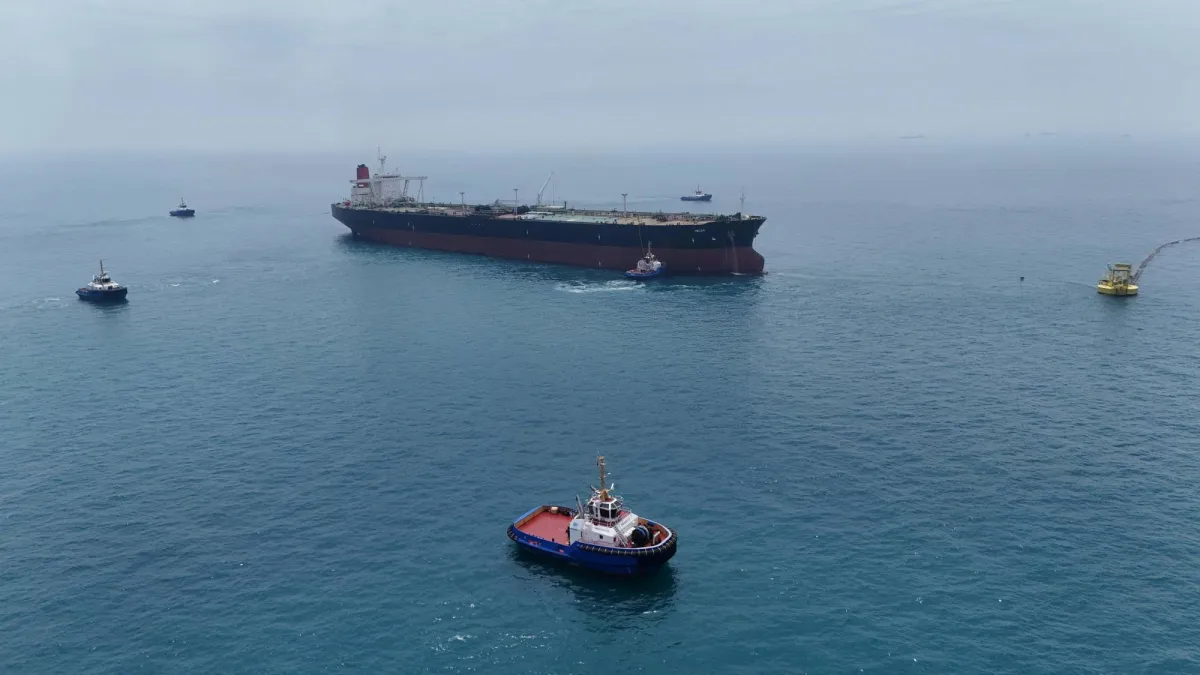
Oil prices surged sharply after Iran and Israel exchanged fire, jeopardizing the fragile ceasefire in the Middle East at a time when efforts to end the war are stumbling.
Brent crude recorded an increase of up to 5.1%, reaching $97.83 per barrel, while West Texas Intermediate approached $95. This rise followed Israel's announcement of strikes on military targets in Iran in response to previous missile attacks launched by Tehran, despite U.S. President Donald Trump's call for Israeli Prime Minister Benjamin Netanyahu to refrain from retaliation.
Details of the Incident
In response, Iran launched new strikes targeting vital facilities at the Israeli air bases of Negev and Tel Nof, according to the Fars news agency affiliated with the Iranian Revolutionary Guard. Additionally, Iranian-backed Houthi rebels in Yemen announced a ban on Israeli ships in the Red Sea.
The two sides exchanged missile strikes on Monday, despite Trump's calls for both parties to cease fighting and allow peace talks a chance. Trump had urged Tehran earlier to return to negotiations following the Israeli strikes and criticized Israel for attacking Beirut on Sunday, according to Fox News.
Background & Context
Last week saw an escalation of hostilities across the Middle East, threatening to undermine the ceasefire and complicate negotiations aimed at ending the war. This conflict has led to the near-total closure of the vital Strait of Hormuz, choking crude oil, fuel, and natural gas supplies to customers worldwide.
In this context, the U.S. Central Command announced on Sunday that it had shot down two Iranian attack drones that were threatening international maritime navigation in the Strait of Hormuz. This came after six ballistic missiles were fired towards Bahrain and Kuwait on Friday, which were intercepted, while the U.S. struck Iranian coastal radar monitoring sites.
Impact & Consequences
Concerns are growing over a broader regional escalation, as financial markets reacted negatively to the events, with the Stoxx 600 European index falling to its lowest levels in two weeks. The index dropped by 0.9%, reaching 616.04 points, affected by rising tensions in the Middle East and widespread selling of AI company stocks.
Shares of energy-sensitive airlines, such as Lufthansa and Air France, fell by more than 2% each. Meanwhile, technology sector stocks were among the hardest hit, dropping by 2.1% due to sharp losses on Wall Street at the end of last week.
Regional Significance
The risks to regional security are increasing, as ongoing tensions between Iran and Israel could directly impact the stability of neighboring Arab states. Additionally, rising oil prices may increase the economic burdens on oil-importing countries in the region.
In conclusion, the situation in the Middle East remains volatile, necessitating close monitoring of developments, as any further escalation could negatively impact global markets and affect regional stability.