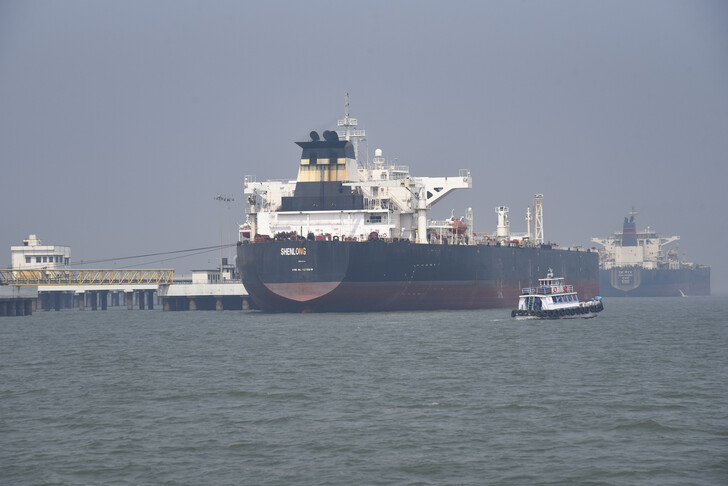
In recent statements, the Omani Minister of Transport emphasized that any attempt to impose fees on ships transiting the Strait of Hormuz is a violation of international laws. These remarks come at a time when reports are circulating about an Iranian proposal to impose fees on vessels crossing this vital waterway.
The Strait of Hormuz is one of the most important maritime passages in the world, with approximately 20% of the world's total oil passing through it. Oman plays a pivotal role in securing this passage, making its stance on this issue particularly significant.
Details of the Statement
The Omani Minister of Transport reported that any attempt to impose fees on ships crossing the Strait of Hormuz contradicts international agreements that guarantee freedom of navigation. He affirmed that Oman will continue to support freedom of navigation in this strategic passage, which is a vital artery for the global economy.
These statements come at a sensitive time, as tensions in the region have escalated due to strained political relations between Iran and Western countries. The Iranian proposal to impose fees on ships has raised alarm among many nations, as it is seen as a threat to maritime security.
Background & Context
The Strait of Hormuz is a major transit point for oil and natural gas, witnessing heavy traffic from commercial vessels. Historically, the strait has experienced numerous crises and tensions, especially during periods of regional conflicts. Iran has previously attempted to exert control over the strait, leading to strong international reactions.
In recent years, tensions between Iran and the United States have increased, impacting navigation in the region. Oman, as a neighboring country, has sought to maintain stability and enhance cooperation among the concerned nations.
Impact & Consequences
If fees are imposed on transit through the Strait of Hormuz, it could lead to increased shipping costs, affecting global oil prices. Such a move may also escalate tensions in the region, negatively impacting maritime security.
Freedom of navigation in the Strait of Hormuz is a vital issue for oil-importing countries, many of which rely on this passage to secure energy supplies. Therefore, any change in transit policy could affect the stability of global markets.
Regional Significance
The Strait of Hormuz holds immense strategic importance, not only for Oman but for the entire global economy. The potential imposition of fees could disrupt the flow of oil and gas, leading to economic repercussions worldwide.
In conclusion, the ongoing discussions surrounding the Strait of Hormuz highlight the delicate balance of interests in the region, where any shift in policy could have far-reaching implications for international trade and security.