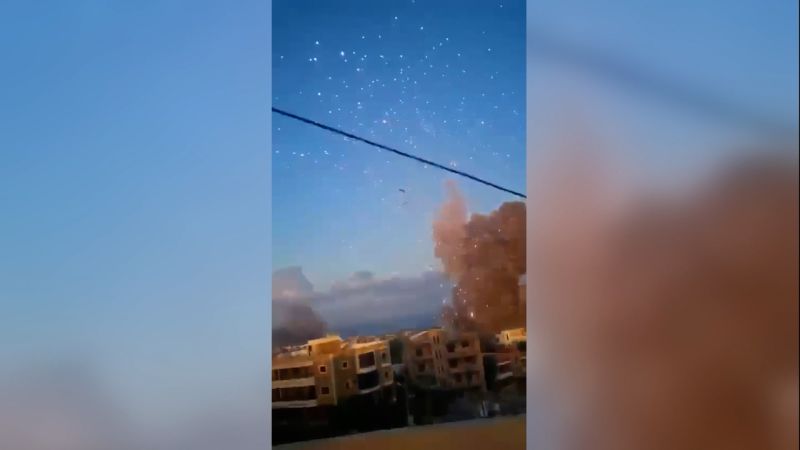
Lebanese politician Bzeshkian asserted that the continuation of airstrikes on Lebanon will make any negotiation discussions meaningless. These remarks come at a sensitive time, as tensions in the region escalate due to recent events.
Bzeshkian pointed out that the deteriorating security situation in Lebanon negatively impacts the possibility of achieving peaceful solutions. He highlighted that the airstrikes exacerbate the humanitarian situation, increasing the suffering of the Lebanese people who are already facing multiple crises.
Details of the Ongoing Situation
The airstrikes on Lebanese territory continue, raising concerns within the international community. Several countries and international organizations have expressed their worries about the escalating violence, calling for an immediate cessation of hostilities and a return to the dialogue table.
In this context, Bzeshkian emphasized that any future discussions will not be effective unless the airstrikes are halted. He noted that the Lebanese people require international support to confront the challenges they are facing.
Background & Context
Historically, Lebanon has witnessed numerous armed conflicts and airstrikes, which have affected its political and economic stability. Recurrent crises have exacerbated the humanitarian situation, with citizens suffering from a lack of basic services.
In recent years, tensions in the region have increased due to regional conflicts, making Lebanon susceptible to further pressures. This has led to worsening economic and social crises, necessitating international intervention.
Impact & Consequences
The ongoing airstrikes on Lebanon continue to negatively affect regional stability. This reflects the political instability that Lebanon is experiencing, which could lead to a further deterioration of security conditions.
If these airstrikes persist, they may exacerbate humanitarian crises, threatening the safety of citizens and increasing their suffering. Additionally, this could impact relations between Lebanon and neighboring countries.
Regional Significance
The situation in Lebanon is part of a broader regional landscape, where conflicts in Lebanon affect neighboring countries. Ongoing crises may lead to heightened tensions in the region, calling for urgent international intervention.
In conclusion, hope remains for a return to dialogue and negotiation, but this requires first halting hostilities and improving the humanitarian conditions in Lebanon.