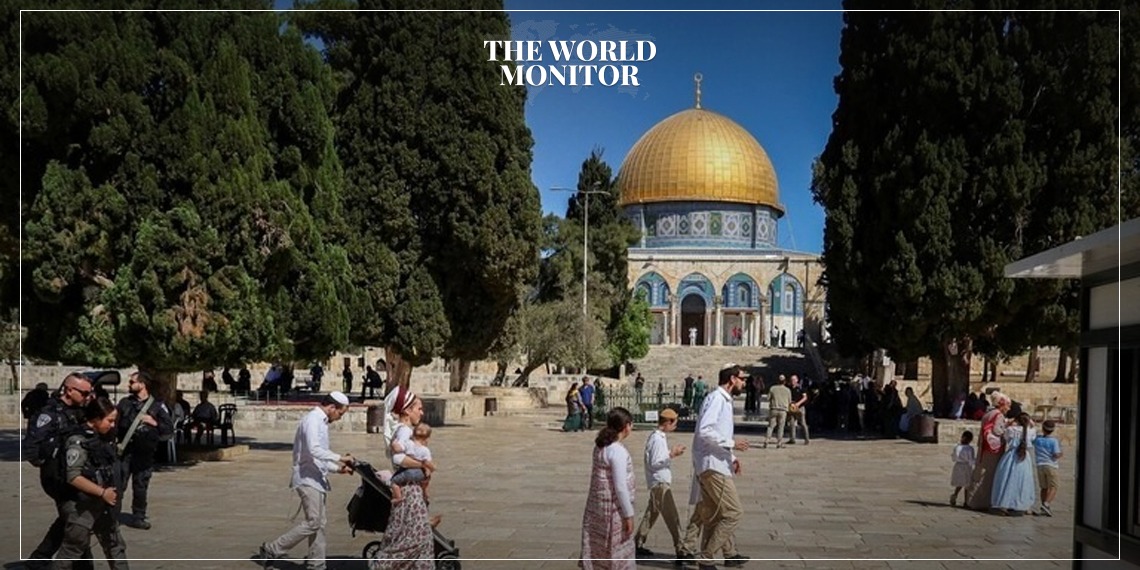
In a scene reflecting the escalating tension at Al-Aqsa Mosque, images and videos showed over 100 settlers queuing near the Buraq Wall, while the mosque's courtyards were empty of Muslim worshippers. These events come at a time when the occupation authorities are tightening restrictions on Muslim access to Al-Aqsa Mosque, raising concerns about the future of this sacred site.
These incursions coincided with a decision by the Israeli Supreme Court that approved an increase in the number of worshippers allowed to be present at the Buraq Wall from 50 to 100. This ruling followed a hearing regarding a petition demanding an increase in the number, reflecting the occupation's policy in managing the sacred site.
Details of the Incident
On Monday evening, Israeli National Security Minister Itamar Ben Gvir stormed Al-Aqsa Mosque, a move observers considered a precursor to imposing a new reality on the ground. Ben Gvir agreed with the occupation police to open Al-Aqsa Mosque to Muslims and settlers in small groups, raising fears of escalating incursions during the Jewish Passover.
Images and videos also showed crowds of settlers at the Hebron Gate, attempting to reach the Buraq courtyard to perform their religious rituals. These events occur amid the closure of the mosque's doors to Muslim worshippers during the month of Ramadan and the Eid al-Fitr holiday, further intensifying tensions in the area.
Background & Context
Historically, Al-Aqsa Mosque has witnessed numerous incursions by settlers, often coinciding with their religious holidays. Since the outbreak of the American-Israeli war on Iran on February 28, these incursions have notably increased, reflecting the occupation's policy of altering the status quo at Al-Aqsa Mosque.
Academic researcher Saher Ghazawi pointed out that these scenes confirm a rapid trajectory through which the occupation seeks to impose new realities on the ground, exploiting current circumstances. Additionally, Ben Gvir's incursion aligns with a policy aimed at diminishing the role of Islamic endowments and their employees, reflecting systematic attempts to reshape the management of the site.
Impact & Consequences
Concerns are rising that these policies will exacerbate conditions at Al-Aqsa Mosque, where Palestinians face significant challenges amid limited responses thus far. Ghazawi believes that Al-Aqsa Mosque is calling out to the Islamic and Arab nations, urging effective responses from Arab countries to confront these challenges.
The Jerusalem International Foundation asserts that current measures represent a smokescreen, as Al-Aqsa Mosque remains open to invading aggressors while being closed to Muslim worshippers. These policies reflect the occupation's trends towards intensifying incursions and altering the status quo at Al-Aqsa Mosque.
Regional Significance
The recent events at Al-Aqsa Mosque serve as a wake-up call for Arab nations, placing them before their responsibilities regarding the Palestinian cause. The continuation of these policies could lead to heightened tensions in the region, necessitating coordinated Arab action to protect Islamic sanctities.
In conclusion, Al-Aqsa Mosque remains a symbol of sovereignty, religion, and civilization, and the Arab nation must unite to face the challenges confronting this sacred site. Restoring the action and role of every individual and institution has become an urgent necessity under the current circumstances.