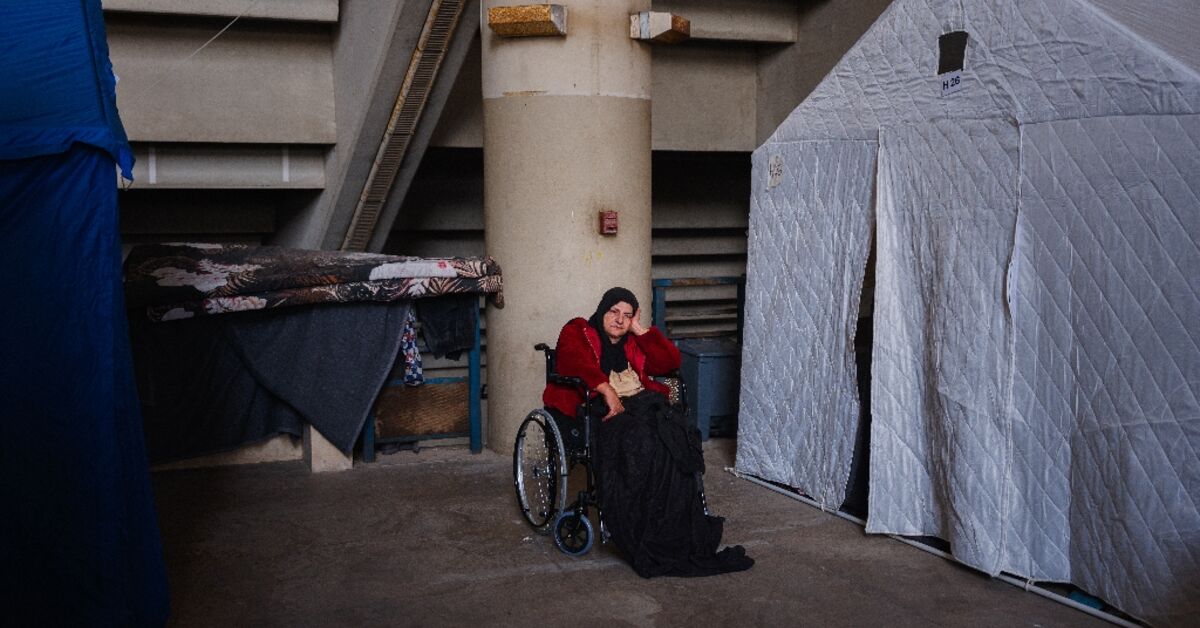
In the largest stadiums of Beirut, the cries of displaced children echo instead of the cheers of fans. More than 1,000 individuals, who fled the Israeli bombardment in Lebanon, are sleeping in tents under the stands, including approximately 50 people with disabilities and mobility issues.
This massive sports complex, which opened its doors to the displaced during the previous war in 2024, is considered one of the few places capable of accommodating individuals with disabilities, despite its inadequacy in meeting their specific needs.
Event Details
Reports indicate that the conditions in the stadium, currently used as a shelter, reflect significant suffering. The place lacks basic facilities, such as designated pathways for individuals with disabilities, making movement within the stadium extremely difficult. Additionally, the shortage of health and food services exacerbates the suffering of these displaced individuals, who were forced to leave their homes due to ongoing bombardments.
The number of displaced individuals in Lebanon is increasing with the escalation of military operations, putting additional pressure on public facilities. Displaced persons are enduring harsh living conditions, forced to live in cramped tents, which negatively impacts their mental and physical health.
Background & Context
Historically, Lebanon has witnessed numerous armed conflicts that led to mass displacement of its population. Since the outbreak of the civil war in the 1970s, the conflict in the country has not ceased, making Lebanon one of the most affected countries by conflicts in the region. In recent years, the situation has worsened with rising tensions between Israel and Hezbollah, leading to a deepening humanitarian crisis.
In 2024, Lebanon experienced a new war, resulting in the displacement of thousands of people to safer areas, including sports stadiums and educational centers. However, these facilities are not adequately equipped to meet the needs of the displaced, especially those with disabilities.
Impact & Consequences
These tragic conditions highlight the urgent need for humanitarian support for the displaced. The lack of suitable facilities for individuals with disabilities reflects the failure of the international community to meet the needs of the most vulnerable groups during crises. Furthermore, the lack of psychological and social support increases the suffering of these individuals, necessitating urgent interventions from humanitarian organizations.
These circumstances require swift action from the Lebanese government and the international community to provide necessary assistance and ensure the rights of the displaced, especially those with disabilities, who suffer from marginalization in such crises.
Regional Significance
The situation in Lebanon serves as a mirror reflecting the humanitarian crises faced by many Arab countries. As conflicts escalate in the region, the number of displaced and homeless individuals is rising, demanding a collective response from Arab nations and the international community. Providing support to the displaced in Lebanon can serve as a model for addressing humanitarian crises in other countries.
In conclusion, the tragic conditions experienced by the displaced in the largest stadiums of Beirut require urgent action from all concerned parties. There must be a comprehensive humanitarian response that meets the needs of these individuals and ensures their rights to live with dignity.