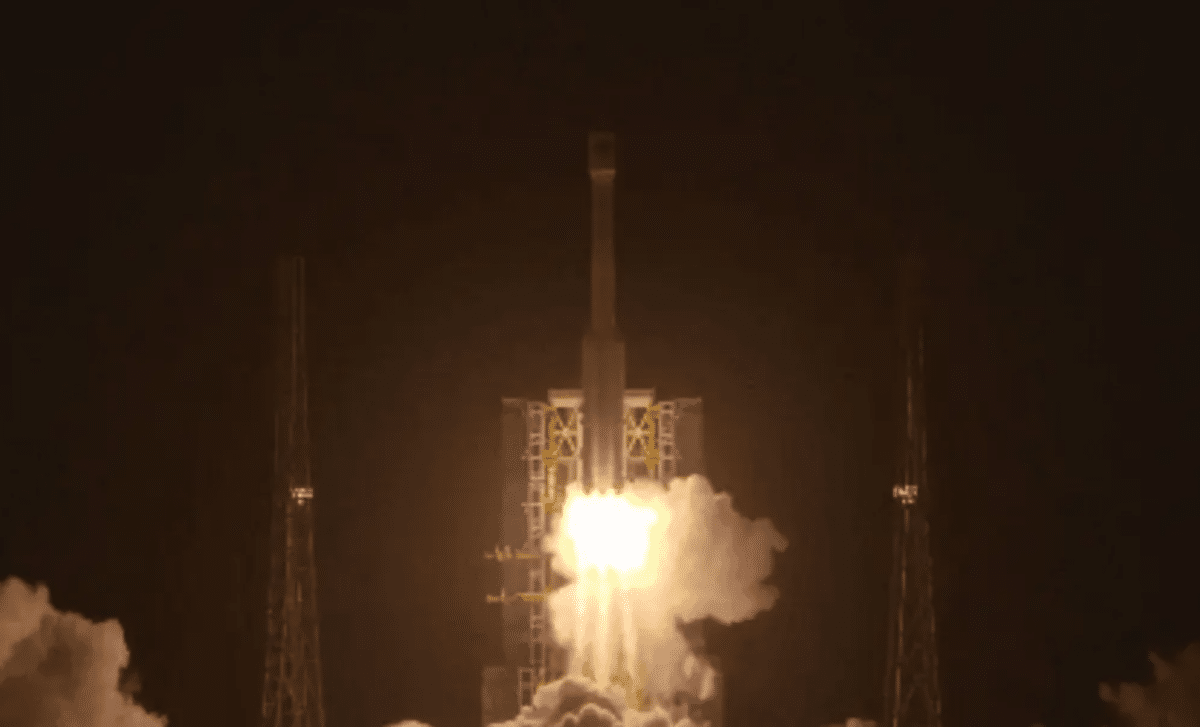
Pakistan has announced its successful launch of a photovoltaic satellite in collaboration with China, representing an important step in enhancing its technological capabilities in space. The satellite, named "Braak 1", was launched from a space launch center in China and aims to support scientific research and improve natural resource management in Pakistan.
This initiative is part of Pakistan's efforts to expand the use of modern technology across various fields, including agriculture, environment, and disaster management. The new satellite will enable Pakistan to collect accurate data on climate changes, assisting in informed decision-making regarding resource management.
Event Details
The "Braak 1" satellite was launched late last night, with the event attended by several government officials and scientists from both countries. The satellite has been designed to capture high-resolution images, facilitating environmental monitoring and analysis.
This collaboration between Pakistan and China is not the first of its kind, as Pakistan has previously launched several satellites in partnership with China, reflecting the depth of relations between the two countries in technology and space.
Background & Context
Historically, the relationship between Pakistan and China has seen significant development, especially in recent years, with China becoming a strategic partner for Pakistan in numerous developmental projects. The China-Pakistan Economic Corridor is one of the most prominent projects reflecting this cooperation.
Pakistan is also striving to enhance its capabilities in space to address environmental and economic challenges, as satellites are vital tools for gathering information and analyzing data necessary for planning and sustainable development.
Impact & Consequences
The launch of the "Braak 1" satellite is expected to have positive impacts across various sectors in Pakistan. The satellite will enable the government to improve its response to natural disasters, such as floods and droughts, by providing timely and accurate data.
Additionally, it will contribute to enhancing food security by improving agricultural resource management, helping farmers make better decisions based on space-derived data.
Regional Significance
This step is significant not only for Pakistan but also for the Arab region, as it can serve as a model for cooperation between Arab states and major countries in technology. Arab nations can benefit from successful experiences in satellite launches to enhance their capabilities in various fields.
In light of the environmental and economic challenges facing the region, investing in space technology is a strategic step towards achieving sustainable development.
The launch of Pakistan's new satellite represents a new beginning in its journey towards achieving technological independence and enhancing its capabilities in space, opening new horizons for regional and international cooperation.