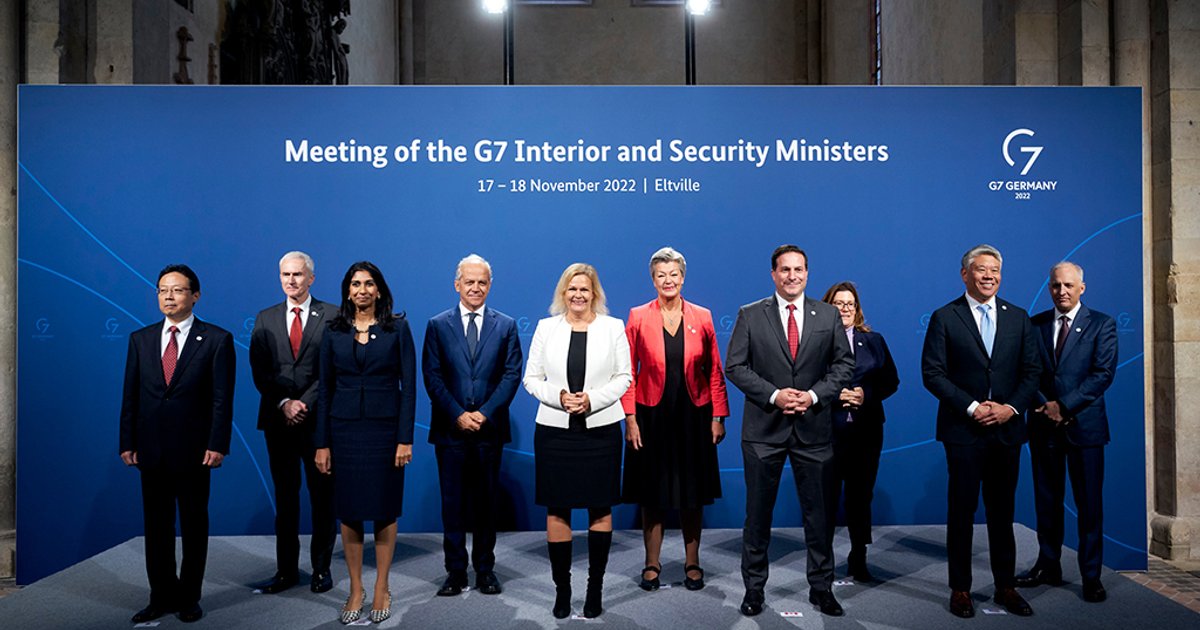
The Minister of Foreign Affairs participated in a session titled 'Cross-Border Threats and Sovereignty' as part of the G7 ministerial meeting, addressing security issues affecting countries around the world. Discussions centered on how to confront the increasing threats that transcend national borders, including terrorism, organized crime, and illegal immigration.
This session is part of the G7's efforts to enhance international cooperation in addressing security challenges that impact global stability. The session saw participation from several foreign ministers from G7 countries, where opinions and experiences were exchanged on the best ways to tackle these threats.
Event Details
The G7 ministerial meeting was held in the context of member states' efforts to enhance coordination in security and defense areas. During the session, current challenges facing countries were reviewed, including threats arising from regional conflicts and their impact on international security. The importance of cooperation among nations to effectively address these challenges was emphasized.
The session also included discussions on how to strengthen national sovereignty in light of cross-border threats. Participants pointed out the need to develop comprehensive strategies that take into account the humanitarian and social dimensions of these issues.
Background & Context
This session comes at a time when the world is witnessing a rise in security threats, with an increase in armed conflicts and illegal immigration, affecting the stability of many countries. These challenges have necessitated a reevaluation of national security policies and the enhancement of international cooperation to confront them.
Historically, the G7 has been an important platform for exchanging views on global issues, playing a pivotal role in coordinating efforts to address security threats. With the increasing challenges, it has become essential to strengthen this cooperation to ensure security and stability worldwide.
Impact & Consequences
Discussing cross-border threats within the G7 framework reflects the importance of international cooperation in addressing security challenges. Coordination among countries can contribute to developing effective strategies to combat terrorism and organized crime, thereby enhancing regional and international security.
This session may also help raise awareness about the importance of national sovereignty in the face of global threats. Security challenges do not only affect the countries involved but also extend their impacts to neighboring nations, necessitating a coordinated response from the international community.
Regional Significance
The Arab region is among the most affected by cross-border threats, with many countries suffering from armed conflicts and illegal immigration. Enhancing international cooperation in this context can contribute to improving security conditions in the region and bolster the ability of Arab countries to face common challenges.
The participation of the Minister of Foreign Affairs in this session reflects Saudi Arabia's commitment to supporting international efforts to confront security threats, reinforcing its role as an influential power on the international stage.
In conclusion, cross-border threats remain an urgent issue requiring a coordinated response from countries, and the G7 ministerial meeting underscores the importance of international cooperation in addressing these challenges.