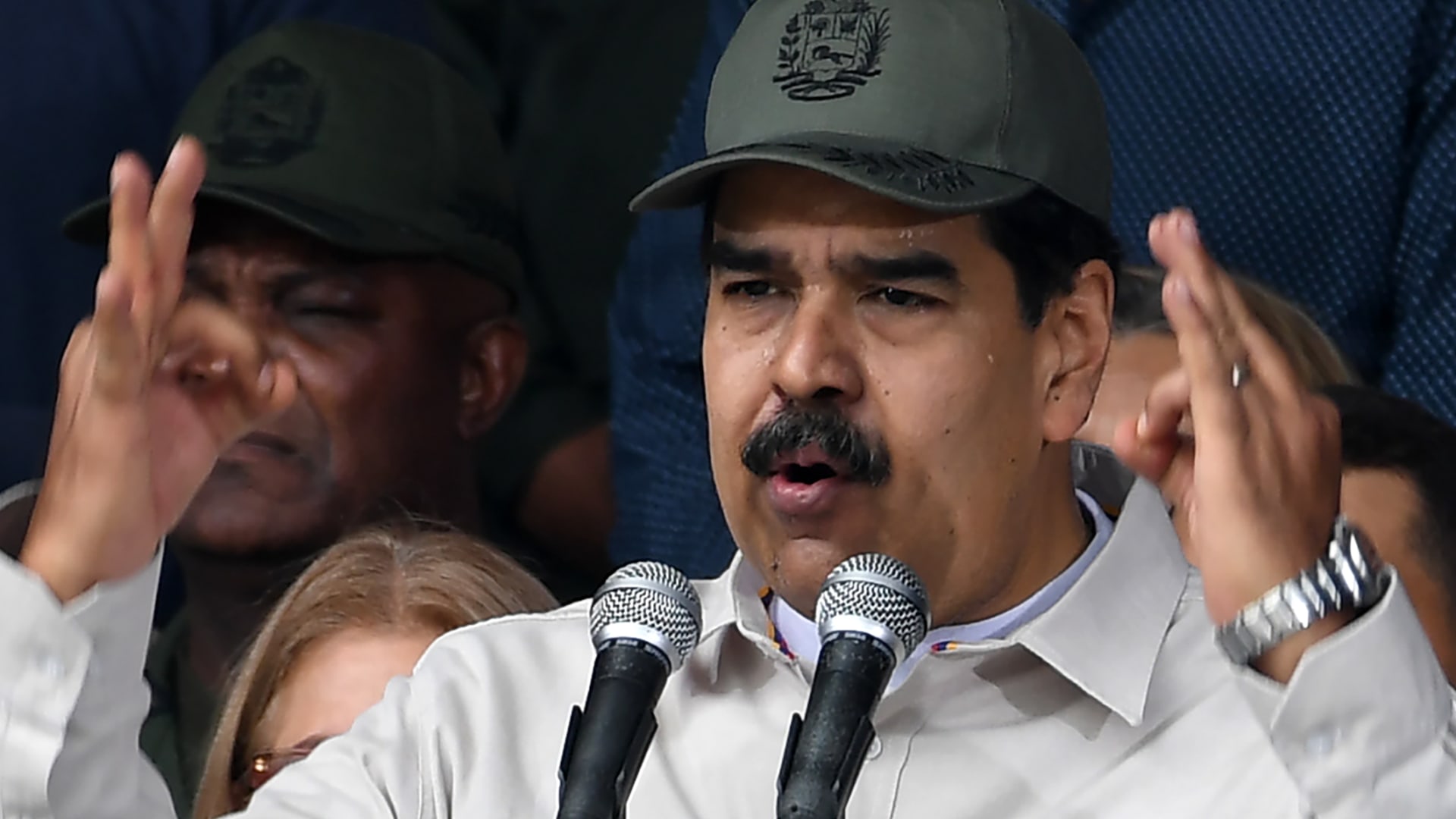
Political tensions are escalating in Venezuela as President Nicolás Maduro continues to face significant challenges from the opposition and the populace. Amid deteriorating economic and social conditions, massive protests have erupted in several Venezuelan cities demanding Maduro's resignation and the holding of free elections.
These protests come at a time when the Venezuelan people are suffering from severe shortages of food and medicine, along with soaring inflation rates. Reports indicate that the poverty rate in the country has surpassed 90%, making it increasingly difficult for citizens to meet their basic needs.
Details of the Protests
In recent days, the capital city of Caracas and other cities have witnessed large-scale demonstrations, with thousands of citizens gathering in public squares to express their dissatisfaction with the current situation. Security forces have used tear gas to disperse the protesters, leading to clashes between the two sides.
It is worth noting that Maduro was re-elected in 2018 in elections deemed unfair by many countries, further isolating his government on the international stage. The United States and other nations have imposed economic sanctions on Venezuela in an attempt to pressure the ruling regime.
Background & Context
Historically, Venezuela has experienced recurring political tensions since Maduro assumed power in 2013 following the death of President Hugo Chávez. Failed economic policies have led to a deterioration in living conditions, making the country one of the poorest in the world.
Venezuela is rich in oil resources, yet it suffers from mismanagement and corruption. The sharp decline in oil prices has exacerbated economic crises, rendering the government unable to provide basic necessities for its citizens.
Impact & Consequences
The repercussions of the political crises in Venezuela extend beyond its borders, affecting regional stability. The dire living conditions have led to significant waves of migration, with millions of Venezuelans fleeing to neighboring countries in search of a better life.
Moreover, Maduro's continued rule may contribute to heightened tensions between major powers, as Russia and China support the Venezuelan regime, while the United States and other Western nations back the opposition. These dynamics could lead to greater conflicts in the region.
Regional Significance
Despite the geographical distance, the situation in Venezuela captures the attention of Arab countries, especially amid the economic and political crises faced by some Arab nations. The Venezuelan experience could serve as a lesson for countries facing similar governance and management challenges.
Additionally, political transformations in Venezuela may impact relations between Arab nations and Latin American countries, as Arab states might seek to enhance cooperation with governments that adopt sustainable development policies.
In light of ongoing political and economic crises, Venezuela's future remains uncertain. Venezuelans are looking for genuine change, while international powers closely monitor the situation, making Venezuela a focal point of global interest.