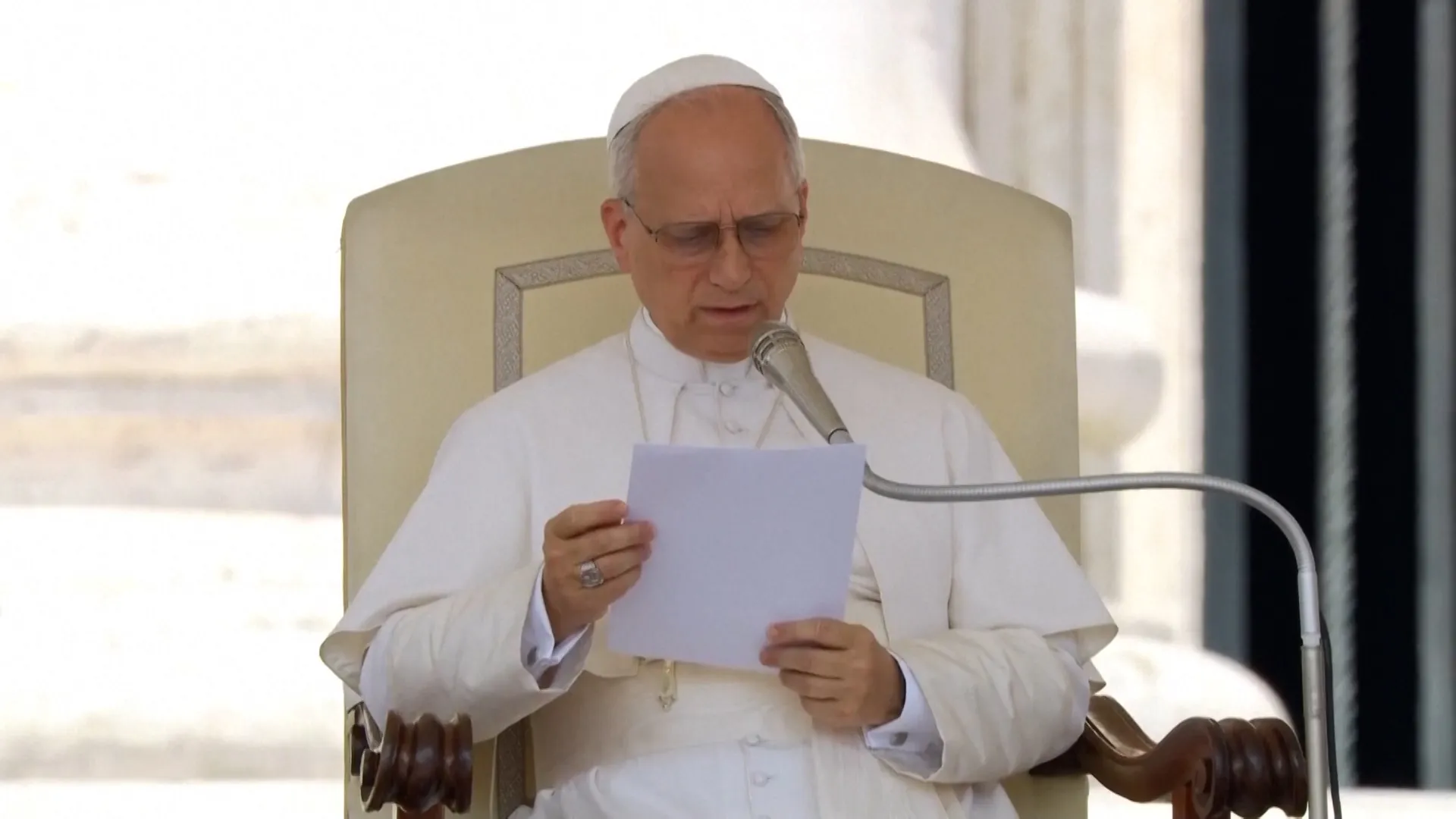
In a notable stance, Pope Leo XIV affirmed that the threats issued by U.S. President Donald Trump against Iran are 'unacceptable.' This statement was made during remarks to reporters outside Rome, where the Pope indicated that these threats pose a danger to the entire Iranian population.
The Pope added that 'there are issues related to international law, but the more important aspect is the moral side concerning the welfare of the people.' He urged the conflicting parties to return to the negotiating table, warning that attacks on civilian infrastructure contradict international laws.
Details of the Event
The Pope's remarks come at a sensitive time, as Trump threatened to destroy a 'complete civilization' in Iran, hinting at the possibility of bombing power stations and bridges if Tehran does not open the Strait of Hormuz and reach an agreement by a specified deadline. White House spokesperson Caroline Levitt warned that Iran could return to the 'Stone Age' if it fails to reach an agreement before the deadline expires.
Tensions in the region escalated following attacks by the U.S. and Israel on Iran on February 28, prompting Iran to respond by targeting Israeli and U.S. sites in the Middle East.
Background & Context
Historically, relations between the United States and Iran have experienced increasing tensions since the Islamic Revolution in 1979. These tensions have escalated in recent years due to Iran's nuclear program, which Washington views as a threat to regional and international security. Meanwhile, Iran perceives these threats as attempts to change the regime in Tehran.
The recent statements from Trump and the Pope are part of an escalating war of words in the region, with each side seeking to bolster its position amidst the multiple crises faced by Middle Eastern countries.
Impact & Consequences
The repercussions of these statements extend beyond Iran, potentially leading to an escalation of conflicts in the region, which would affect regional stability. Additionally, U.S. threats could provoke extreme reactions from Iran, further intensifying tensions.
It is crucial for the international community to recognize that these statements could exacerbate humanitarian crises in the region, where civilians are suffering from the effects of ongoing conflicts.
Regional Significance
Tensions between the United States and Iran directly impact Arab countries, especially those situated within the conflict zone such as Iraq, Syria, and Lebanon. Any escalation could lead to negative ramifications for security and stability in these nations, increasing the suffering of their populations.
In conclusion, the current situation in the Middle East requires urgent action from the international community to mitigate tensions and ensure the safety of civilians, as the continuation of conflicts will only lead to further humanitarian crises.