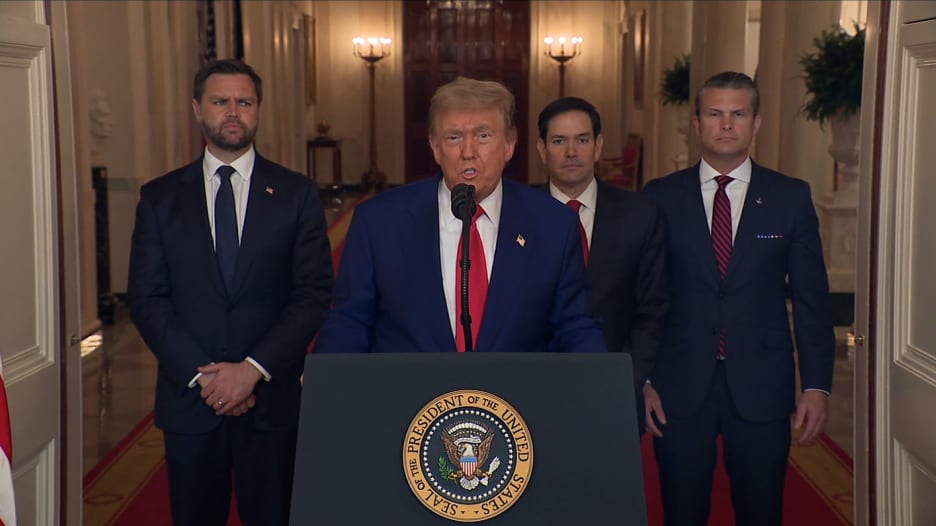
US President Donald Trump announced on Friday a 10-day postponement of the planned attacks on Iranian energy facilities. The new date for these operations is now set for Monday, April 6, 2026. This decision comes at a time when relations between Washington and Tehran are experiencing increasing tensions, as the United States had previously threatened military strikes on vital sites in Iran.
This move is part of Trump's ongoing policy towards Iran, which includes both economic and military pressure. The announcement has elicited mixed reactions within political and military circles, with some viewing it as a step towards de-escalation, while others consider it an unjustified delay in military escalation.
Details of the Event
In his statements, Trump did not provide specific details regarding the reasons for the postponement of the attacks, but he indicated that the decision followed consultations with senior military leaders. It is believed that this delay may be linked to the tense security situation in the region, as the United States seeks to avoid any escalation that could lead to a full-scale military conflict.
It is worth noting that Trump had previously declared his readiness to take military action against Iran, especially following the attacks that targeted Saudi oil facilities in 2019, for which Iran was accused of being behind. However, the current postponement may reflect Trump's desire to reassess the situation before taking any new military steps.
Background & Context
The roots of tensions between the United States and Iran date back decades, with relations between the two countries escalating significantly after Washington's withdrawal from the Iranian nuclear agreement in 2018. Since then, the United States has imposed strict economic sanctions on Iran, leading to a deterioration of the country's economic situation and increased regional tensions.
Moreover, recent events, including attacks on commercial vessels in the Arab Gulf, have heightened tensions further. These circumstances have led to calls from some European countries for a return to the negotiating table in an attempt to ease the rising tensions.
Impact & Consequences
The postponement of the US attacks may have multiple implications for the regional and international landscape. On one hand, this decision could be seen as an opportunity for diplomacy, potentially opening the door for new talks between the United States and Iran. On the other hand, it may be interpreted as a sign of weakness from the US administration, which could encourage Iran to continue its nuclear and military activities without fear of American repercussions.
This delay may also affect US allies in the region, who might feel concerned about Washington's ability to protect their interests. At the same time, it could serve as a message to other major powers, such as Russia and China, regarding the United States' capacity to manage international crises.
Regional Significance
In the Arab context, this decision may have direct effects on countries neighboring Iran, such as Iraq, Syria, and Lebanon. These countries are already suffering from the impacts of the Iranian-American conflict, and any escalation in tensions could exacerbate their security and economic situations.
Furthermore, Arab countries seeking to achieve stability in the region may find themselves in a difficult position, needing to balance their relations with the United States and their need to engage with Iran. Thus, the postponement of the attacks could be seen as an opportunity for regional diplomacy, but it may also raise new concerns regarding regional security.
In conclusion, it remains to be seen how events will unfold in the coming days and whether this postponement will lead to a real change in relations between the United States and Iran, or if it is merely a delay in the potential conflict.