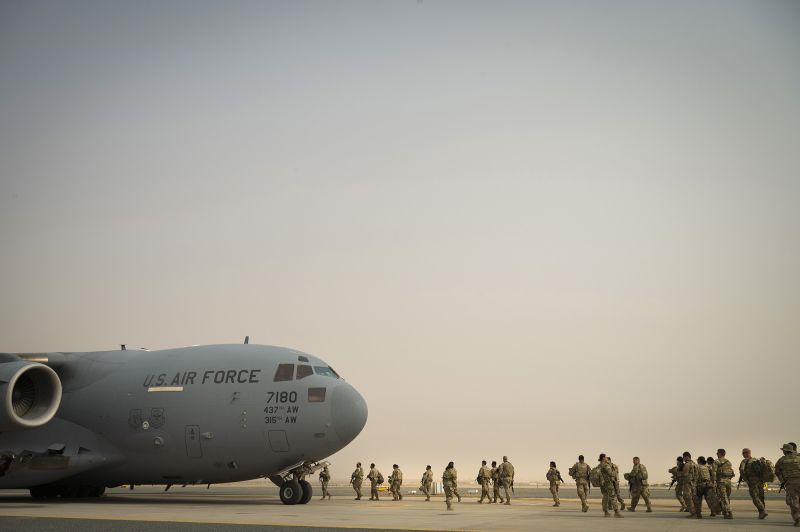
The confrontation between the United States and Iran is approaching a more perilous turning point, with the prospect of a potential American ground invasion of Iran looming on the horizon. This possible escalation could change the rules of engagement in the region and affect the balance of power in the Middle East.
In recent years, relations between Washington and Tehran have seen increasing tension, with both nations exchanging airstrikes and missile messages, intensifying the conflict. However, talk of a ground invasion indicates a radical shift in the American strategy towards Iran and reflects growing concerns over Iranian military activities in the region.
Details of the Event
Reports are increasing regarding potential American preparations for conducting ground military operations in Iran, which may require the mobilization of significant forces and advanced military resources. This comes at a time when tensions between the two sides are escalating, as the United States seeks to confront the rising Iranian threats, including its support for armed militias in Iraq and Syria.
This step is fraught with risks, as it could lead to large-scale military escalation, threatening the stability of the entire region. Some analyses have warned that any ground intervention could drag the United States into a new military quagmire, similar to what occurred in Iraq and Afghanistan.
Background & Context
The roots of the conflict between the United States and Iran date back decades, with relations deteriorating after the Iranian Revolution in 1979. Since then, Iran has taken hostile positions towards the United States, leading to the imposition of economic and military sanctions.
In recent years, tensions have escalated significantly, especially after the United States withdrew from the Iranian nuclear agreement in 2018. This decision led to increased Iranian military activities in the region, prompting the United States to bolster its military presence in the Arabian Gulf.
Impact & Consequences
If a US ground invasion of Iran is executed, it will have serious repercussions at both the regional and international levels. This escalation could ignite a comprehensive war in the region, threatening the lives of millions and increasing civilian suffering.
Moreover, any military intervention could provoke strong reactions from Iran and its allies in the region, potentially escalating the conflict in Iraq, Syria, and Lebanon. Global oil prices and financial markets may also be affected as a result of this escalation, increasing economic instability.
Regional Significance
Any military escalation in Iran has direct implications for neighboring Arab countries, as it may lead to a flow of refugees and increased sectarian tensions. Arab nations that maintain relations with the United States may find themselves in a precarious position, needing to balance support for their traditional ally while maintaining internal stability.
In this context, Arab countries are closely monitoring potential developments, as any miscalculated move could destabilize the entire region.
In conclusion, the potential military escalation between the United States and Iran represents a significant challenge to regional and international security. As tensions rise, there remains hope that wisdom and diplomacy will prevail to avoid a new catastrophe in the region.