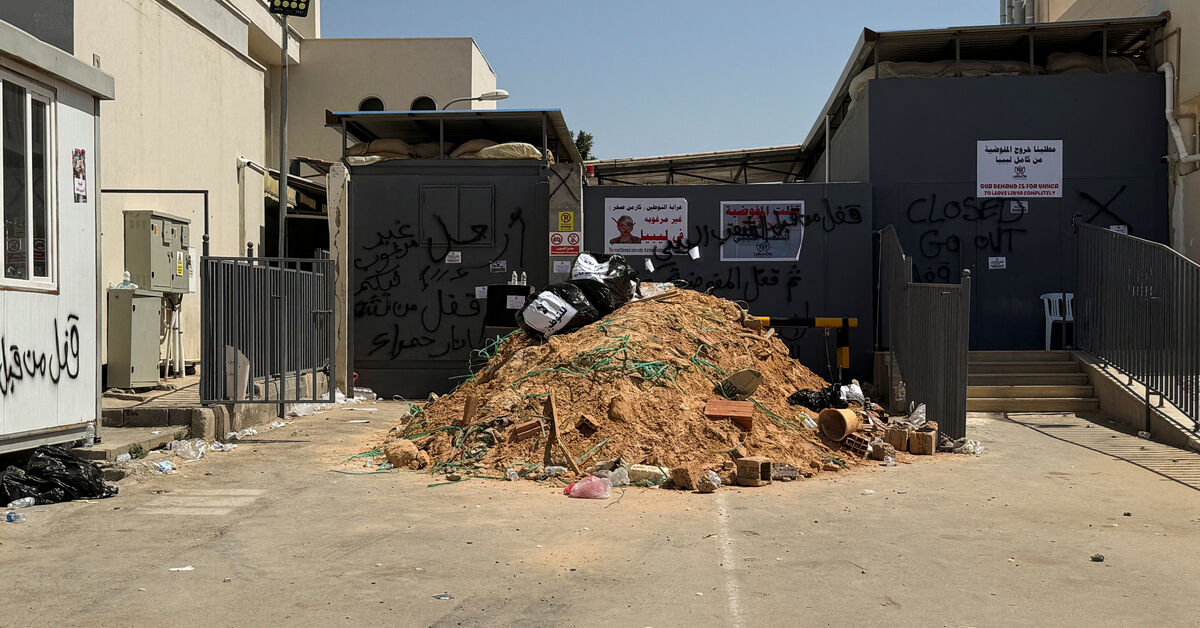
On Thursday, June 4, the capital of Libya, Tripoli, witnessed large-scale protests by hundreds of citizens who closed the office of the United Nations High Commissioner for Refugees. These protests come amid increasing anxiety regarding the flow of migrants into the country in search of job opportunities or passage to Europe.
The demonstrators gathered in front of the main office of the commission in the Siraj neighborhood, chanting slogans expressing their rejection of the presence of migrants, such as "No, no to resettlement, Libya is only for Libyan citizens" and "Get out of Libya, take them all out of Libya." These slogans reflect the feelings of concern and anger among many Libyans regarding the current situation.
Details of the Event
These protests occur at a time when Libya is suffering from increasing economic and social crises, with the number of migrants arriving in the country on the rise. Many protesters believe that the presence of these migrants negatively impacts job opportunities available to Libyan citizens and increases pressure on public services.
Libya is considered a major transit point for migrants attempting to reach Europe via the Mediterranean Sea, making it a center for various issues related to migration and asylum. This phenomenon has heightened tensions between local populations and migrants, leading to a surge in protests recently.
Background & Context
Historically, Libya has experienced waves of illegal migration, especially following the revolution that ousted Muammar Gaddafi's regime in 2011. Since then, the country has been plagued by political and security chaos, making it a destination for migrants from sub-Saharan Africa and the Middle East.
Many humanitarian organizations strive to assist migrants, but these efforts often face resistance from local communities. In recent years, numerous cases of human rights violations against migrants have been documented, complicating the situation further.
Impact & Consequences
These protests highlight the escalating tensions between local populations and migrants, which could exacerbate humanitarian conditions in the country. Additionally, these events may affect Libya's image in the international community, as the country is considered a hotspot for migration issues.
Concerns are growing that the continuation of these protests could lead to increased violence against migrants, further worsening humanitarian crises. It is crucial for the Libyan government to take comprehensive steps to address these issues, including improving the economic and social conditions for citizens.
Regional Significance
The issue of migration is a pressing concern in the Arab region, where many countries are grappling with migrant flows. The protests in Libya reflect the complex situation faced by Arab countries in dealing with migration and asylum issues.
These matters require regional and international cooperation, as Arab states must work together to find sustainable solutions. Addressing the root causes of migration, such as poverty and conflict, is a fundamental step towards improving the situation in the region.
In conclusion, the protests in Tripoli reflect the significant challenges facing Libya amid economic and social crises. It is essential to address these issues comprehensively to ensure the stability of the country and the welfare of both its citizens and migrants.